RRP-233
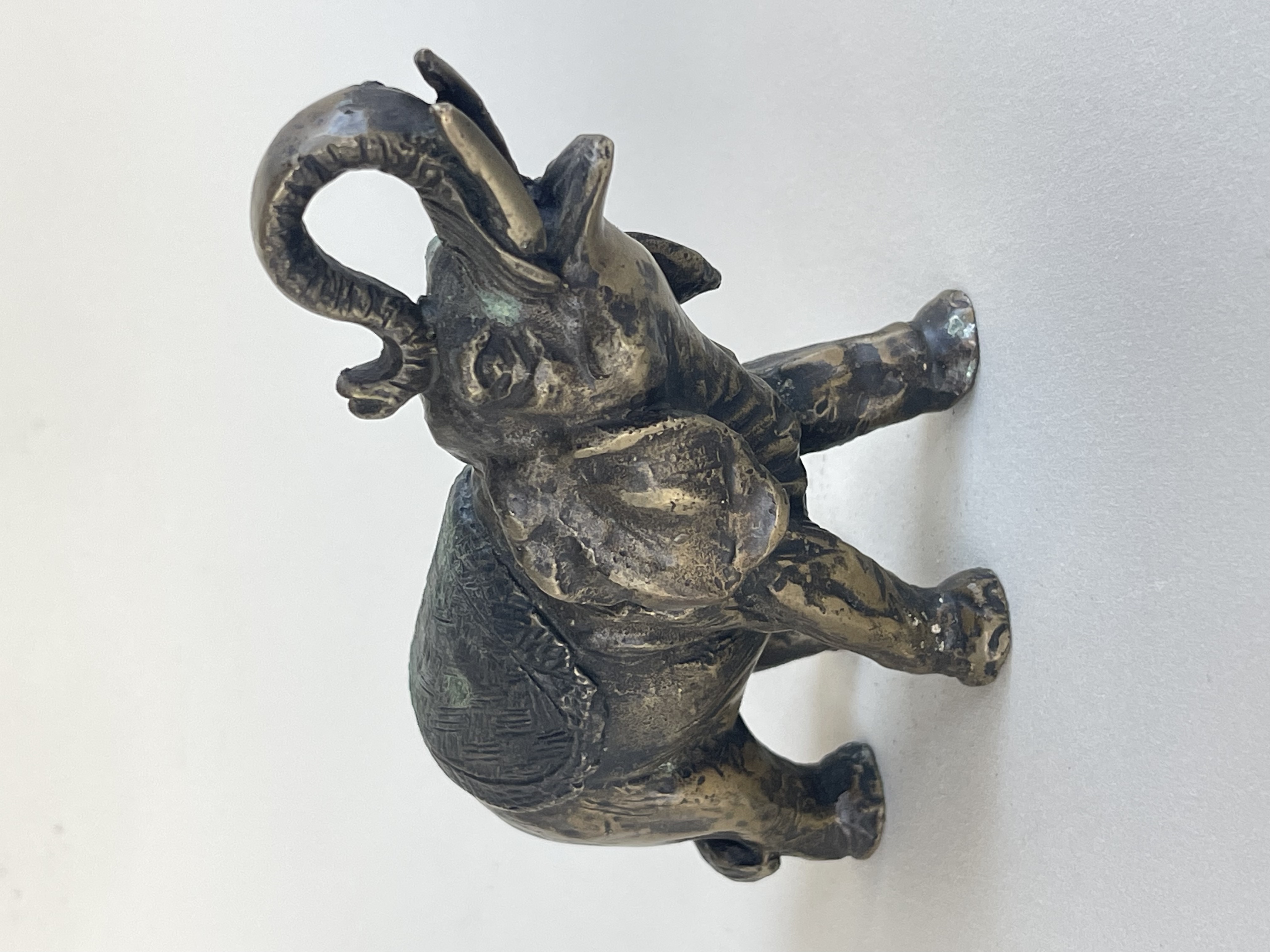
Antique South Indian Hollow-Cast Bronze Elephant with Raised Trunk, 18th–19th Century
Request Access← Back to CollectionInquire about this object →Catalogue entry
Description
An antique South Indian hollow-cast bronze elephant sculpture, attributed to the 18th–19th century, possibly from Tamil Nadu.
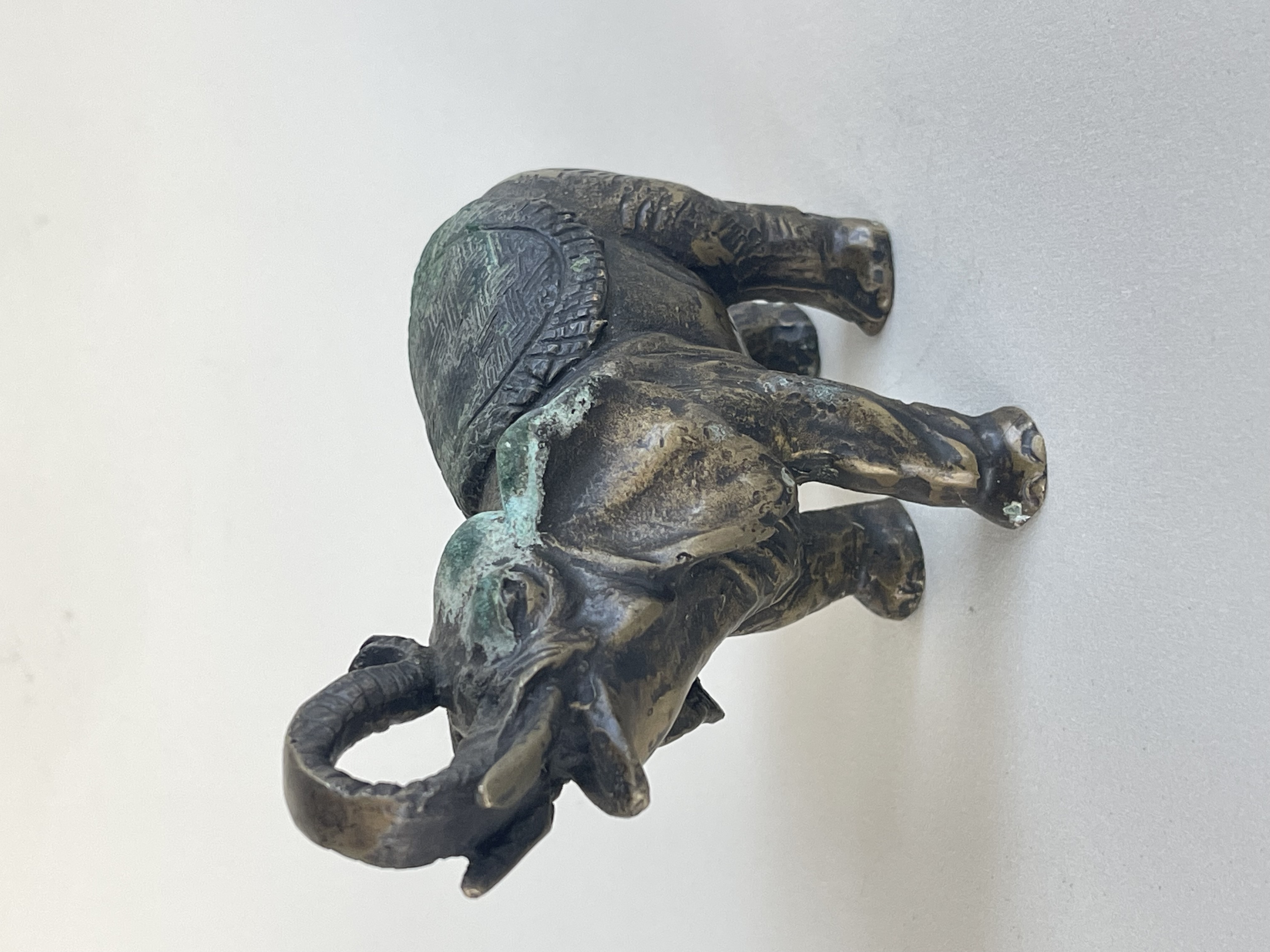
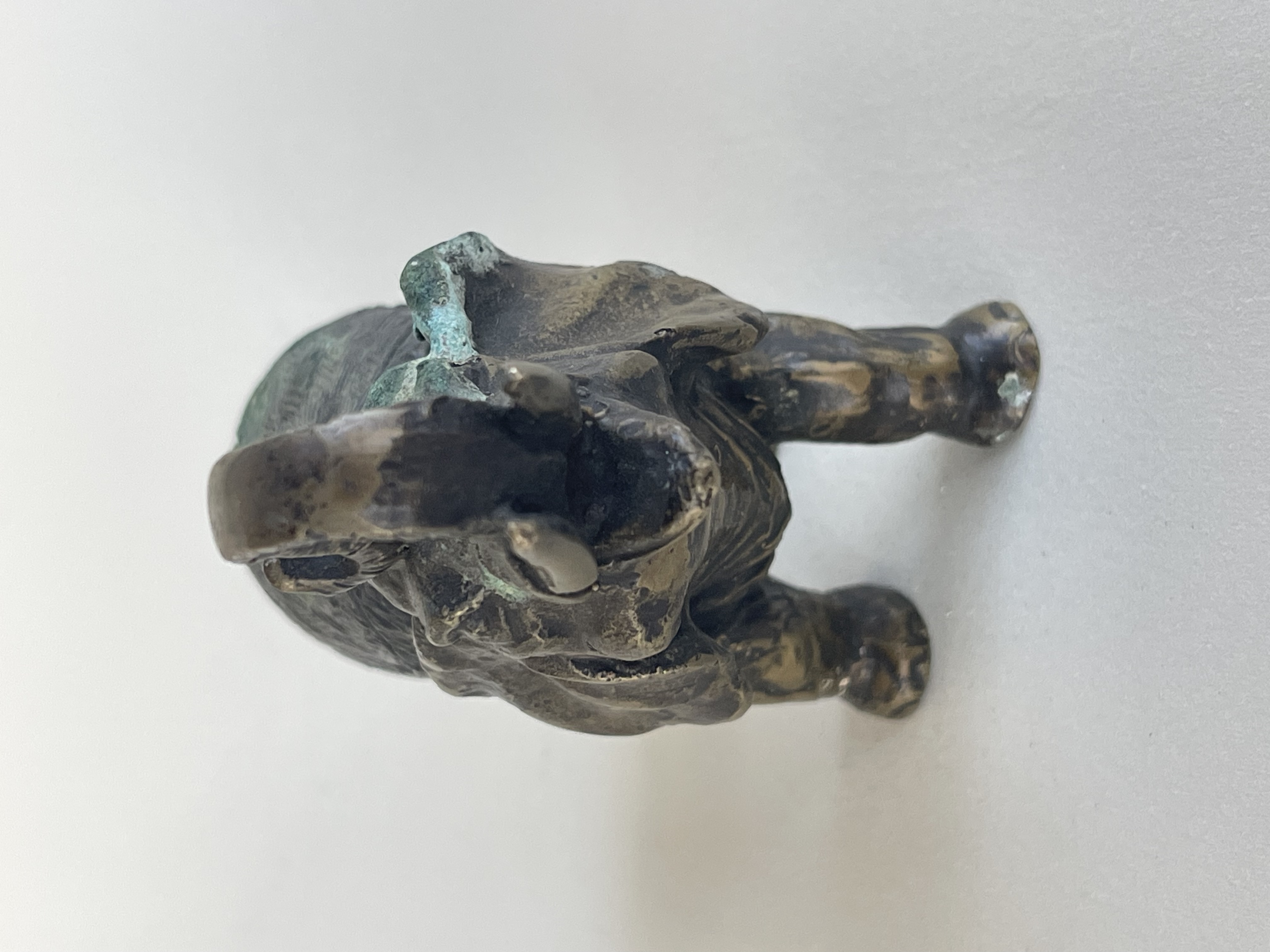
The elephant is depicted standing with its trunk dramatically raised and curled, mouth open, tusks projecting, and large, individually modeled ears. Its animated posture and unusually elaborate anatomical treatment distinguish it from more conventional representations of ceremonial elephants.
Particularly noteworthy is the sculptural treatment of the four legs. Deeply modeled, twisting folds follow the contours of the limbs, creating an almost braided appearance. These forms vary from leg to leg, demonstrating individual attention to the animal's anatomy and movement.
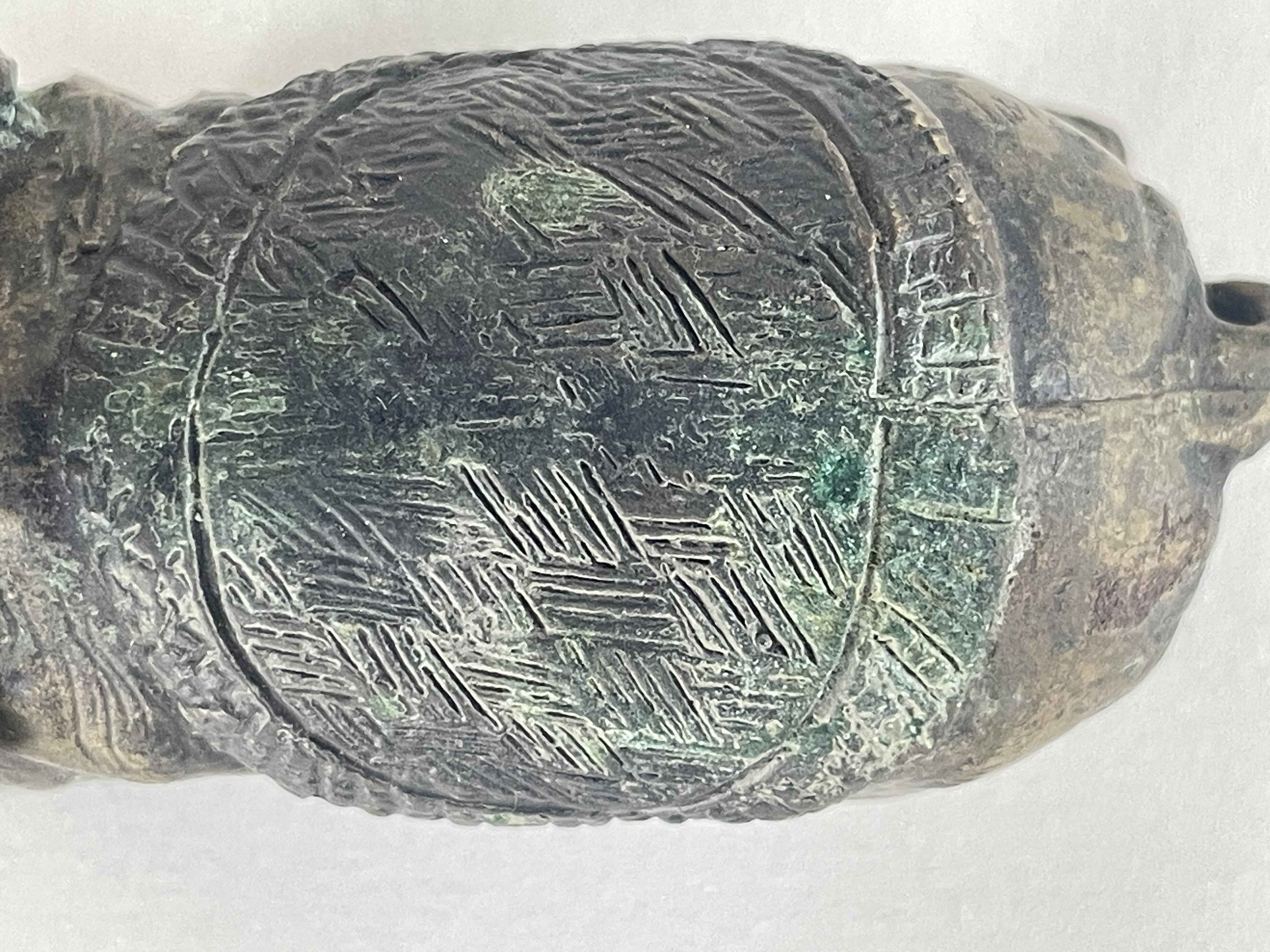
The elephant wears an extensively engraved saddlecloth featuring interlocking geometric patterns resembling woven or plaited textiles. The decoration consists of alternating groups of closely spaced parallel lines, enclosed within an ornamental border with raised rectangular elements.
Construction and Material
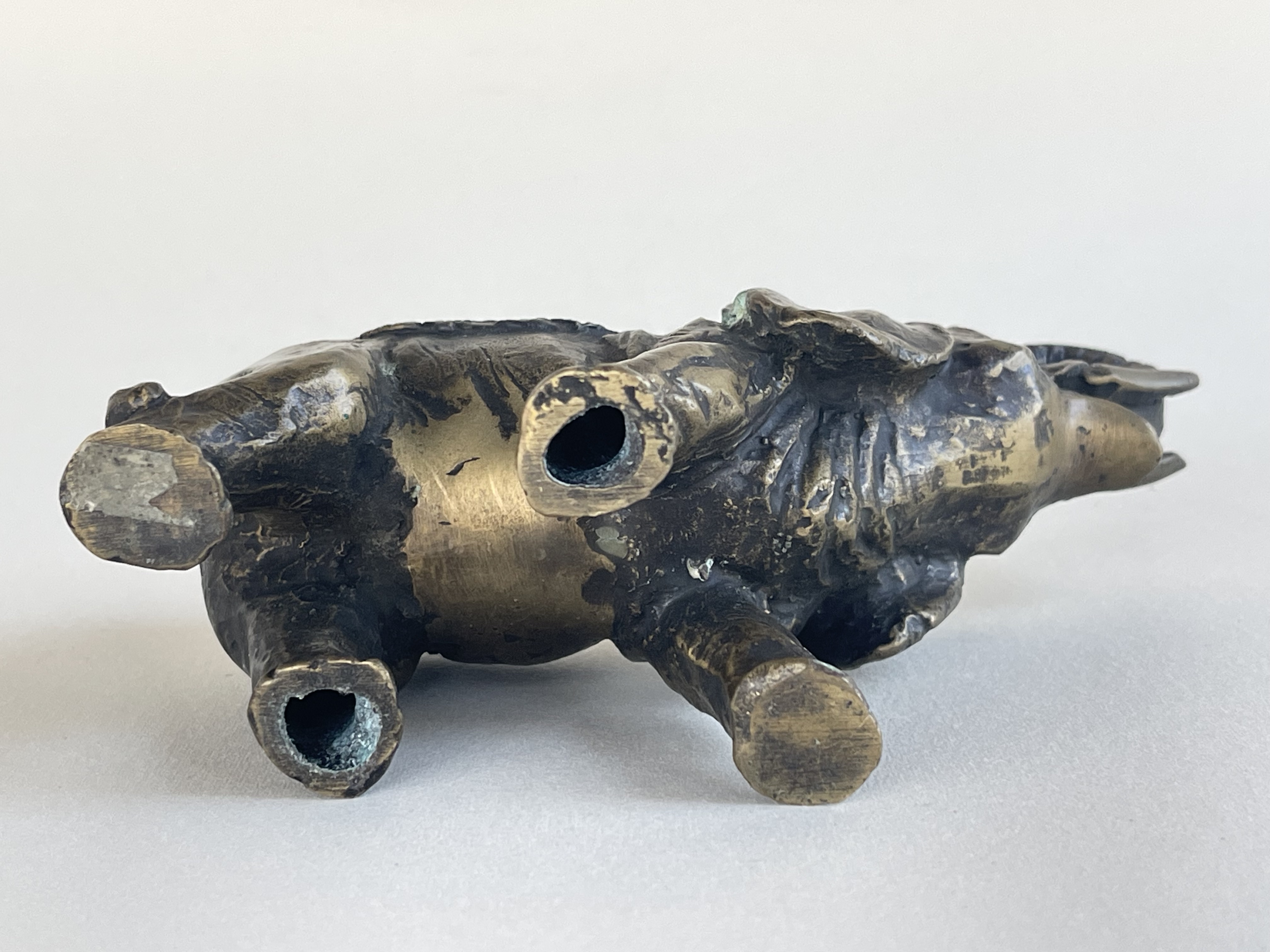
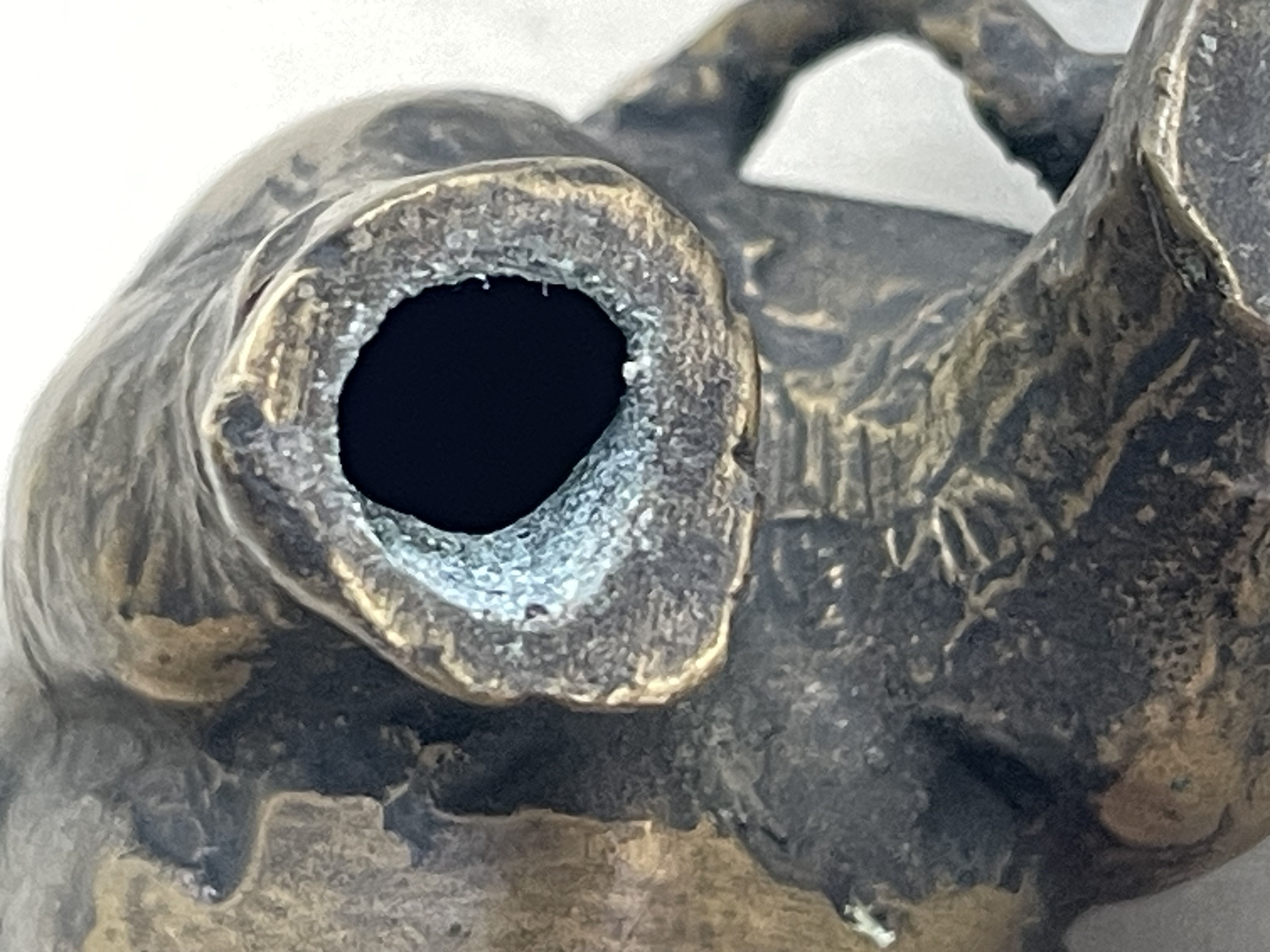
The sculpture was produced using hollow-casting techniques. Two openings beneath the feet reveal the hollow interior, while the remaining foot terminals are closed. The exposed openings preserve visible casting surfaces and internal oxidation.
The metal has a muted brownish-gold appearance in areas of extensive abrasion, rather than the bright yellow coloration commonly associated with brass.
The sculpture is described as bronze in the traditional art-historical sense. Its precise copper-alloy composition has not been established by metallurgical testing.
Surface and Wear
The sculpture preserves extensive evidence of handling, abrasion, and corrosion.
Dark brown-black patination remains across much of the surface, particularly in recessed areas. Raised and projecting elements—including the ears, trunk, legs, feet, and hindquarters—display considerable abrasion exposing the underlying muted brown-gold metal.
Localized blue-green copper-alloy corrosion is particularly evident around the forehead, eyes, ears, and engraved saddlecloth. Several areas exhibit surface pitting, granular corrosion deposits, and localized loss of original surface material.
The distribution of wear is particularly noteworthy. The projecting anatomical forms show extensive smoothing and abrasion, while protected recessed areas retain darker patination and accumulated corrosion.
The engraved saddlecloth retains considerable detail despite its worn and corroded surface.
The sculpture has not been polished or restored to a bright metallic finish.
Dating
18th–19th century. The proposed dating is based on traditional copper-alloy casting techniques, sculptural workmanship, ornamental vocabulary, and comparisons with documented historical Indian elephant sculptures.
Cultural Attribution
India, probably Southern India. Possibly Tamil Nadu.
The sculpture's geometric saddlecloth and stylized anatomical modeling have parallels in southern Indian metalworking traditions. Related woven and plaited ornamental vocabulary is also documented in historical Sri Lankan brasswork. The precise regional workshop has not been established.
Collector's Note
Elephants occupy an important place in South Asian artistic and ceremonial traditions, associated with royal authority, prosperity, strength, and auspiciousness.
This example is distinguished by its animated posture, raised curling trunk, expressive facial modeling, and unusually elaborate twisting anatomical folds.
The geometric saddlecloth is of particular interest. Its interlocking engraved pattern recalls woven textile ornament, providing a useful point of comparison with historical South Indian and Sri Lankan decorative traditions.
A 13th-century Tamil Nadu copper-alloy elephant in the Los Angeles County Museum of Art (accession M.72.1.18) incorporates an engraved herringbone saddlecloth and ornamental modeling of the hindquarters, demonstrating earlier regional precedents for this decorative vocabulary.
An 18th–19th-century cast-and-engraved elephant attributed to Southern India or Sri Lanka, documented by specialist dealer Michael Backman Ltd., provides an additional historical comparison.
These examples support the broader regional and technical context of the present sculpture rather than an attribution to the same workshop.
The confirmed hollow construction, individually modeled anatomical details, engraved saddlecloth, and extensive differential surface wear contribute to the sculpture's interest as an example of historical South Asian copper-alloy craftsmanship.
Photographic gallery

Access & use
Ways this object may be engaged
Educational Programs (No loan fee)
Exhibitions (No loan fee)
Editorial — for books, articles, scholarly journals (No loan fee)
Film / TV
(Rental fees apply)
Advertisement / Commercial Photography
(Rental fees apply)
Prestige Rentals
Distinguished objects available for short- or long-term rental to private residences, offices, hotels and exceptional spaces.
(Rental fees apply)
Documentation