RRP-232
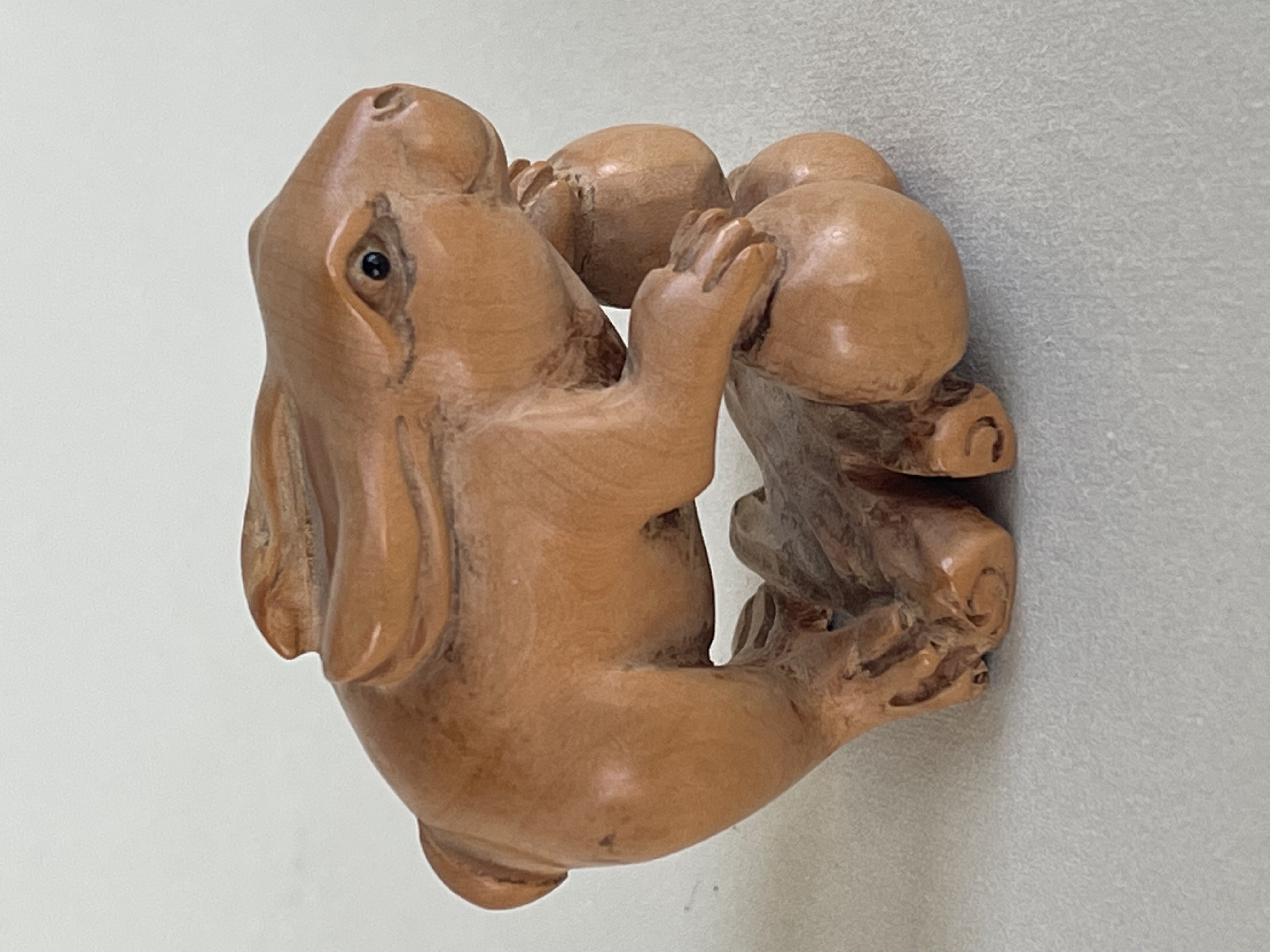
Antique Japanese Edo Wood Netsuke Hare Rabbit with Fruit Horn Eyes c.1770–1820
Request Access← Back to CollectionInquire about this object →Catalogue entry
Description
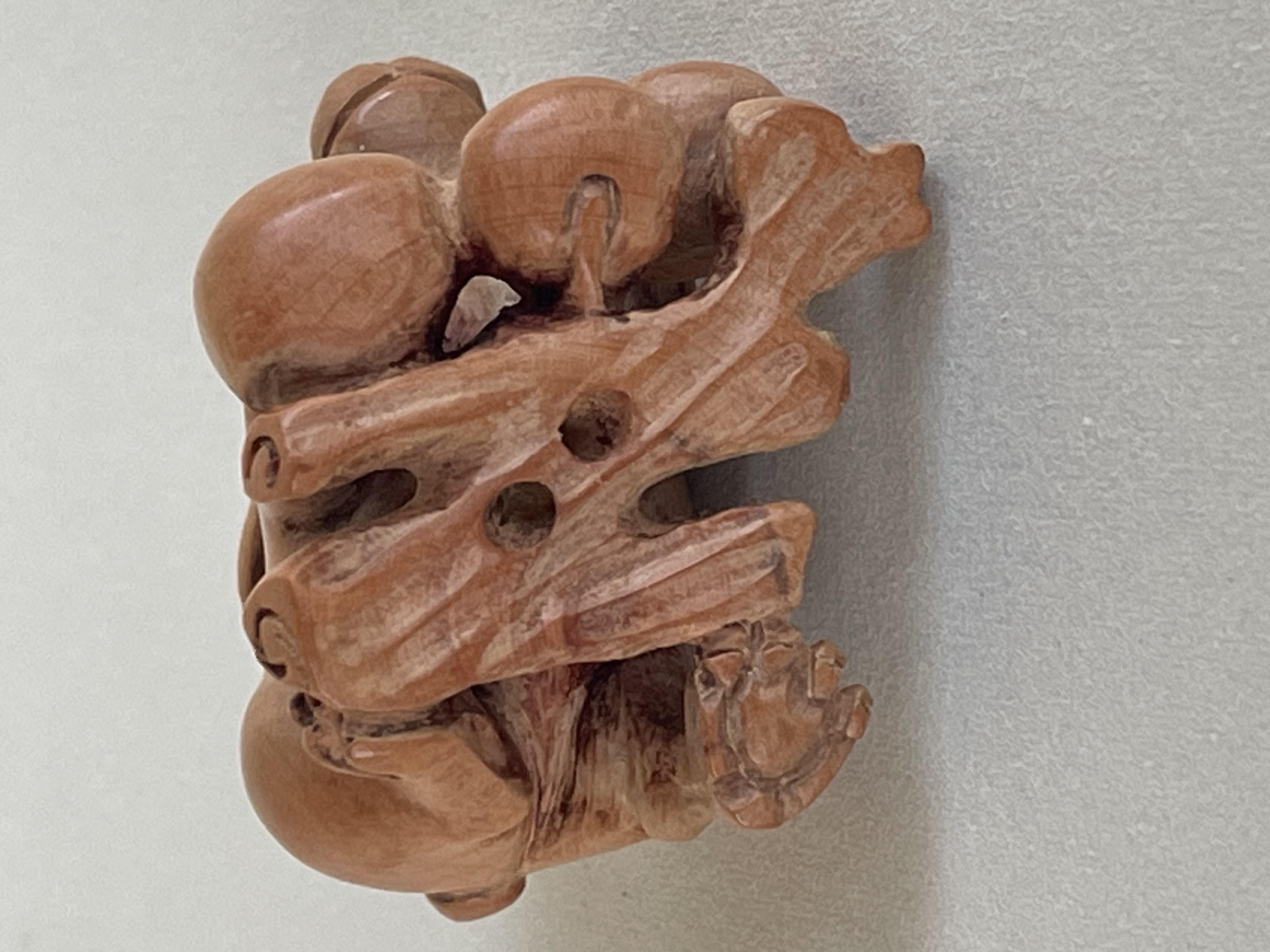
A finely carved Japanese wooden katabori netsuke depicting an expressive hare poised above a cluster of rounded fruits and intricately carved branches. Attributed to the Edo period, circa 1770–1820.
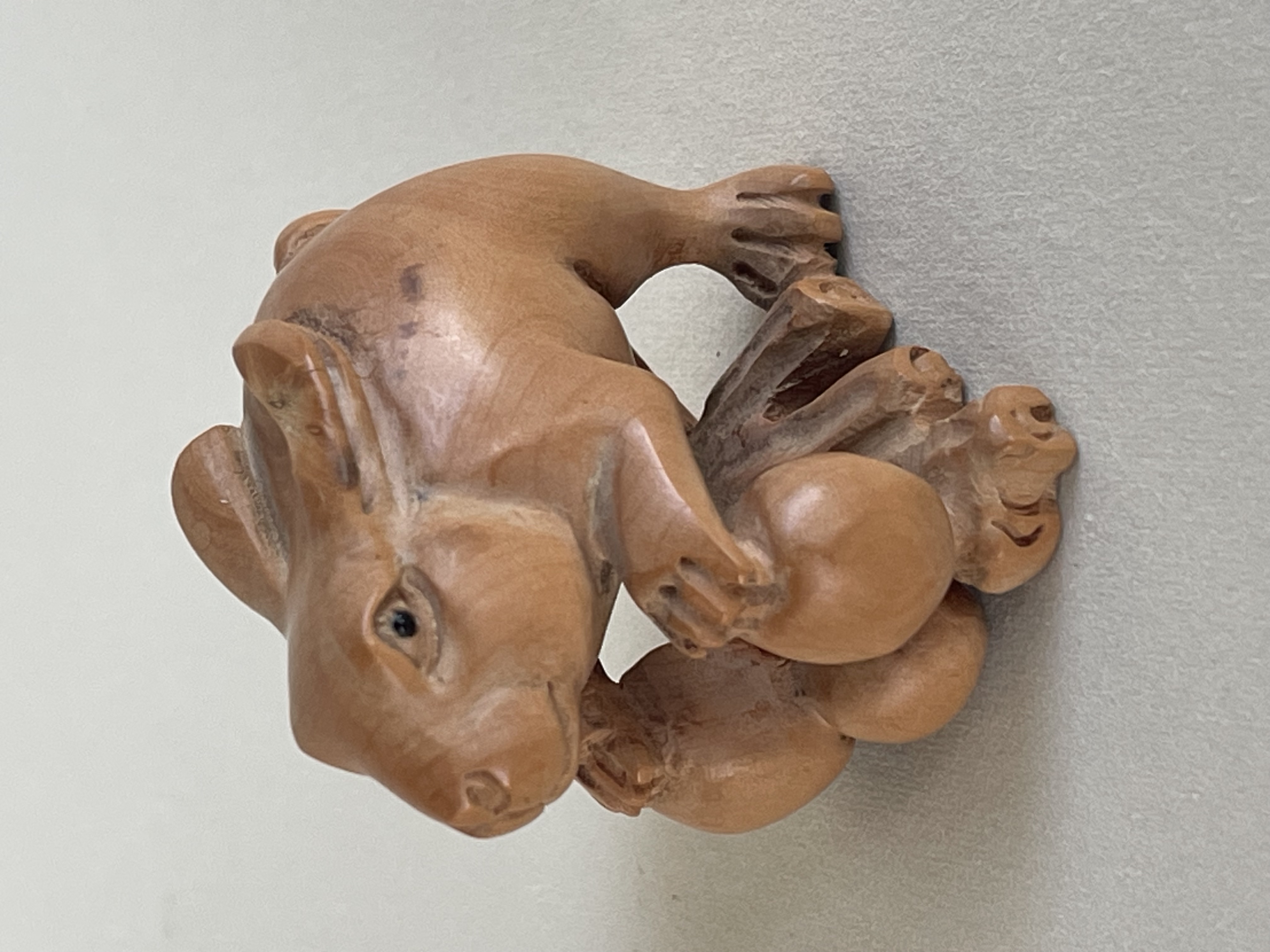
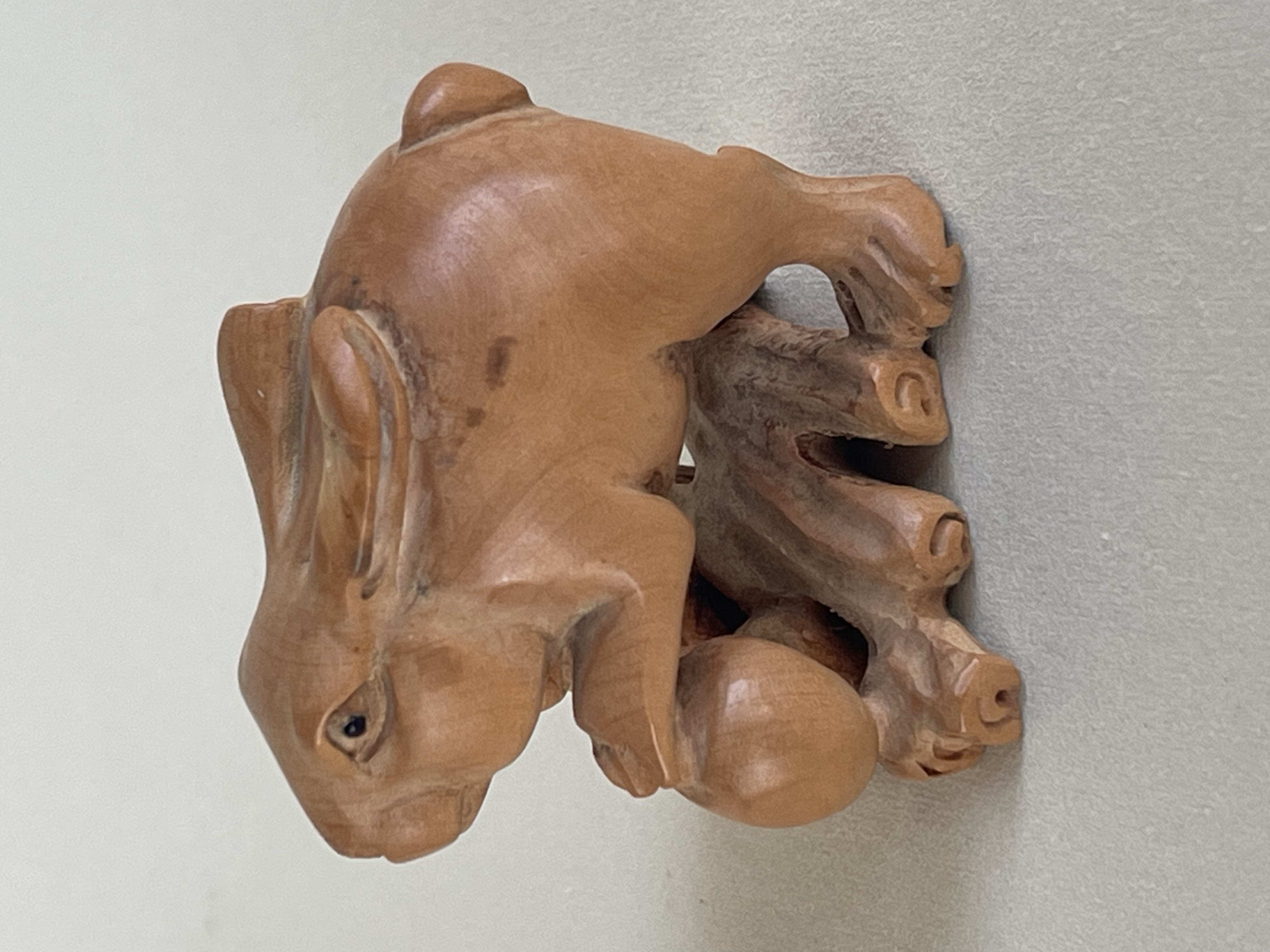
The composition displays an accomplished balance between the hare's smoothly modeled body and the elaborate, deeply undercut branching structure beneath it. The animal appears to lean forward, resting its individually carved front paws upon two rounded fruits, while its hind legs stabilize the sculpture.
The hare's broad cheeks, delicately modeled muzzle, carefully defined nostrils, and backward-swept ears give the figure a remarkably animated appearance. Both eyes retain their glossy black inlays, probably polished horn, set within individually carved sockets.
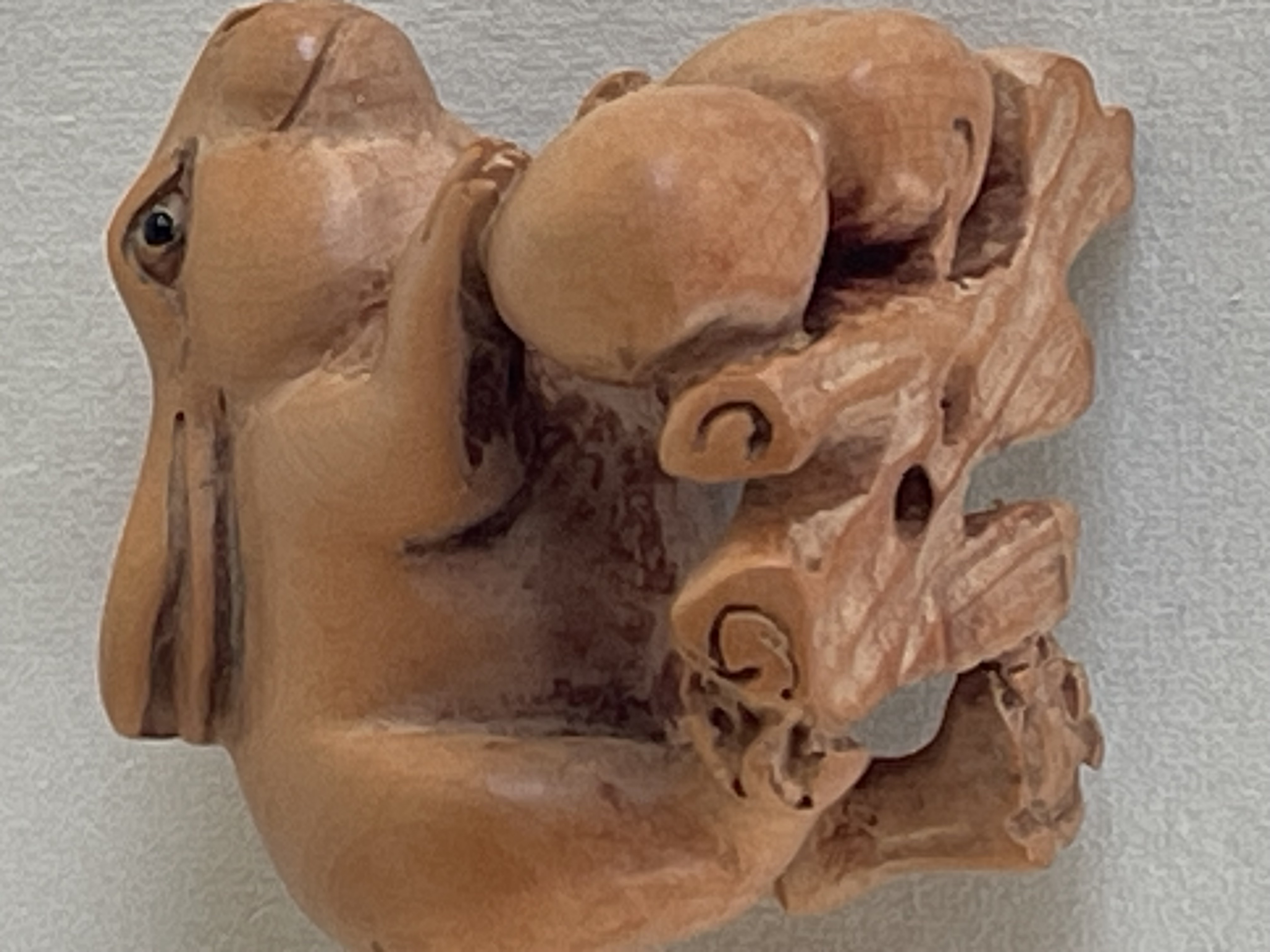
The underside is particularly noteworthy. The carver devoted considerable attention to anatomical and ornamental details that would not ordinarily be visible when the netsuke was worn. The underside of a paw is carefully articulated, while the branch ends display distinctive curled recesses that visually echo details elsewhere in the composition.
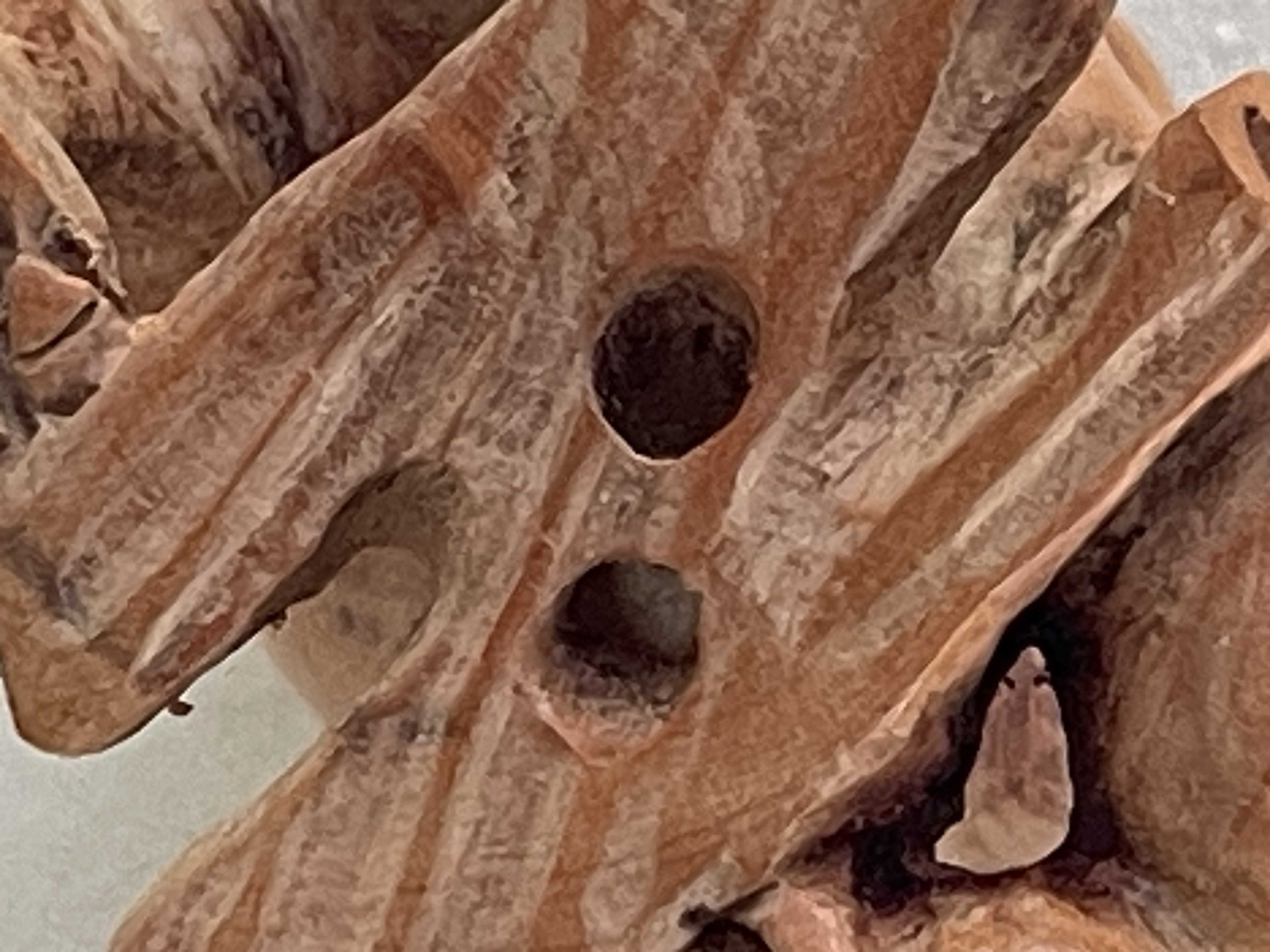
The two functional himotoshi openings are incorporated into the branching structure. Their individually shaped entrances feature sloping surfaces designed to direct the suspension cord. Localized rounding and surface wear along the inner margins are consistent with historical use.
The sculpture retains a warm honey-brown surface with darker coloration in protected recesses. Fine tool marks remain visible in the less-polished underside, contrasting with the smooth finishing of the hare's exposed surfaces.
The fruits may represent loquats (biwa), a subject documented in 18th-century Japanese netsuke carving.
Dating
Japan, Edo period, circa 1770–1820. The attribution is based on the sculptural treatment, traditional construction, carved himotoshi, workmanship, iconographic comparisons, and physical evidence consistent with historical handling.
Collector's Note
The hare (usagi) is a traditional subject in Japanese netsuke carving, associated with the lunar cycle, longevity, fertility, and the Japanese zodiac.
The combination of a hare with fruiting branches is documented in 18th-century Japanese netsuke, including works attributed to the Kyoto carver Yamaguchi Okatomo (active during the second half of the 18th century).
A particularly relevant iconographic comparison is Rabbit with Loquats, attributed to Okatomo and preserved in the Walters Art Museum, Baltimore (accession 71.841).
Although different in material and carving technique, this documented example establishes the presence of the hare-and-loquat composition during the 18th century.
The present wooden netsuke is distinguished by its restrained treatment of the animal's body, expressive black-inlaid eyes, carefully modeled paws, and intricate branching structure.
Of particular artistic interest is the integration of its functional himotoshi into the sculptural composition. Repeated curved details on the paws and branch ends create a visual relationship between the practical cord openings and the ornamental carving.
The result is a compact sculpture conceived for appreciation from multiple viewing angles, including its carefully worked underside.
Condition
Good antique condition with age-related wear, surface patina, minor abrasions and localized small losses. Both original-looking black eye inlays survive. Detailed condition information follows. Please examine all photographs.
Condition Details
The netsuke retains its principal sculptural elements and both black eye inlays.
The exposed surfaces show age-related smoothing, minor scratches, small areas of discoloration, and localized abrasions. Darker deposits and preserved carving marks remain in protected recesses.
There are minor chips and small surface losses along some branch extremities, paws, and ear edges. One eye inlay displays slight surface irregularity or possible minor chipping.
A narrow fissure or separation is visible near the hindquarters. The carved underside exhibits pronounced tool marks and variations in surface finish.
The himotoshi openings remain intact, with localized wear consistent with cord contact.
No major structural restoration has been identified from the visual examination. The object has not undergone laboratory testing.
Please review the detailed photographs as part of the condition description.
Photographic gallery

Access & use
Ways this object may be engaged
Educational Programs (No loan fee)
Exhibitions (No loan fee)
Editorial — for books, articles, scholarly journals (No loan fee)
Film / TV
(Rental fees apply)
Advertisement / Commercial Photography
(Rental fees apply)
Prestige Rentals
Distinguished objects available for short- or long-term rental to private residences, offices, hotels and exceptional spaces.
(Rental fees apply)
Documentation