Condition
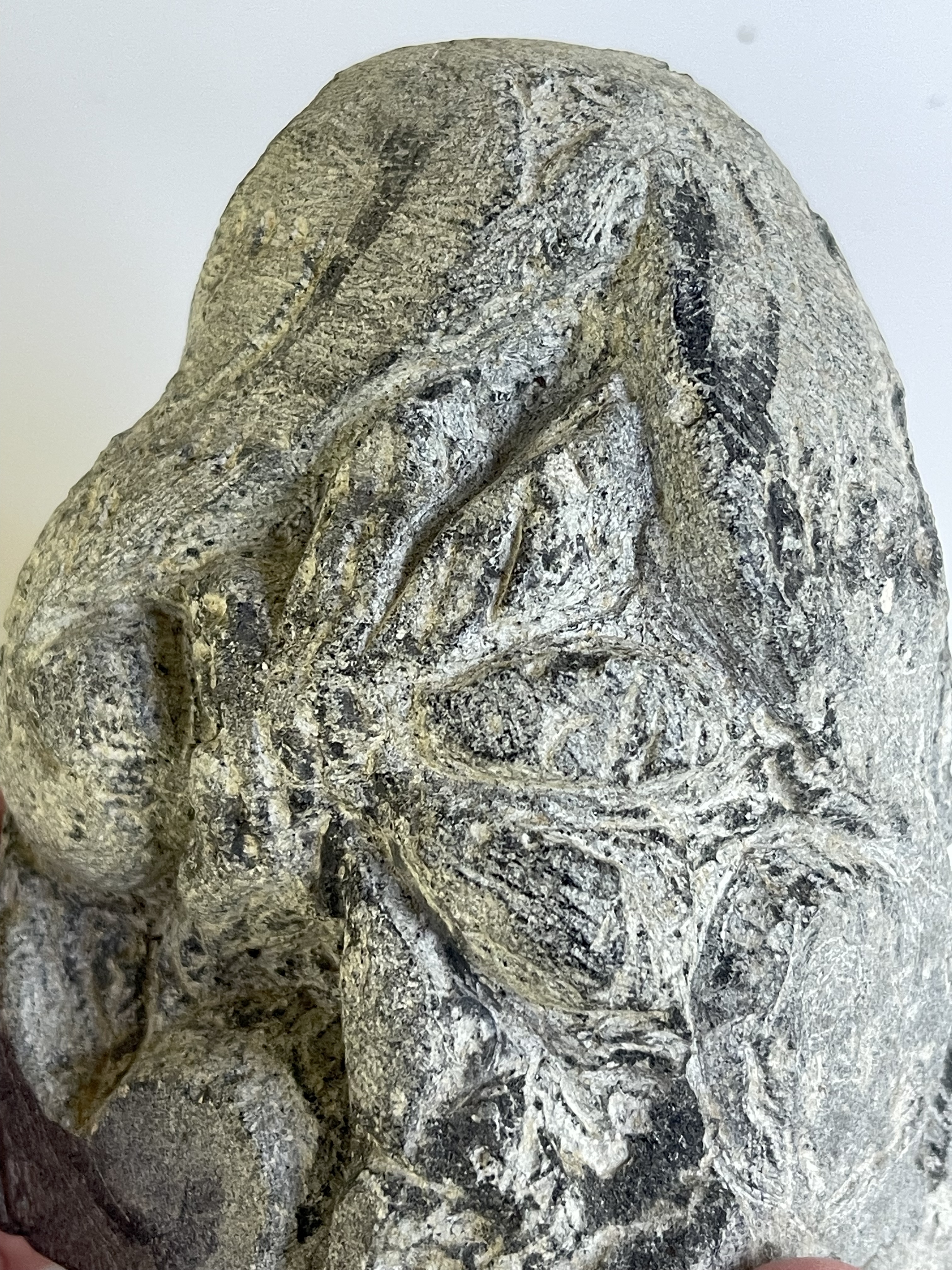
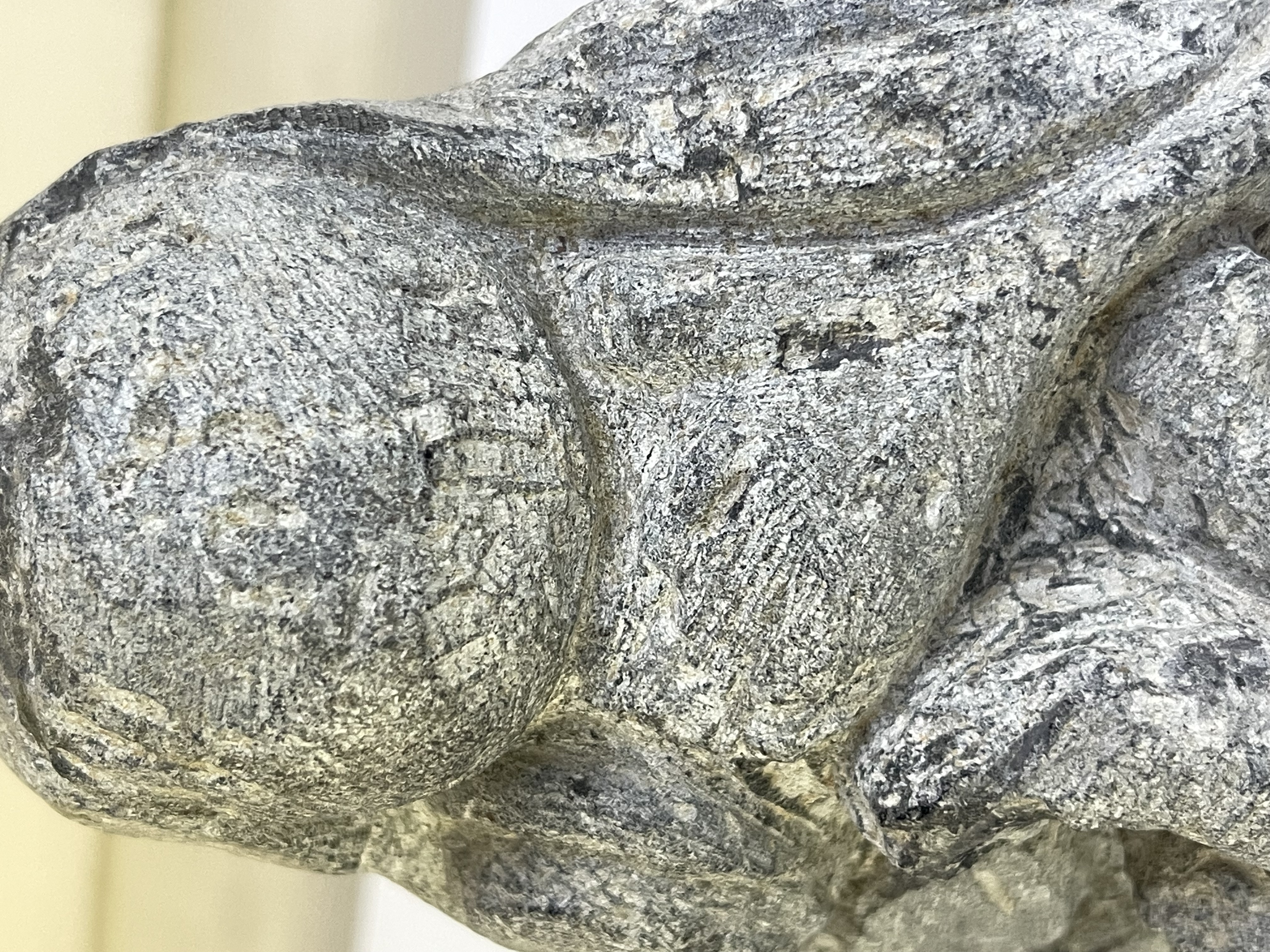
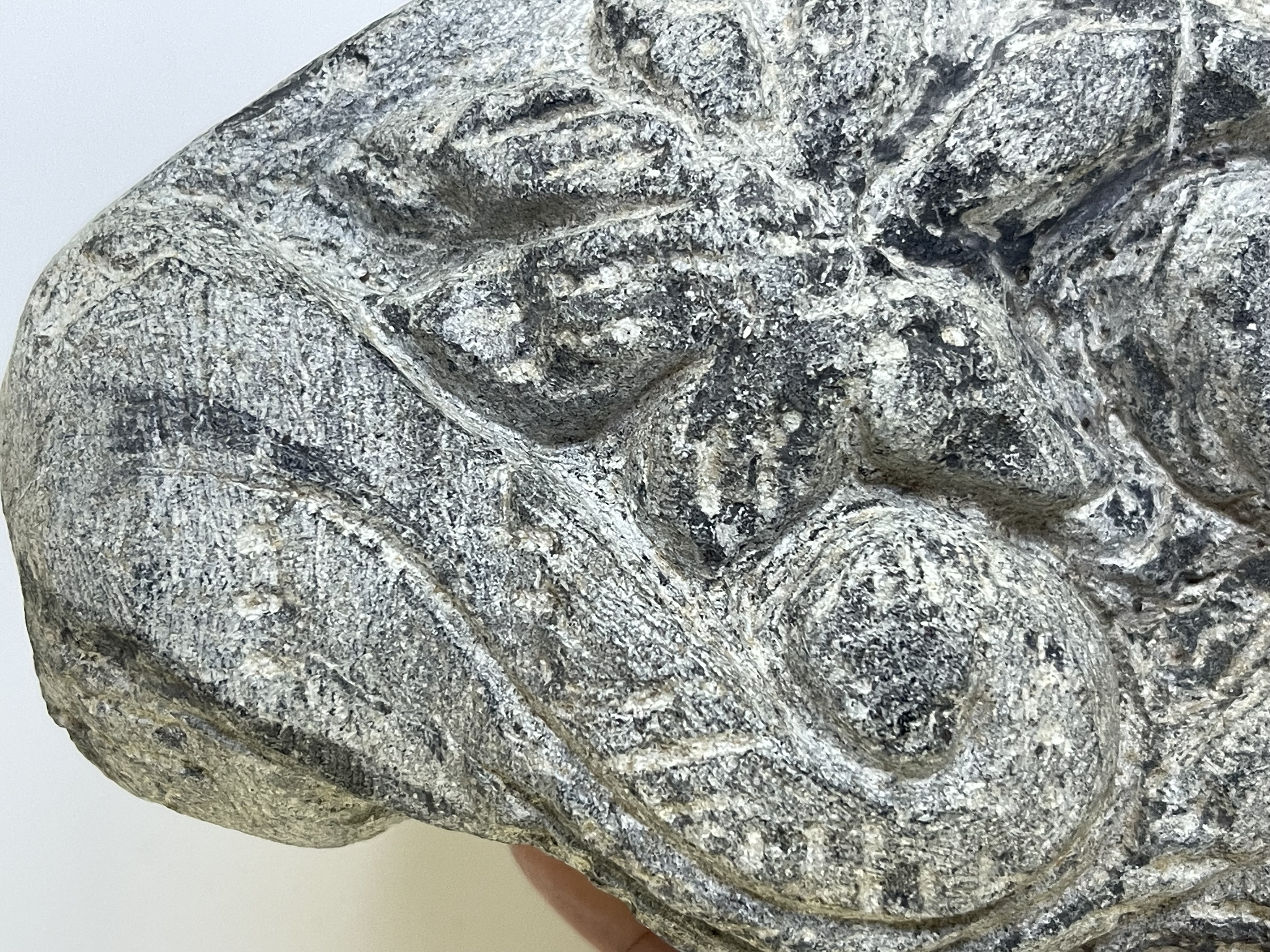
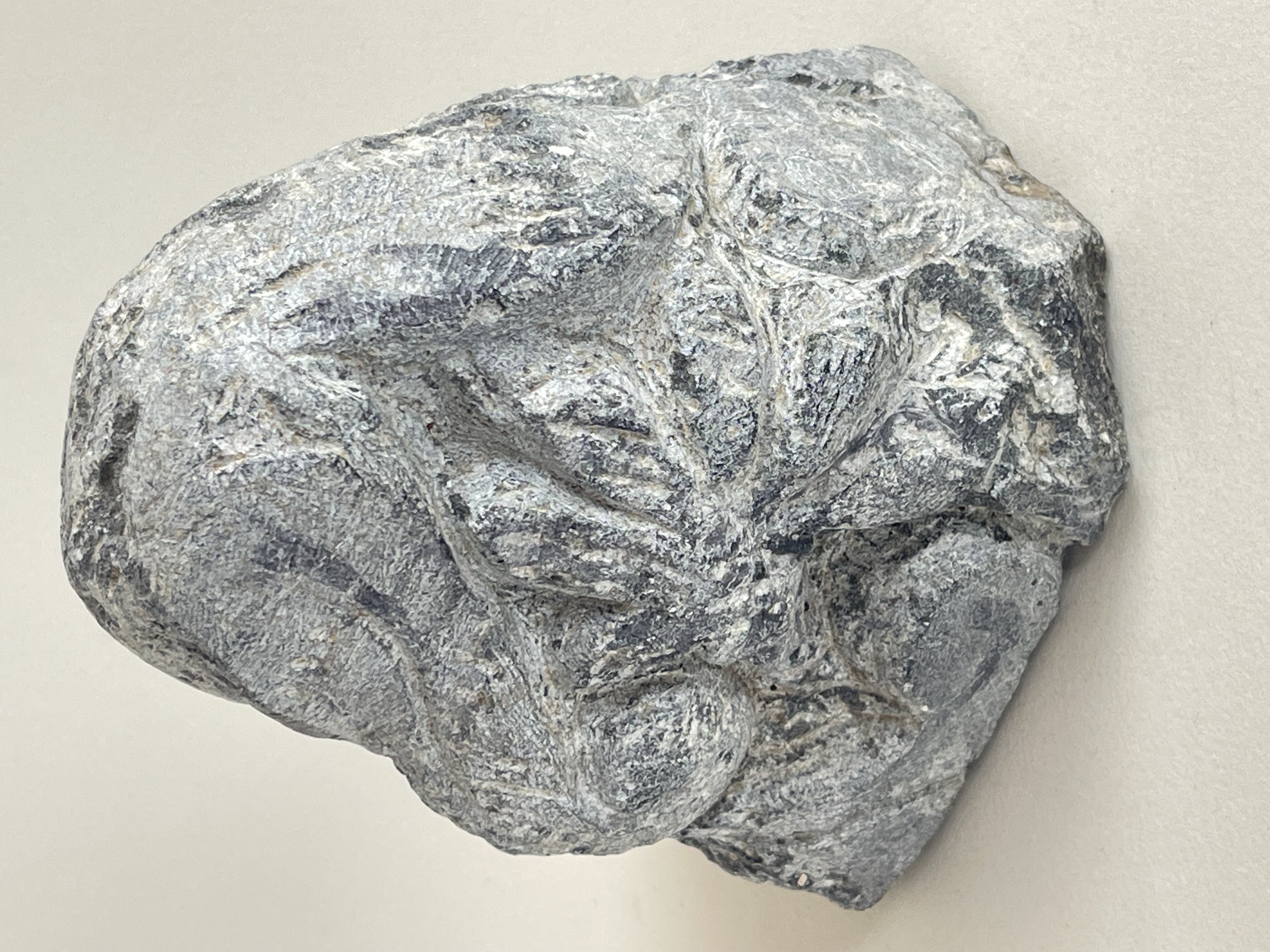
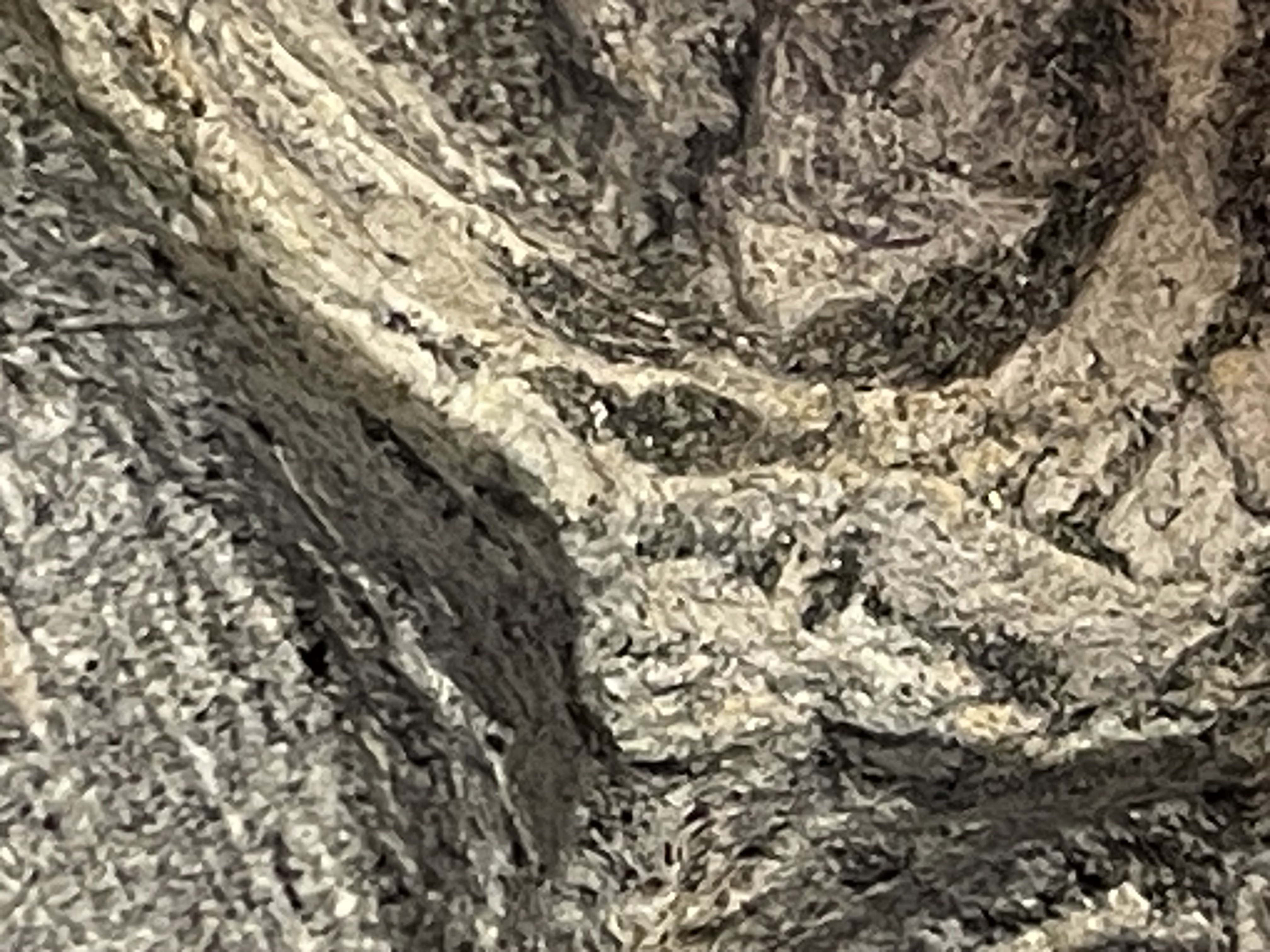
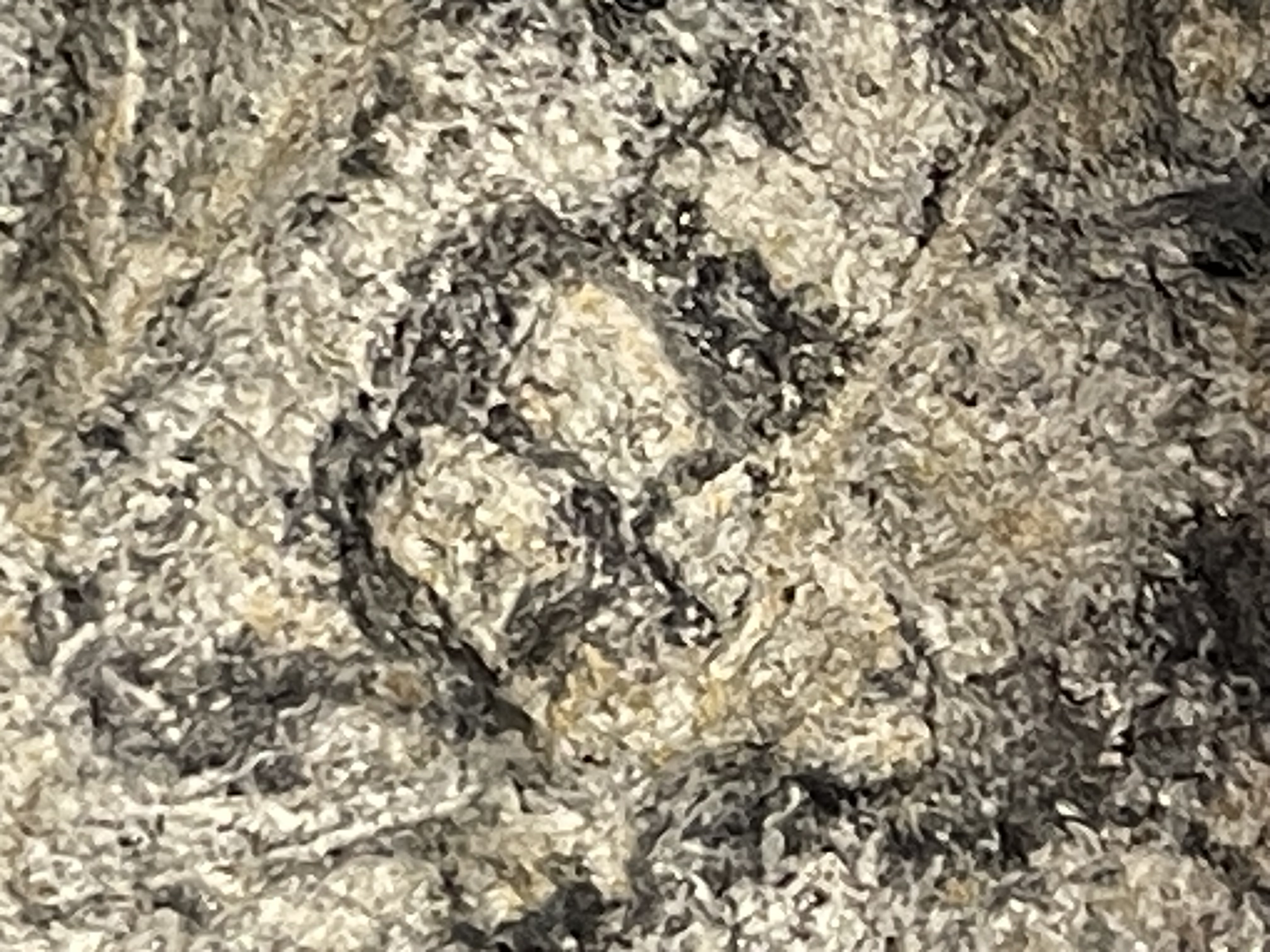
The figurine exhibits substantial alteration and loss of carved stone, especially on the reverse, where areas of the original relief have been heavily reduced. The projecting surfaces are rounded and abraded, while protected recesses retain rougher granular textures and lighter-colored surface material. Cracks, small fractures, pits and local stone losses occur throughout. The irregular underside shows reddish-brown staining in places. The uneven survival of the carving is an important aspect of its physical history, though it does not independently establish the date of manufacture.
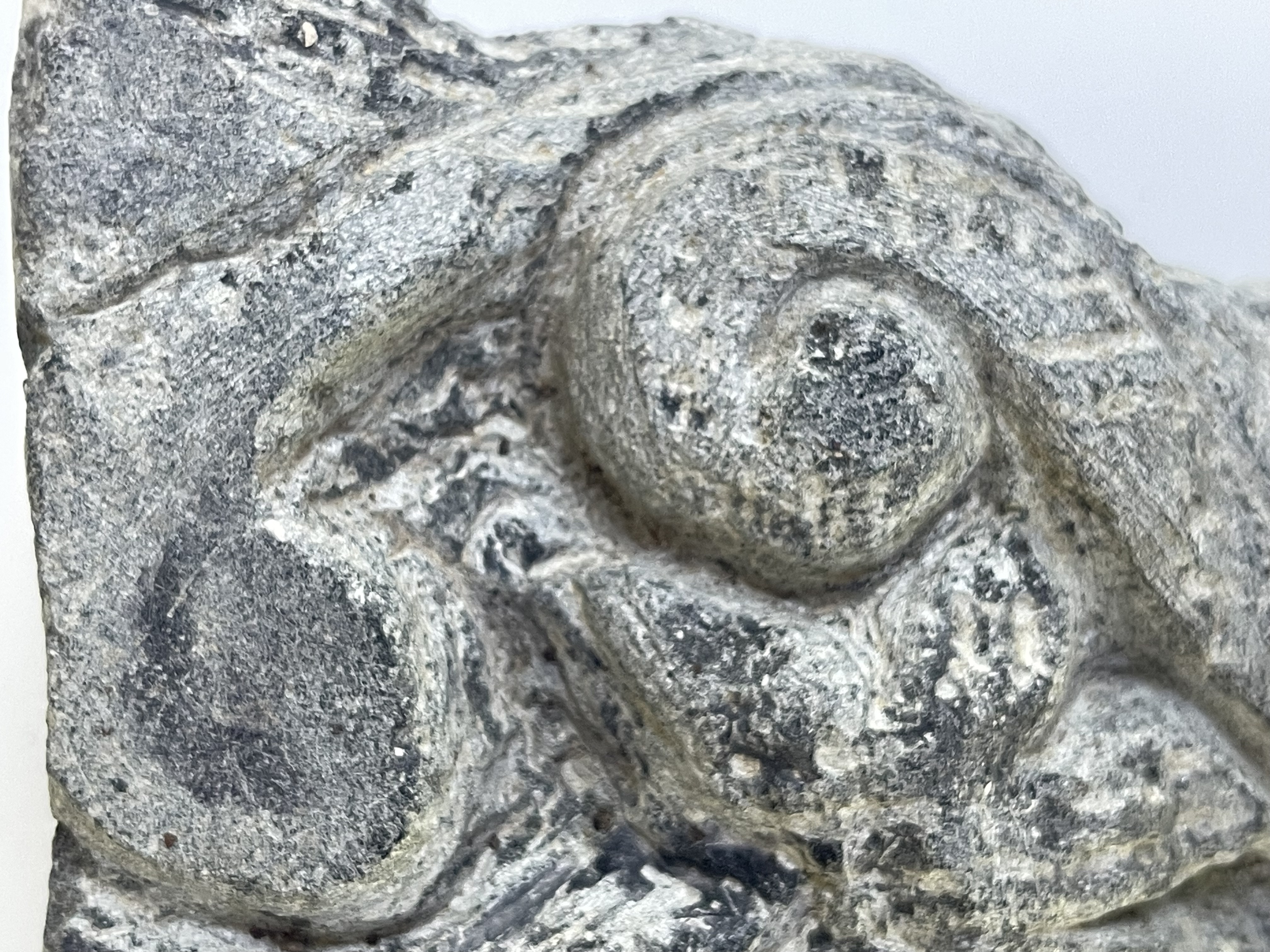
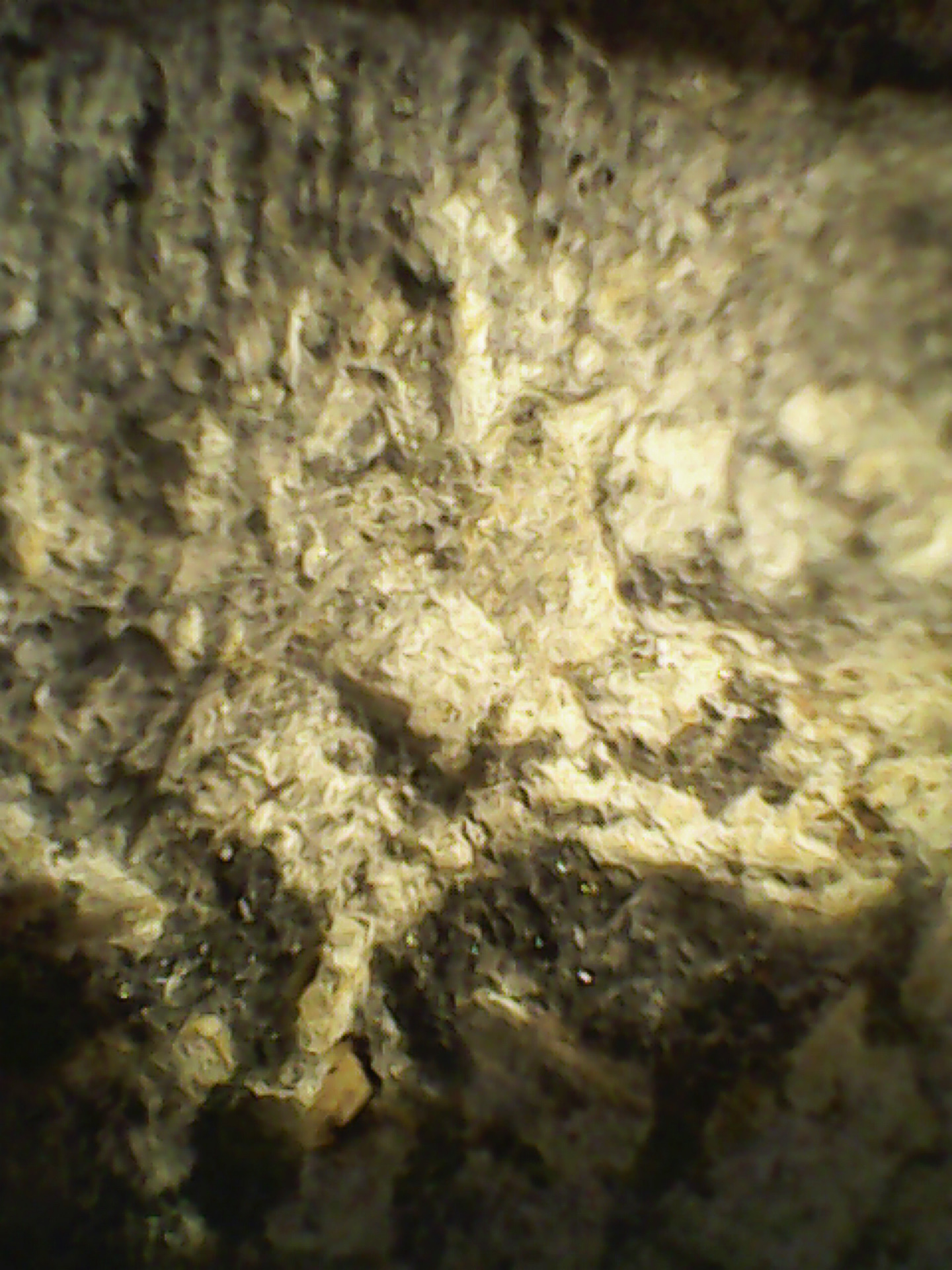
Under approximately 30× magnification, minute reflective inclusions are visible within protected passages as well as on exposed surfaces. Some damaged and worn areas reveal darker gray stone beneath the lighter material remaining in recesses. The composition survives in substantial three-dimensional form despite these losses.
Description
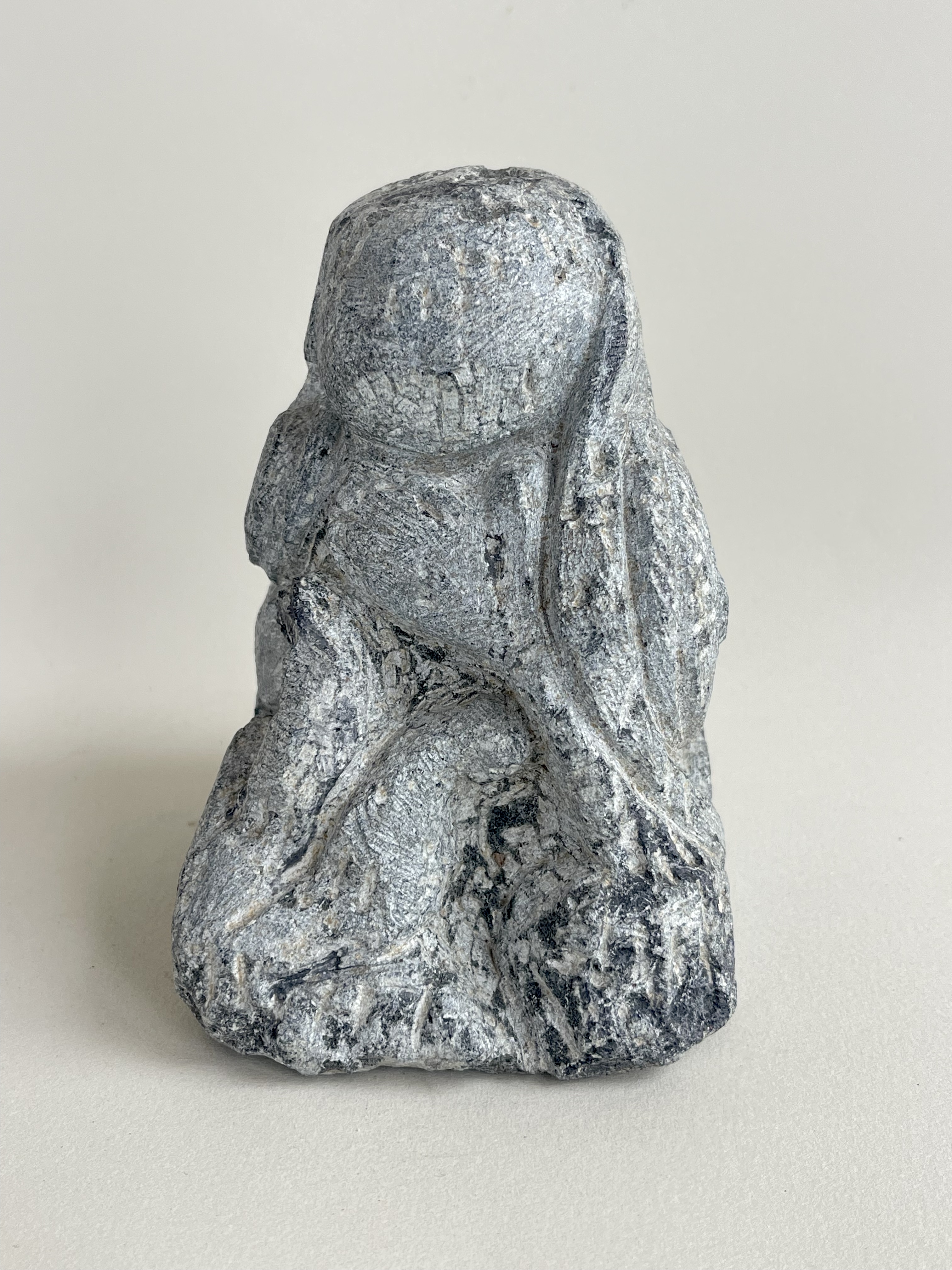
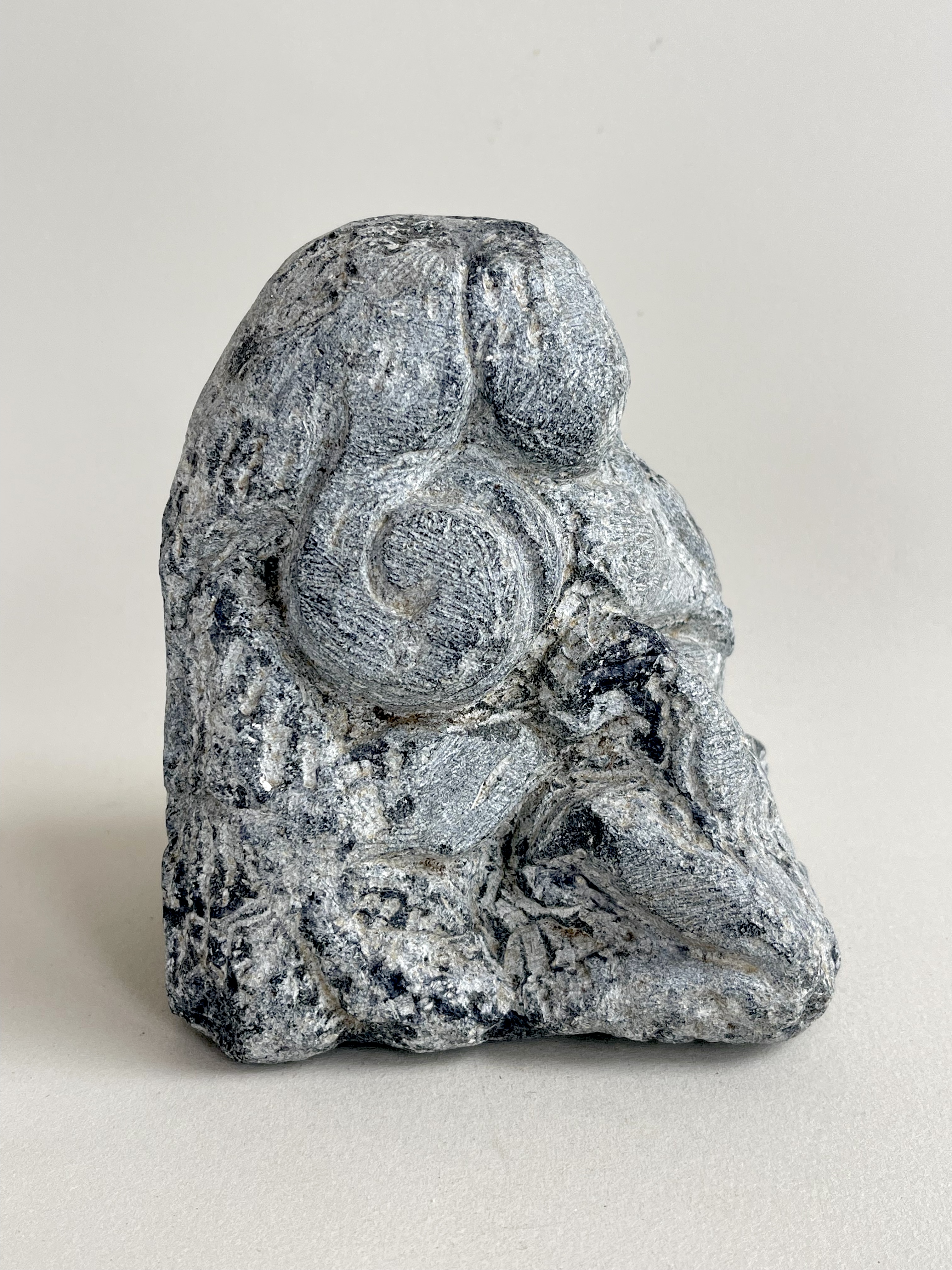
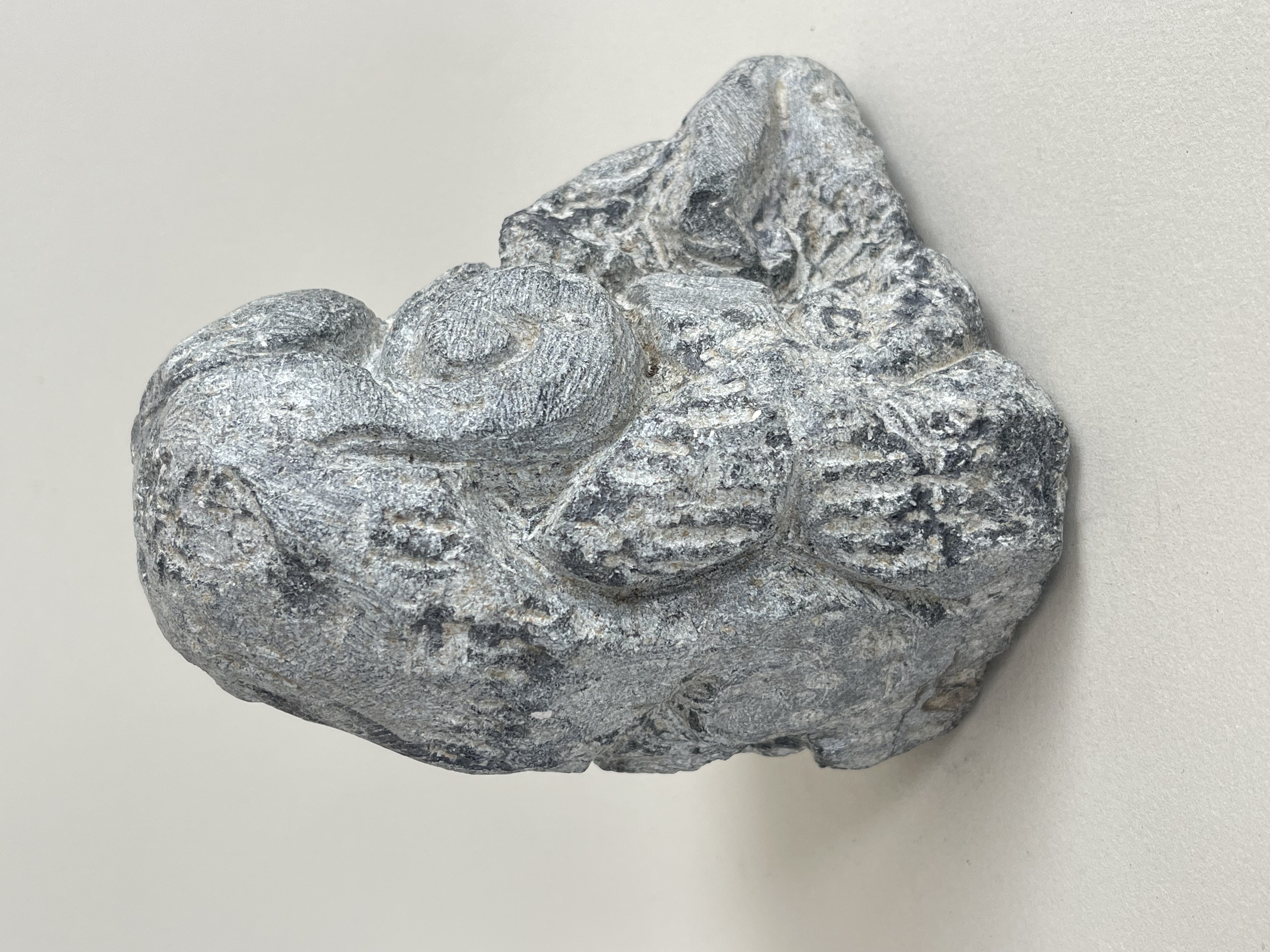
An unusual, densely carved stone sculpture measuring approximately 5½ inches in height and weighing about 2.2–2.3 kg. It is made from a gray, apparently crystalline stone with a complex arrangement of deeply excavated passages, broad curved ridges and rounded projecting masses. Carving extends across the sides and reverse; the sculpture was conceived in the round rather than as a frontal relief.
The principal orientation is defined by a figurative composition interpreted as a squatting woman, with both knees raised toward the abdomen and the left hand brought up near the chest. The contracted body is surmounted by a disproportionately large, bulbous head with a broad rounded crown. Short, irregular marks at the lower front of the head resemble exposed teeth, although the original facial treatment has been strongly altered by wear and remains difficult to reconstruct.
Two petal-like or floral configurations and a series of prominent spiral forms are integrated into the carved mass. Their contours are established by considerable removal of surrounding stone, producing strong raised curves and deeply recessed channels. Some circular areas have distinct central depressions or bosses. From different angles, the petal and spiral elements appear to connect with neighboring forms or pass behind the anthropomorphic figure; portions of the original arrangement are now interrupted by erosion and loss. The surviving carving is unusually intricate, with different aspects of the stone revealing substantially different visual relationships.
The reverse is much more heavily deteriorated, though sections of its original worked relief remain recognizable. The base is roughly rectangular in overall footprint but irregular in outline and texture. The relation between the apparent female figure and the surrounding motifs is unresolved, as are the sculpture's original function, cultural origin and age.
Rarity & Scholarly Significance
The sculpture has resisted identification despite extended investigation and exchanges with specialists in different archaeological fields. The unusual relationship of the contracted female figure, enlarged head, spiral elements and floral carving has not produced a convincing comparison for the complete composition. No secure claims of unique rarity can presently be made in the absence of an established cultural classification. Its striking sculptural vocabulary and the material questions raised by its condition nevertheless make it an important object within the Collection's ongoing research.
Scholarly Note — Ongoing Investigation
An extended documentation and scholarly correspondence effort has examined the morphology and material characteristics of the carving. Individual formal comparisons have been considered, but no accepted chronological or geographical attribution has emerged. Microscopic photographs record a fine granular structure and reflective inclusions in exposed and protected areas. Preliminary measurements of weight and displaced volume indicate an estimated density of approximately 2.9–3.1 g/cm³. Neither the rock type nor geological source has yet been confirmed by laboratory analysis.
Prehistoric manufacture remains the principal working hypothesis. The extensive wear and losses are relevant to investigation of the carving's history, but geological age of the material must not be equated with age of carving. The public catalogue records the visual interpretation and unresolved identification without assigning a specific culture or date.