Antique Mid-19th-Century Jewish Cast-Brass Hanukkiah — Central / Eastern European Tradition, c. 1820–1870
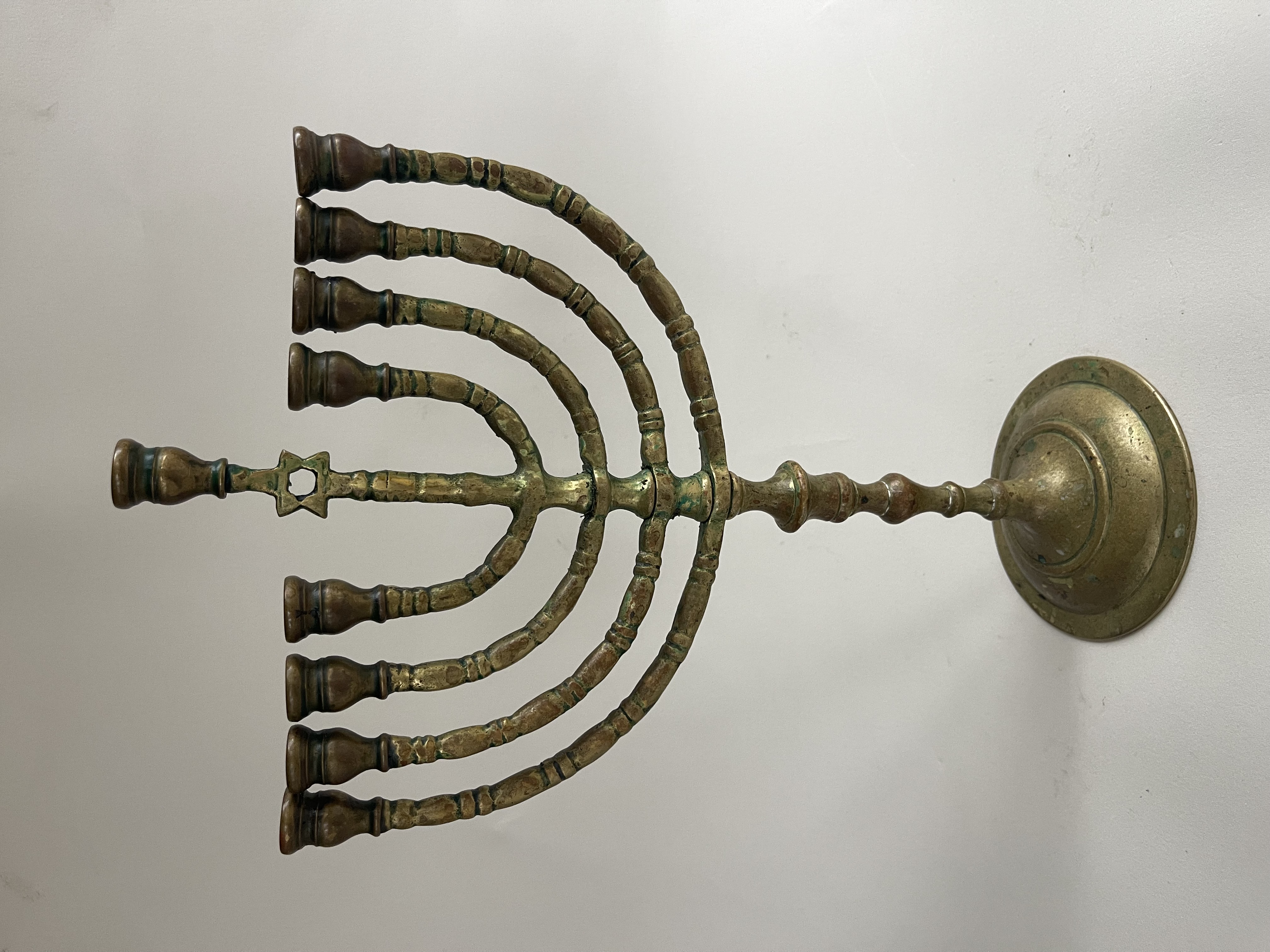
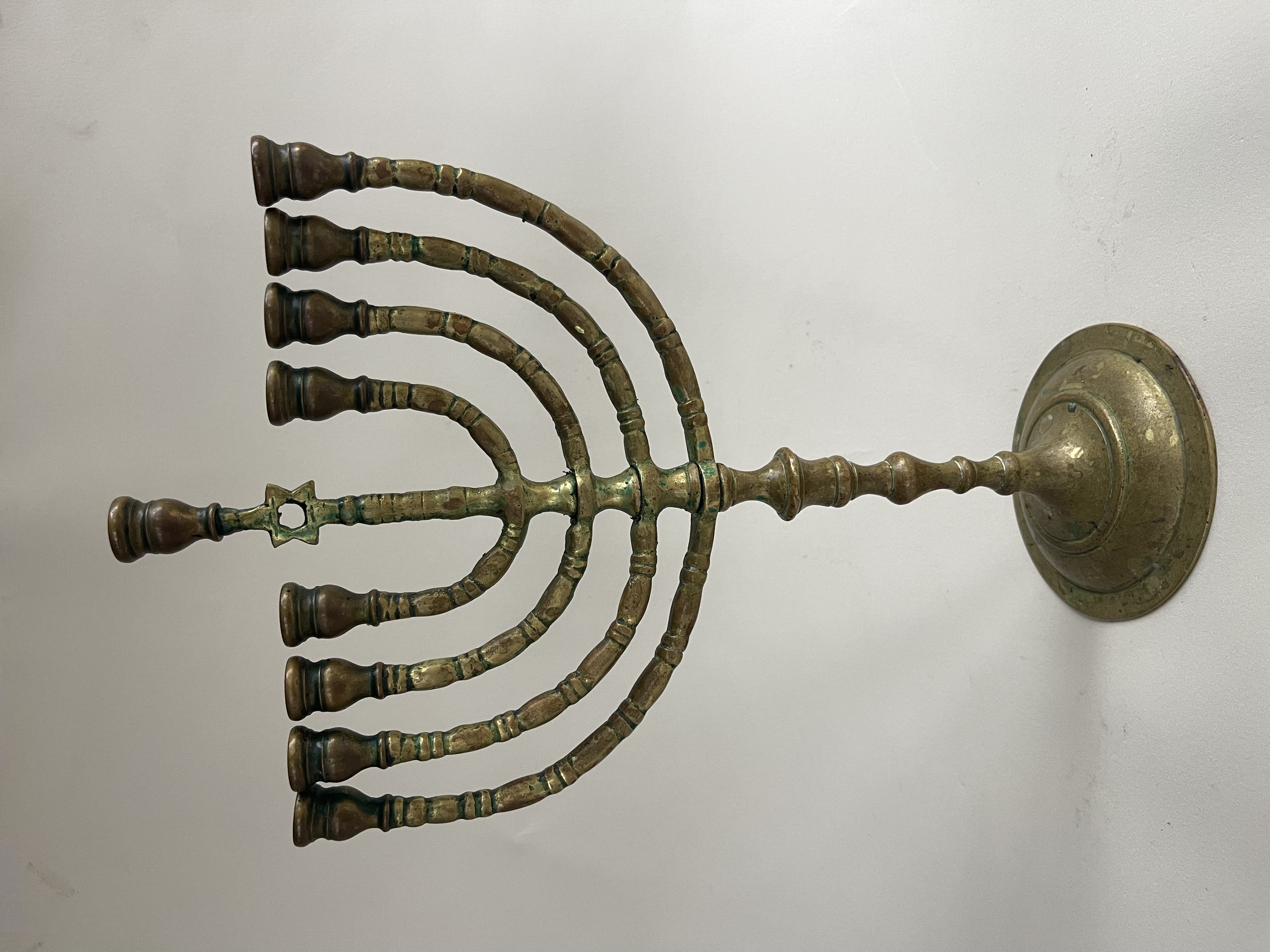
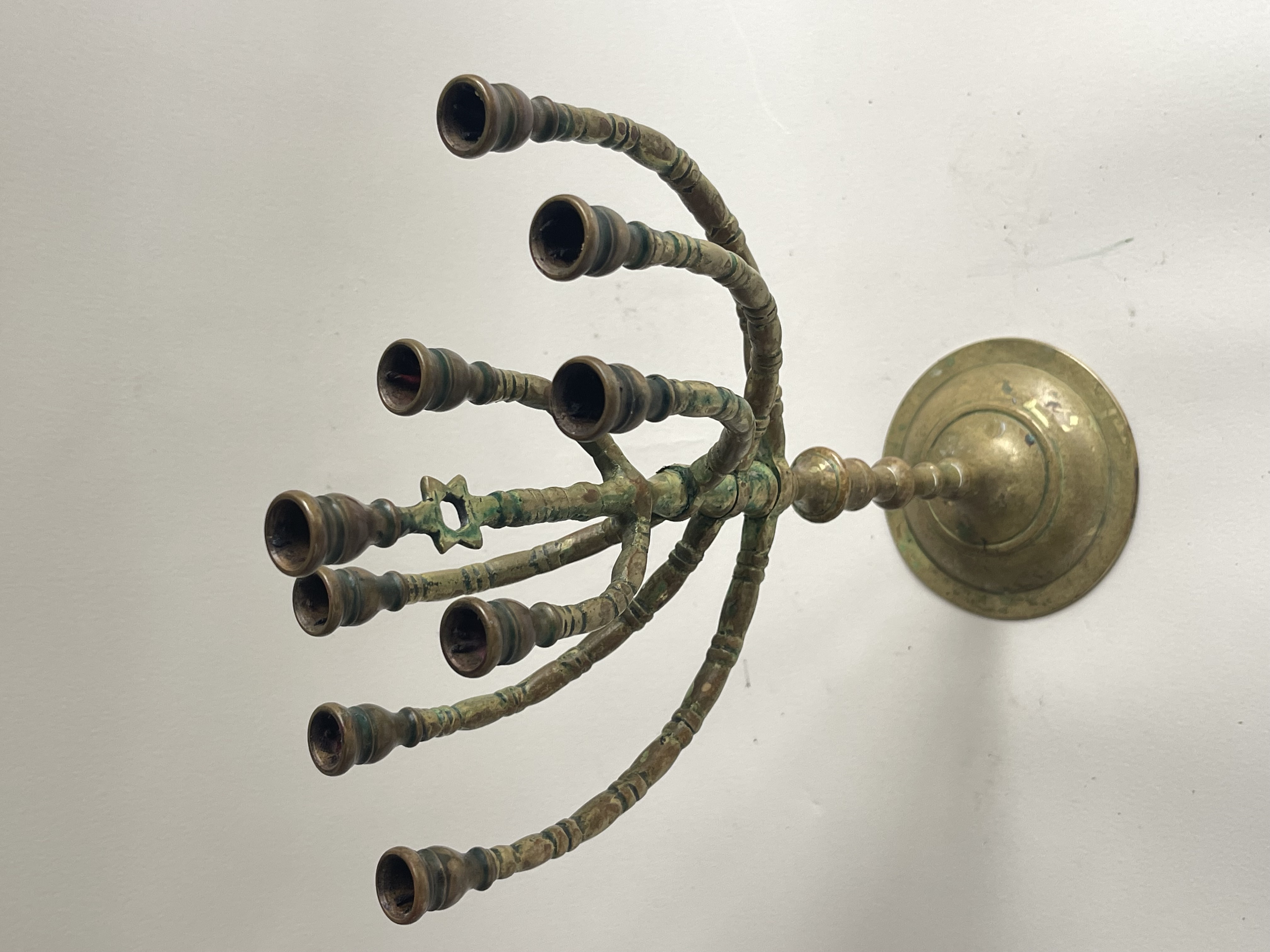
A substantial nine-light Jewish Hanukkah menorah, traditionally manufactured in cast brass, with four independently cast pairs of ascending arms, an elevated central shamash, and an integral pierced Star of David.
Attributed to the Central or Eastern European Jewish metalworking tradition, possibly Poland or Galicia, during the second and third quarters of the 19th century.
The Hanukkiah displays restrained decorative workmanship rather than elaborate architectural ornament. Its visual character derives from the repeated ringed sections along the arms, deeply formed lighting receptacles, balanced ascending arrangement, and baluster-shaped central pedestal.
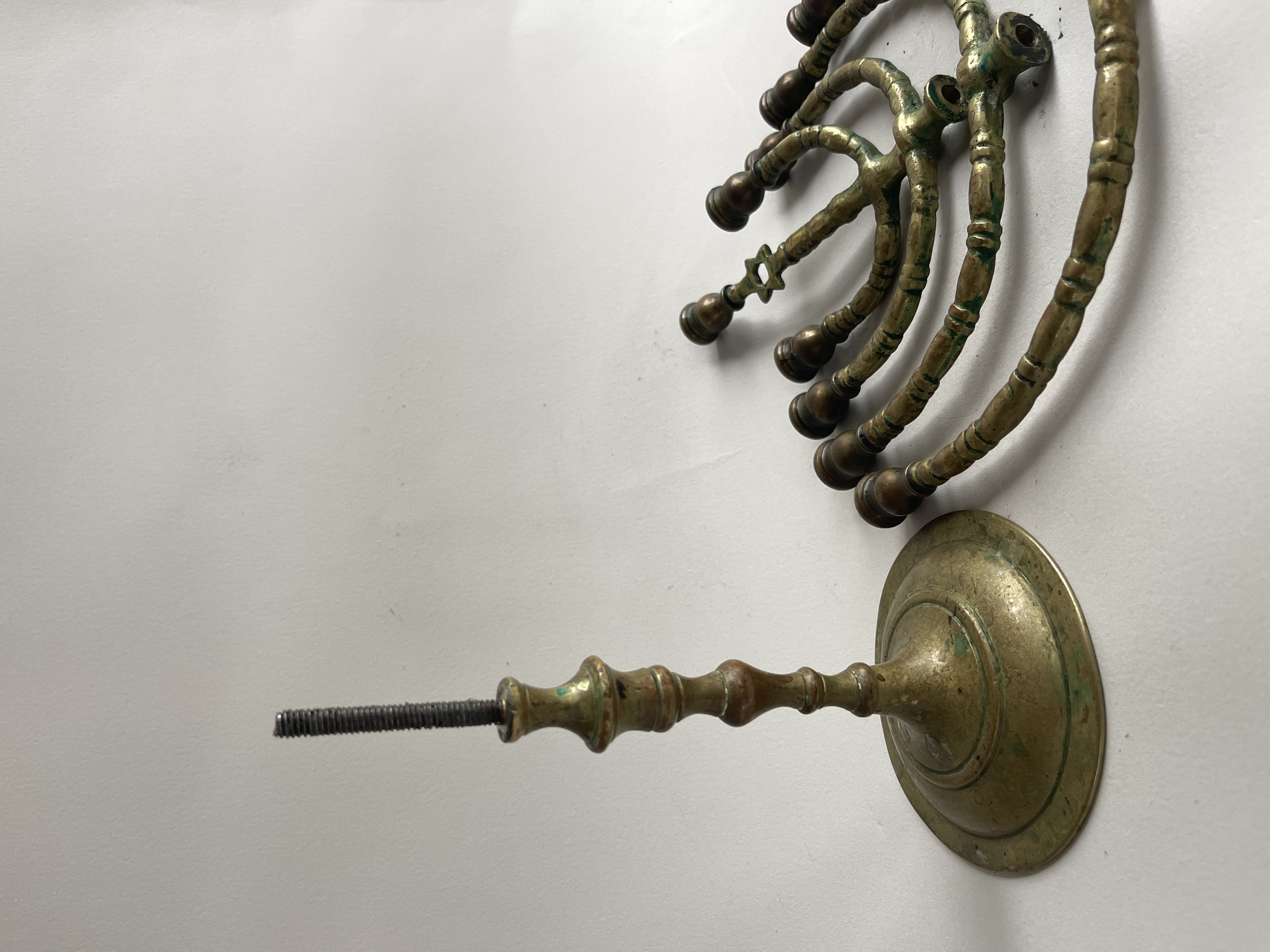
Each pair of arms, including its two lighting receptacles, appears to have been cast as a continuous solid-brass component. The four pairs are fitted over a central threaded metal rod through individually finished, unthreaded openings. An upper threaded fastening element secures the complete assembly.
Arrangement of the Arms: In its traditional display arrangement, all four pairs of arms are aligned in a single plane, forming the familiar symmetrical eight-light Hanukkiah with the elevated central shamash. The paired arms can also rotate independently around the central axis. Photographs showing the arms spread or staggered are deliberate demonstrations of the movable construction, not the traditional lighting arrangement.
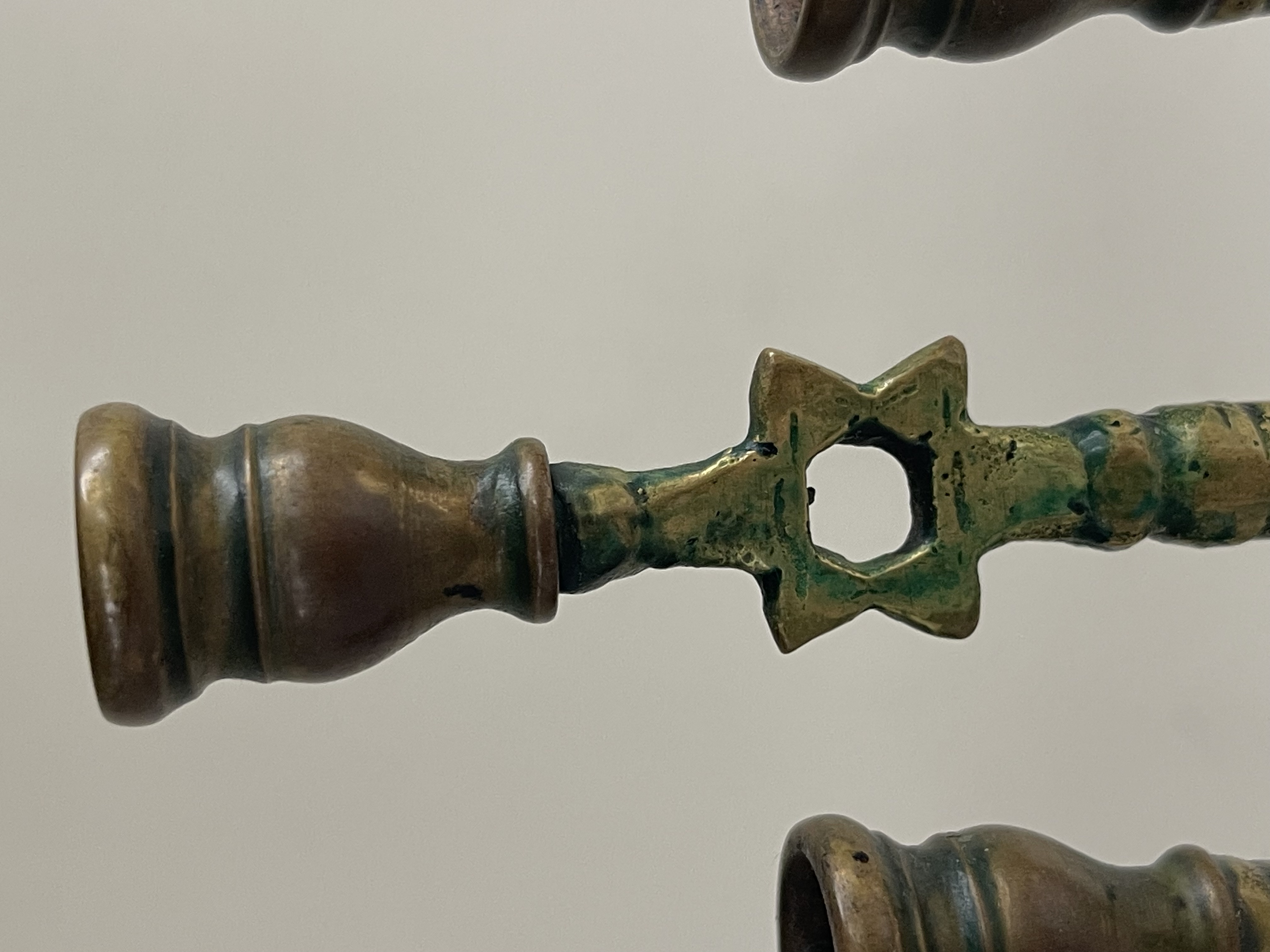
The elevated central shamash incorporates a substantial pierced Magen David (Star of David). The star's asymmetrical internal opening, irregular edges, and softened contours preserve evidence consistent with casting followed by manual finishing.
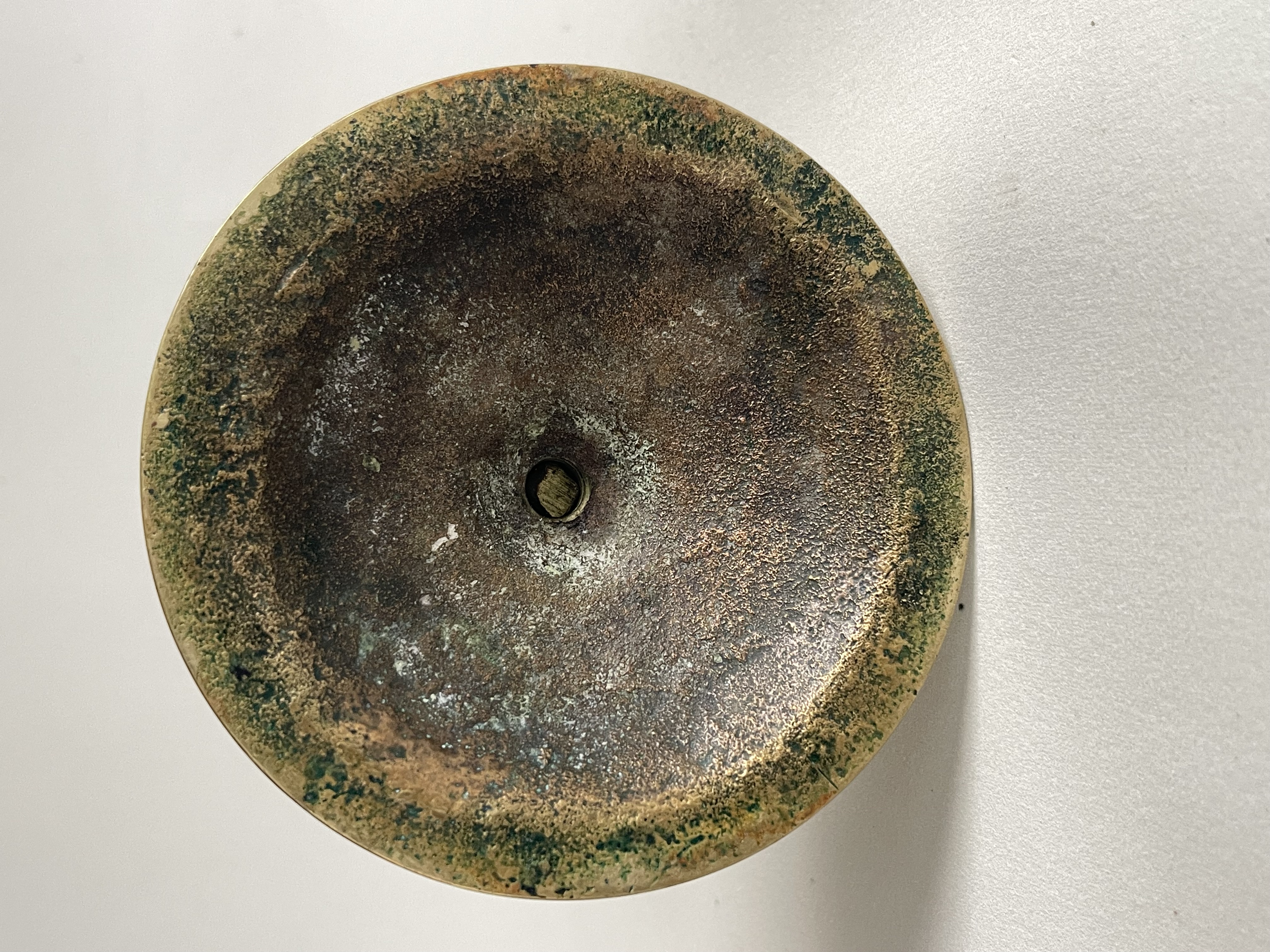
The lower pedestal is formed with a succession of rounded and narrowed sections terminating in a broad, dished circular foot. Its surfaces appear continuous, without obvious external soldered joints.
The lighting receptacles are unusually deep, with openings approximately ½ inch in diameter. Their proportions could accommodate substantial historical candles and are mechanically compatible with certain oil-and-wick arrangements. An original dual-purpose function has not been established.
The surface shows extensive historical handling and cleaning wear, with smooth exposed high points contrasting against darker protected recesses. Green copper-alloy corrosion is particularly concentrated around the central assembly, where adjoining cast components have retained older surface deposits.
The object has been preserved with its accumulated patina and historical surface characteristics intact.
Dating
Mid-19th century, approximately 1820–1870. The proposed dating is based on the traditional solid-brass casting, hand-finished ornament, modular mechanical assembly, pedestal construction, and accumulated surface history. The construction is compatible with historical Jewish ceremonial metalworking traditions established before the middle of the 19th century.
Collector's Note
This Hanukkiah represents the tradition of substantial, individually manufactured Jewish ceremonial brasswork associated with Central and Eastern European communities.
Its restrained decorative vocabulary, solid cast construction, and mechanically assembled components distinguish it from lightweight decorative Hanukkah menorahs.
The object is particularly interesting for its surviving manufacturing details. The four paired-arm castings retain individually finished central openings and contact surfaces, while the central structure preserves an unusual combination of cast and mechanically fitted components.
The considerable smoothing of exposed metal, contrasting darker recesses, and localized green corrosion provide material evidence of prolonged handling, maintenance, and subsequent environmental exposure.
Such objects formed an important part of Jewish domestic religious life and were often preserved through successive generations. This example offers historical and collecting interest as an attributed pre-Holocaust European Jewish ritual object.
The attribution to Poland or Galicia is based on comparative decorative and manufacturing traditions and is not supported by a documented workshop identification.
Condition
Good antique condition with extensive age-related wear, softened high points, deep brown patination, and green oxidation concentrated in recessed areas and around the cast-brass assembly joints. Substantial solid-metal construction with individually cast arm pairs and hand-finished ornament. The central threaded fastening system remains functional. No obvious major losses or structural breaks observed. Preserved without aggressive cleaning or polishing. Please examine all photographs.