Research (No loan fee)
Yes
This small archaeological metal object must be handled with care and securely mounted for display. Do not clean, wet, or apply any substance to the surface. Use gloves and appropriate supports during handling.
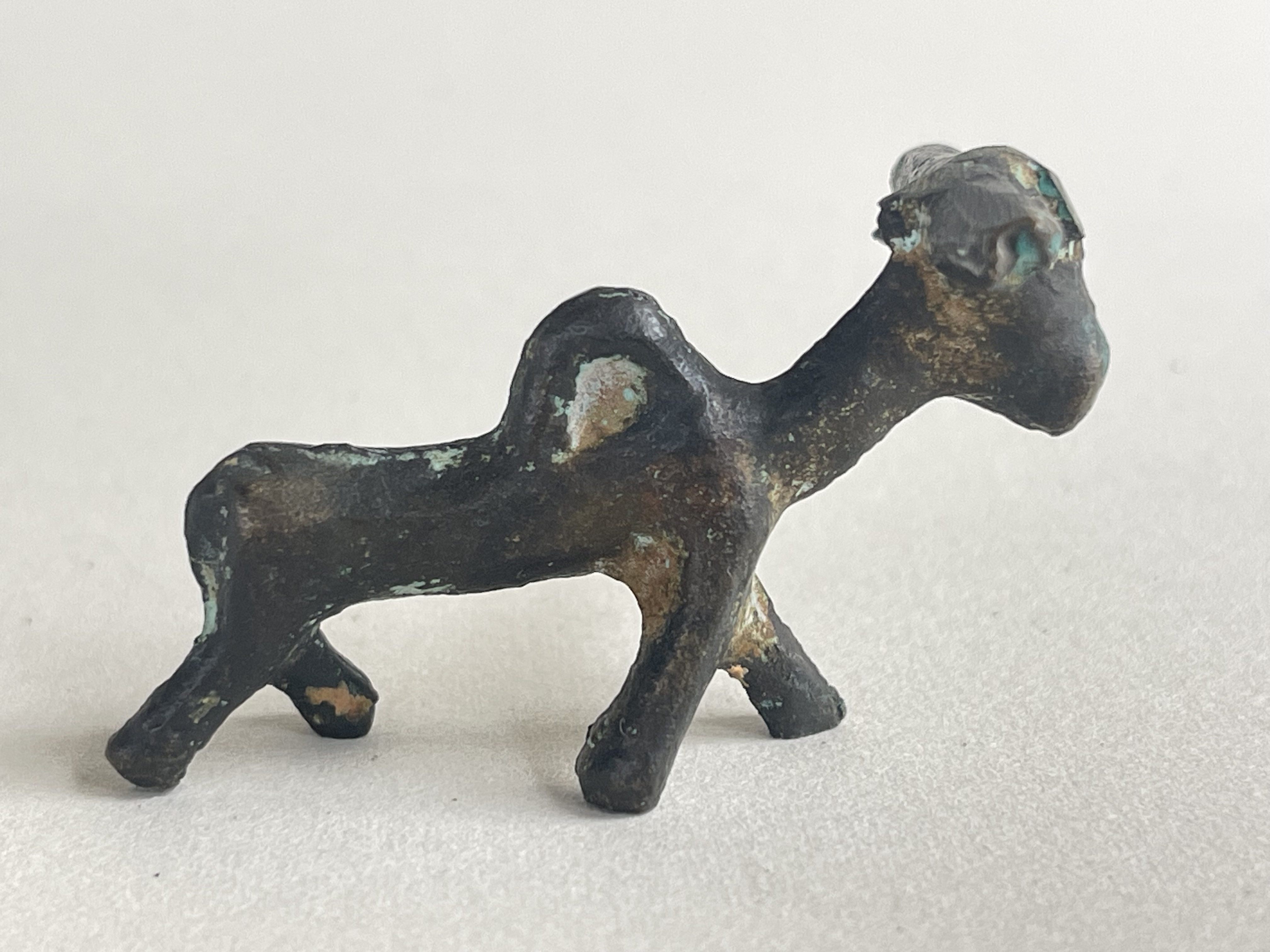
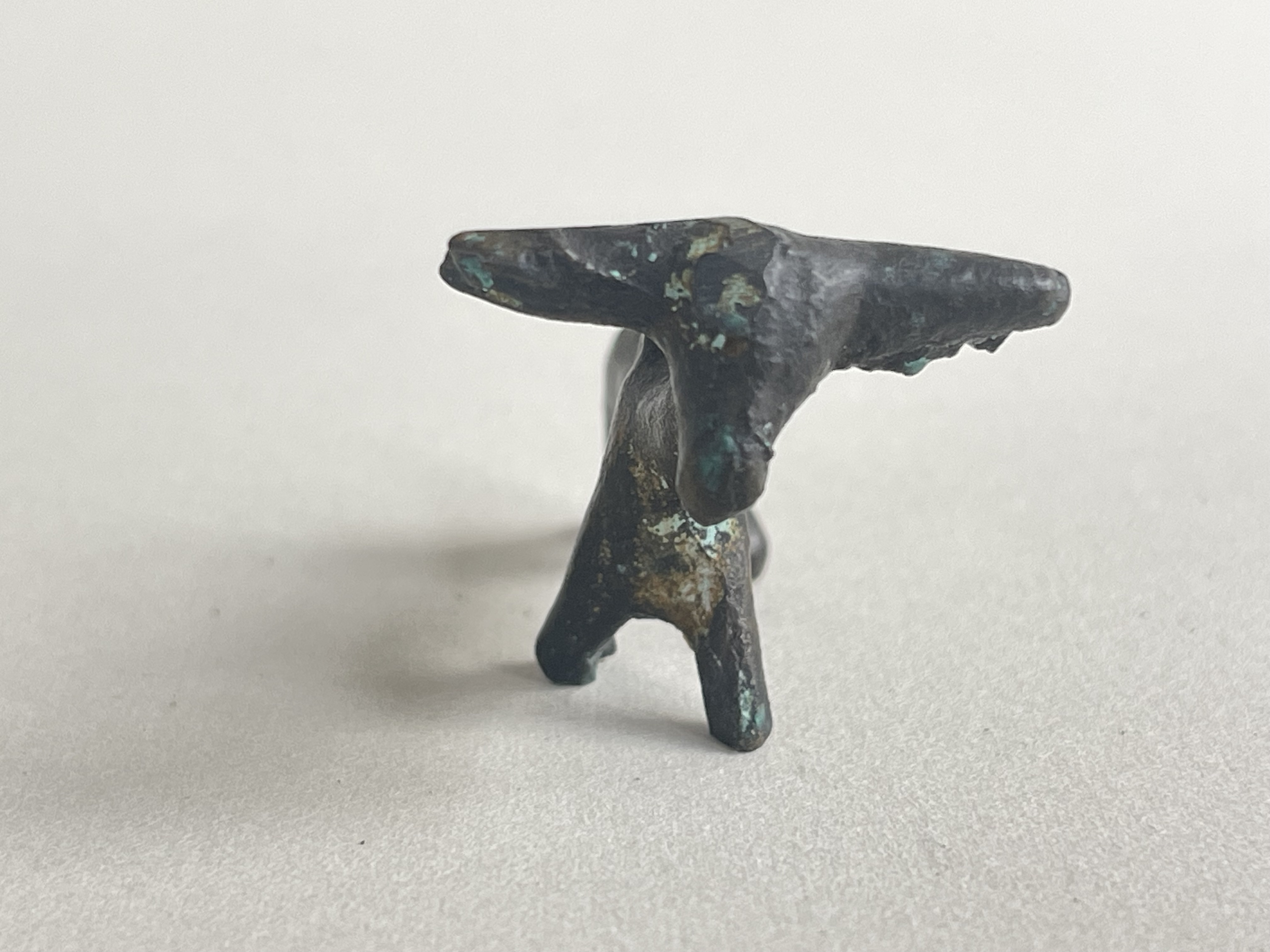
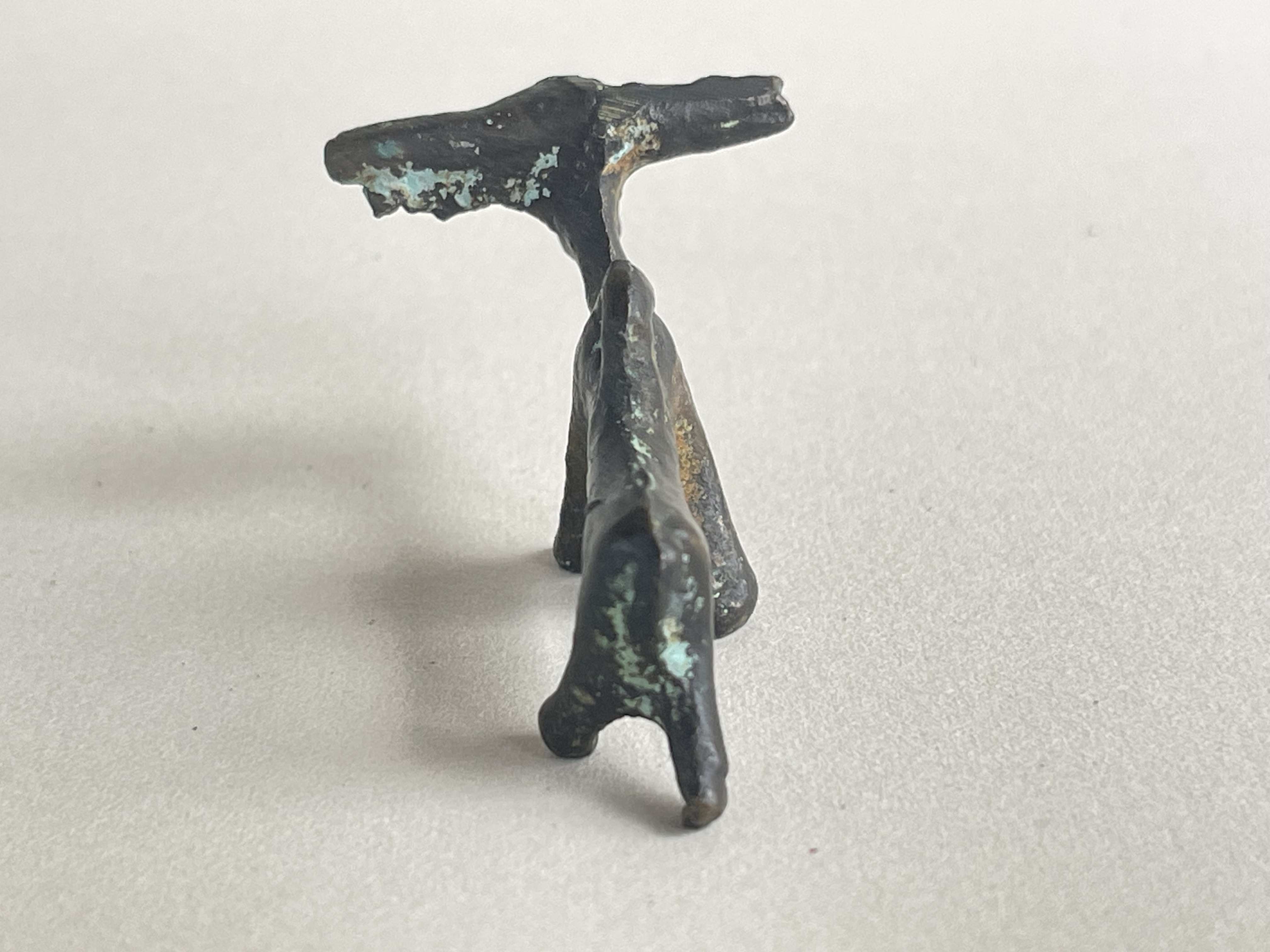
Levantine Bronze Bull Votive Miniature – Middle–Late Bronze Age, c. 1600–1200 BCE
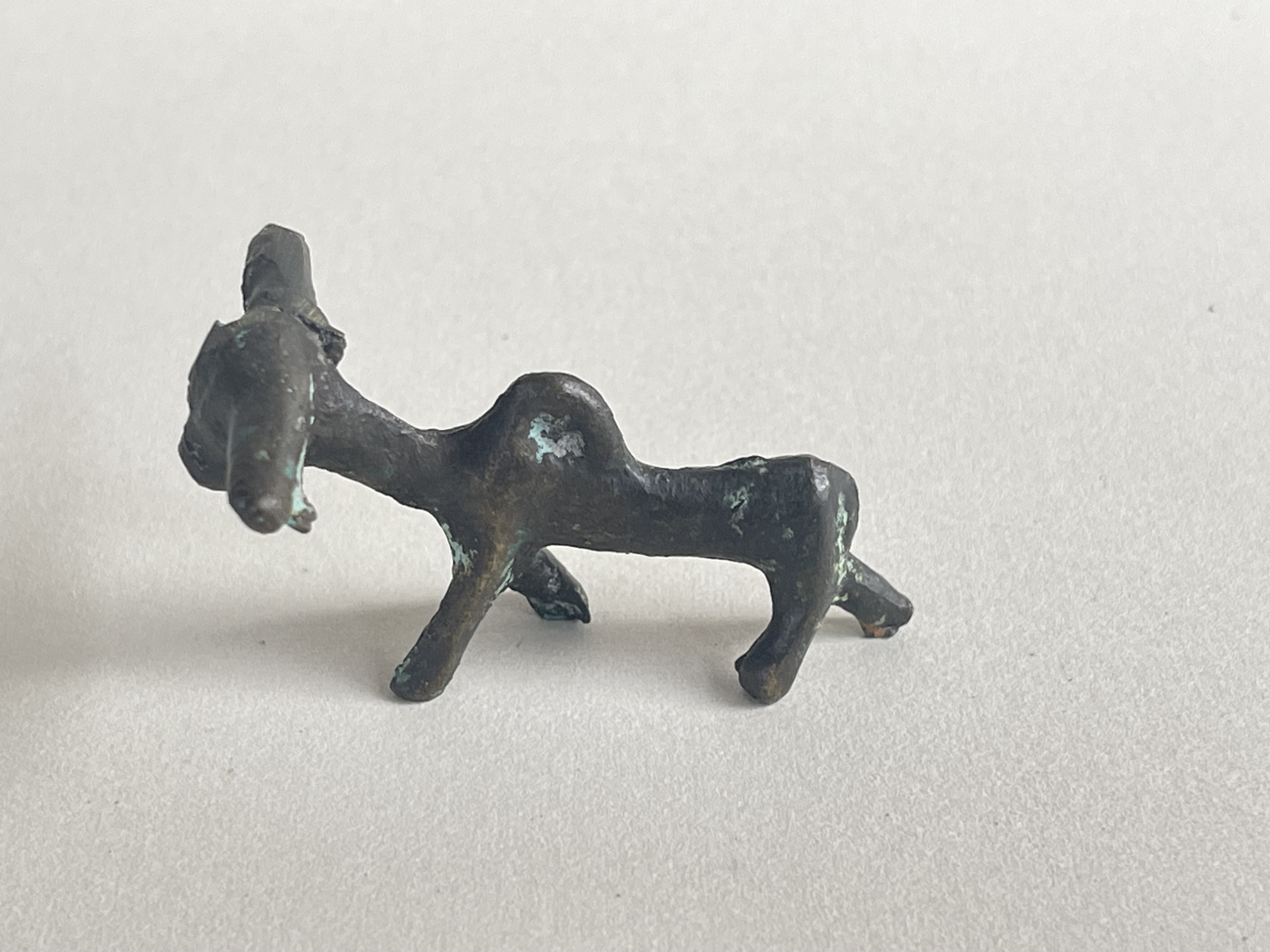
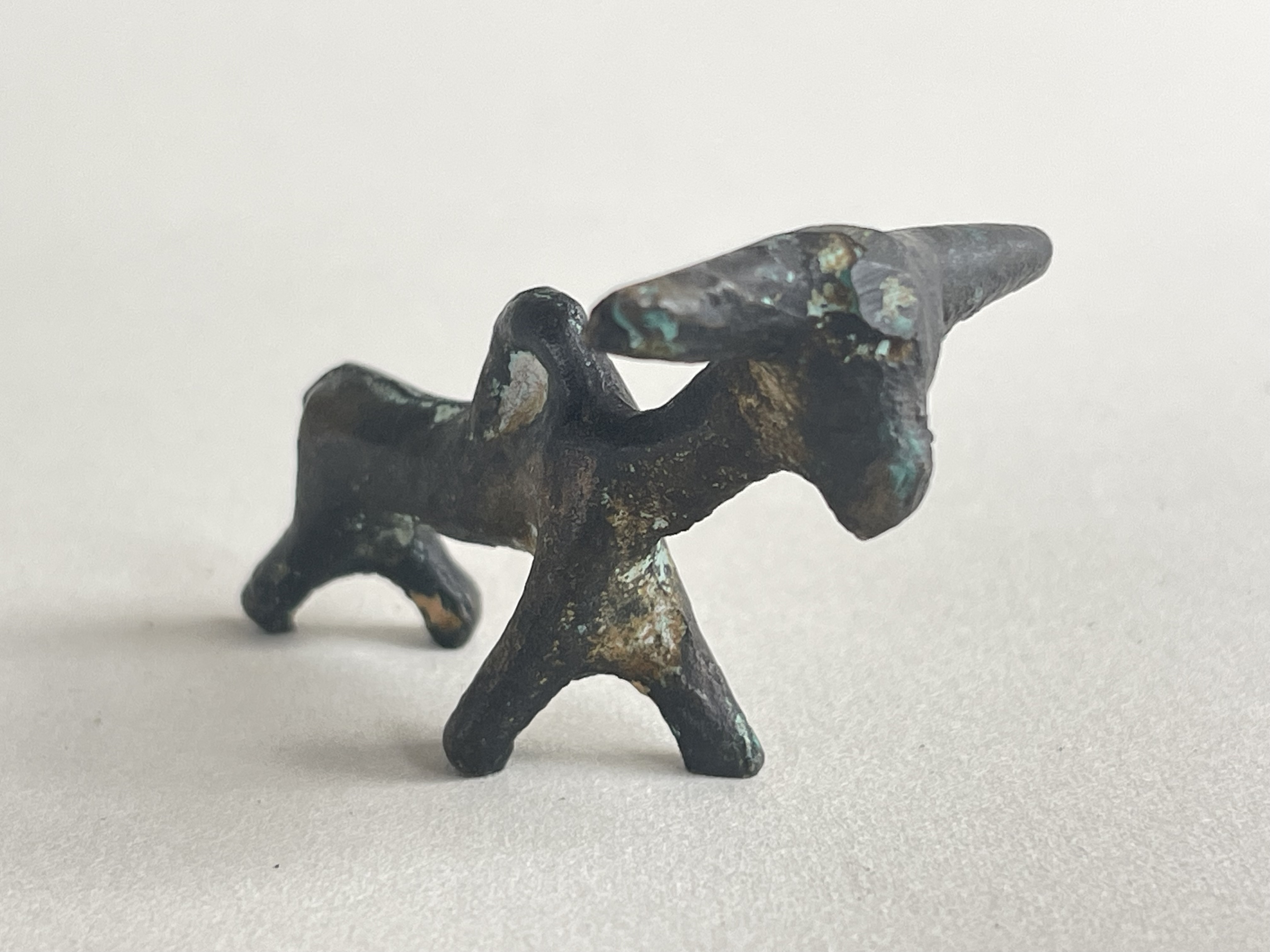
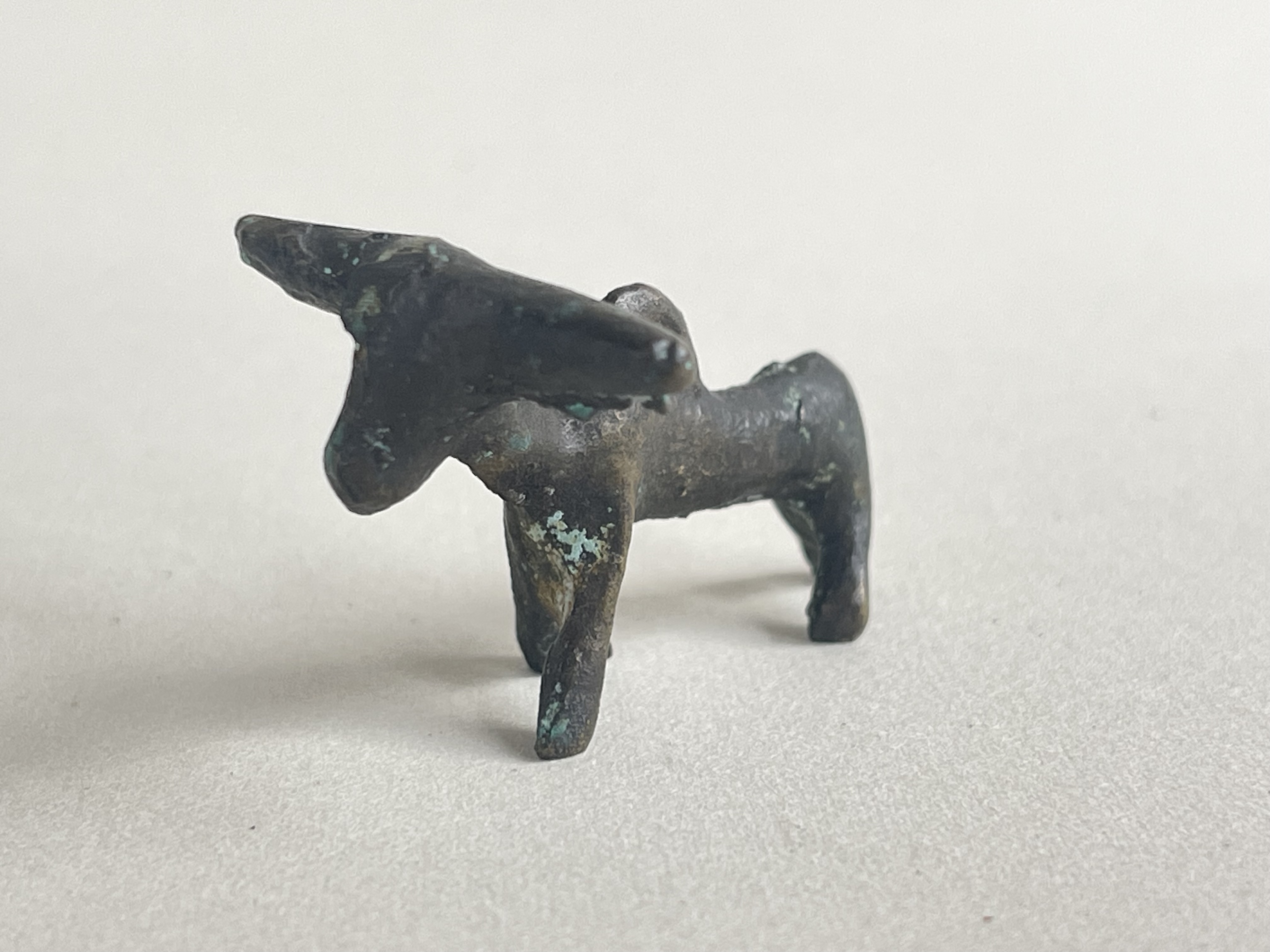
Solid-cast bronze miniature depicting a bull in a compact, schematic form. The figure presents a broad, weight-bearing torso, a thickened neck, and a lowered head with abbreviated horn stubs. The legs are short and firmly planted, creating a low center of gravity and a sense of compressed mass. Anatomical detail is intentionally reduced, emphasizing volume and presence rather than naturalistic modeling.
Cast bronze, solid (not hollow). The figure was produced using hand-modeled wax, evidenced by asymmetries in leg placement and body massing. No modern tooling, rotary marks, or casting seams are visible. The surface retains stratified burial corrosion consistent with long-term interment.
Bull imagery occupies a central role in Levantine ritual and symbolic systems during the Bronze Age, where it functioned as an emblem of strength, fertility, territorial stability, and divine potency. Miniature bronze bulls of this type are understood as votive or devotional objects rather than representational figurines, with scale serving to condense symbolic meaning rather than diminish it.
The compact massing, lowered head, and abbreviated horn forms emphasize weight and presence over motion, aligning this example with Bronze Age cultic conventions in which the bull embodied grounded power and regenerative force. Such miniatures are known from shrine, household, and foundation contexts across the northern Levant, particularly in regions where rural cult practice predominated over monumental temple architecture. Within this framework, the object should be understood as a deliberate ritual reduction—complete at its scale and intended to operate symbolically rather than descriptively.
This miniature bull represents an early and conceptually focused expression of Levantine ritual symbolism. Its strong abstraction, authentic archaeological surface, and regional coherence place it firmly within Bronze Age votive traditions of the Upper Galilee. The piece stands as a complete ritual object at its intended scale and offers significant scholarly and curatorial interest for collectors focused on early Near Eastern cultic material.
Archaeological condition. The surface displays stable, multi-layered patination with dark copper oxides and areas of green and turquoise copper salts. Localized mineral accretions are present across the torso and legs. Edges and contours exhibit natural rounding from age and corrosion. No restorations, modern breaks, or structural repairs observed.

Yes
This small archaeological metal object must be handled with care and securely mounted for display. Do not clean, wet, or apply any substance to the surface. Use gloves and appropriate supports during handling.
Yes
This small archaeological metal object must be handled with care and securely mounted for display. Do not clean, wet, or apply any substance to the surface. Use gloves and appropriate supports during handling.
Yes
This small archaeological metal object must be handled with care and securely mounted for display. Do not clean, wet, or apply any substance to the surface. Use gloves and appropriate supports during handling.
Yes
Professional photographs may be provided for scholarly or editorial reproduction on request.
Any published identification and chronology should be presented as provisional.
(Rental fees apply)
Yes
This small archaeological metal object must be handled with care and securely mounted for display. Do not clean, wet, or apply any substance to the surface. Use gloves and appropriate supports during handling.
(Rental fees apply)
Yes
This small archaeological metal object must be handled with care and securely mounted for display. Do not clean, wet, or apply any substance to the surface. Use gloves and appropriate supports during handling.
Distinguished objects available for short- or long-term rental to private residences, offices, hotels and exceptional spaces.
(Rental fees apply)
Yes
This small archaeological metal object must be handled with care and securely mounted for display. Do not clean, wet, or apply any substance to the surface. Use gloves and appropriate supports during handling.
Additional close-up images and surface documentation may be provided for qualified study.