Research (No loan fee)
Yes
This small archaeological metal object must be handled with care and securely mounted for display. Do not clean, wet, or apply any substance to the surface. Use gloves and appropriate supports during handling.
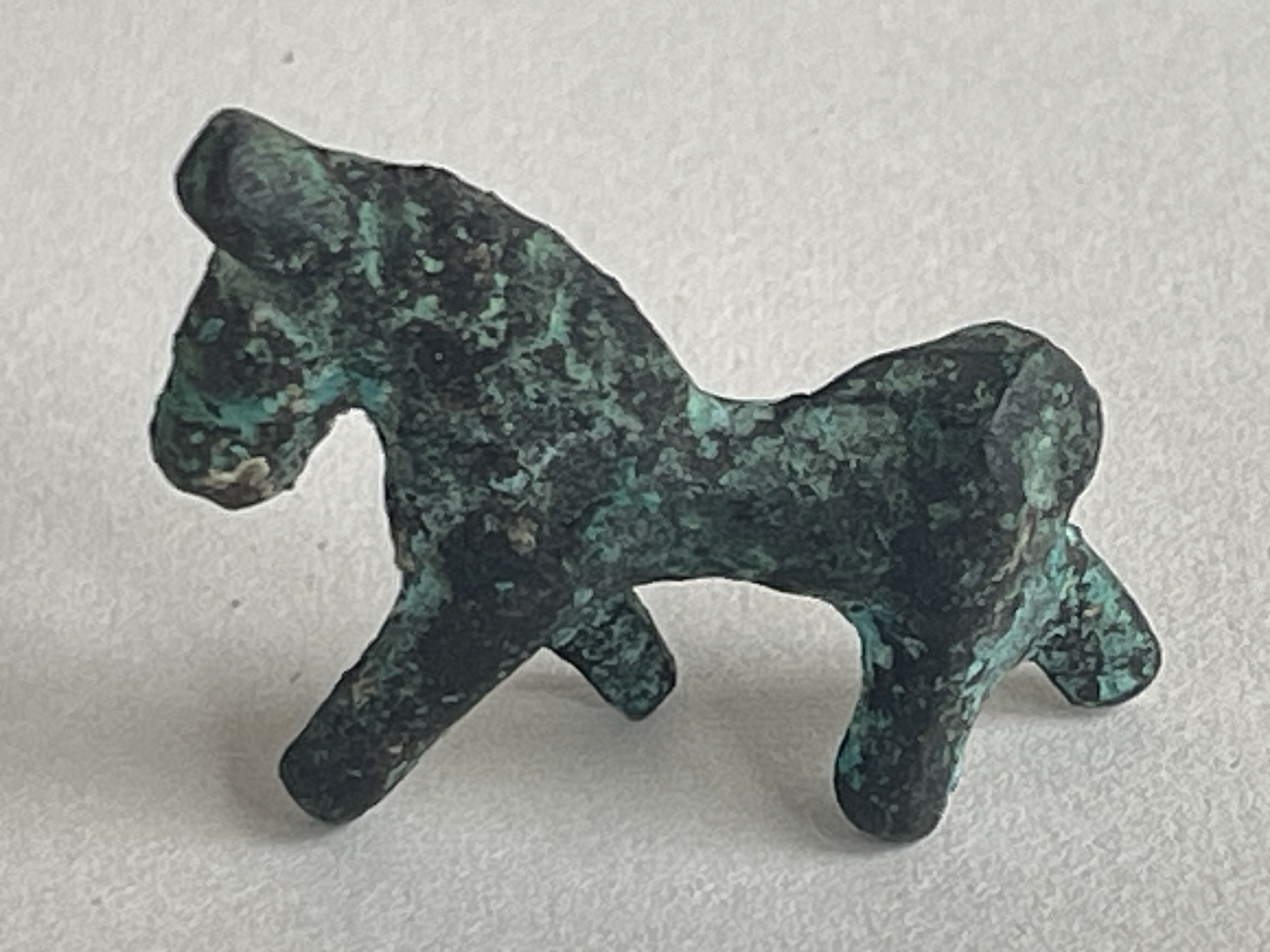
Antique Canaanite Bronze Donkey Votive Levant Israel c1300-1000 BCE
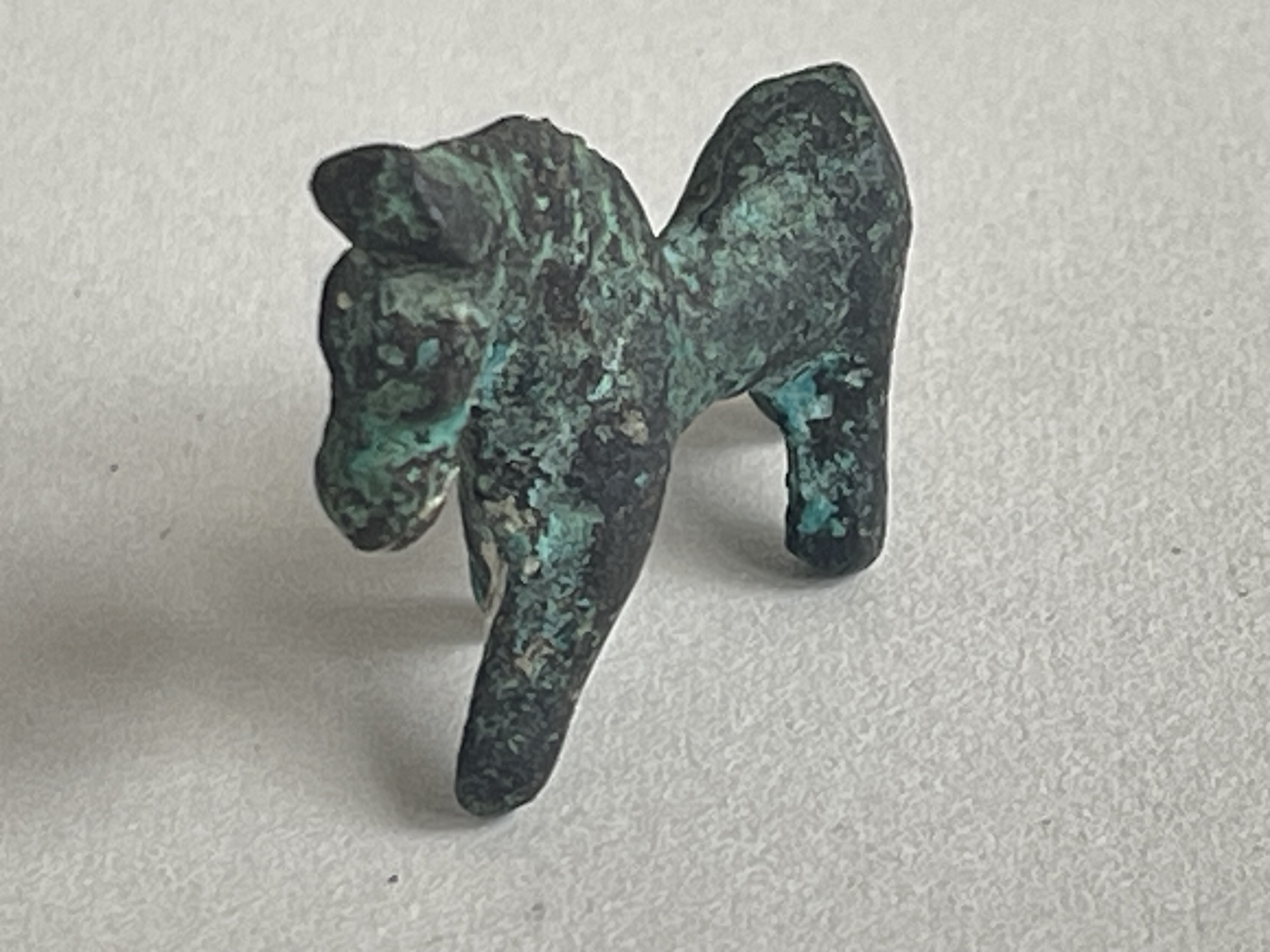
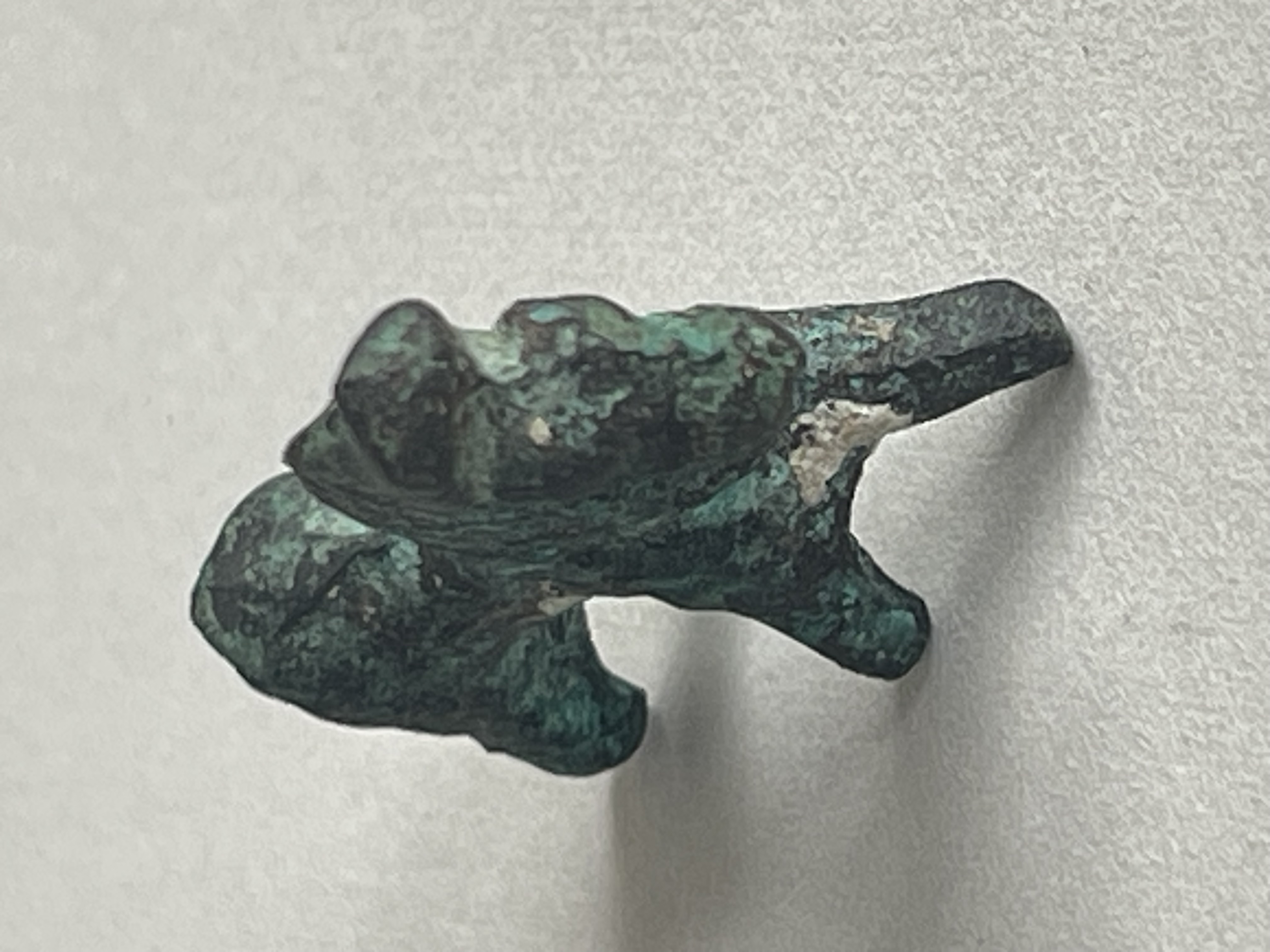
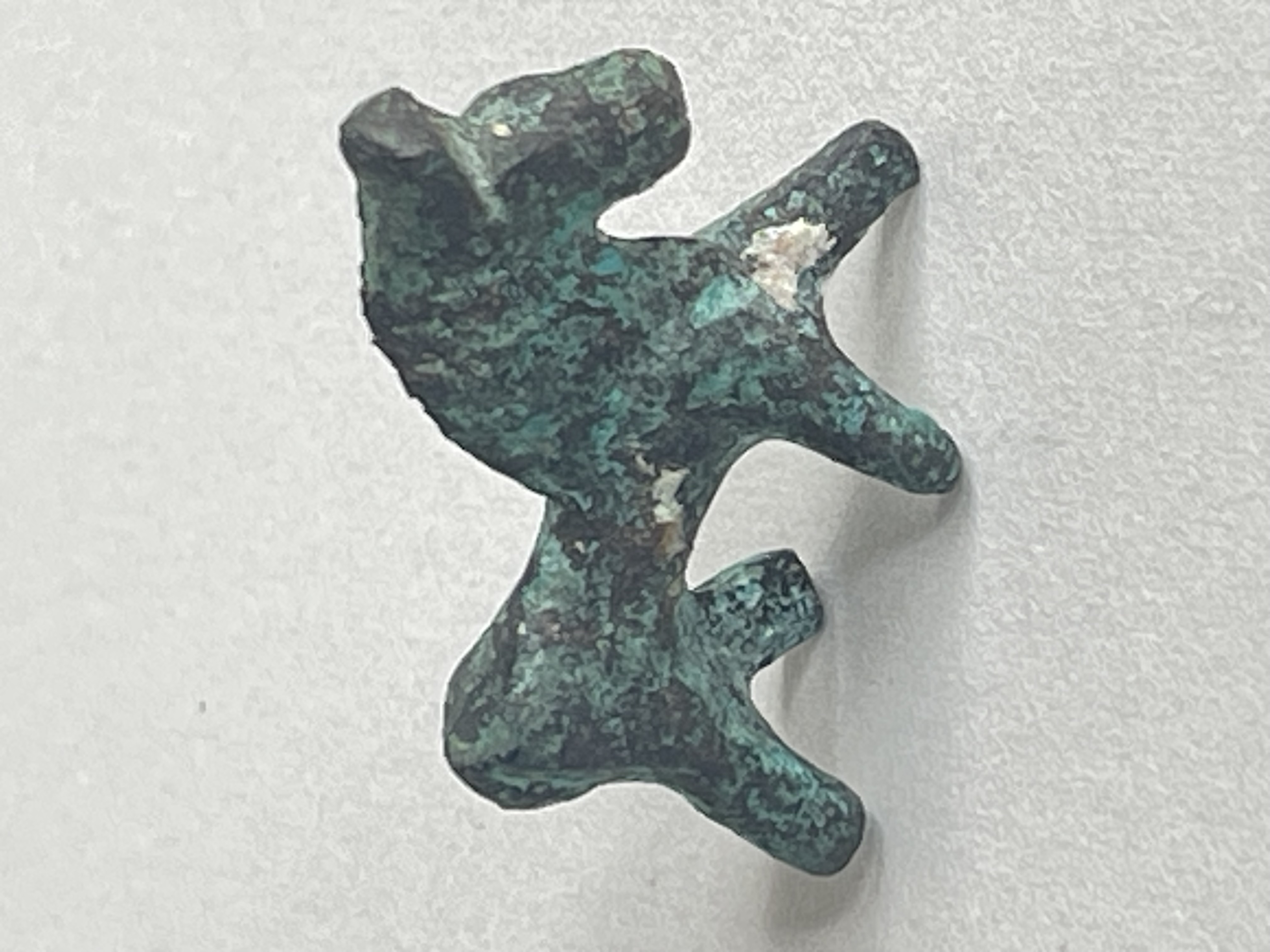
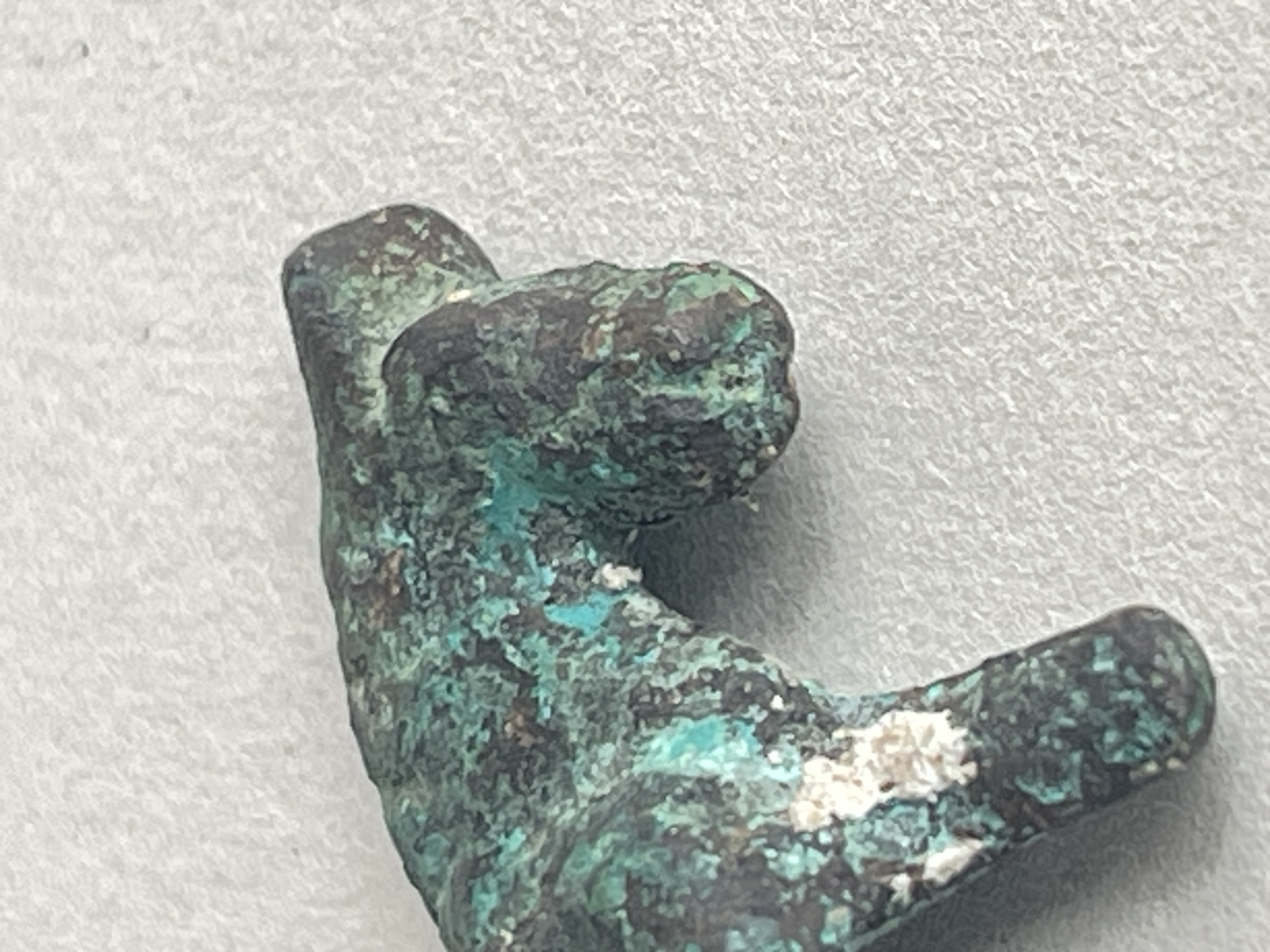
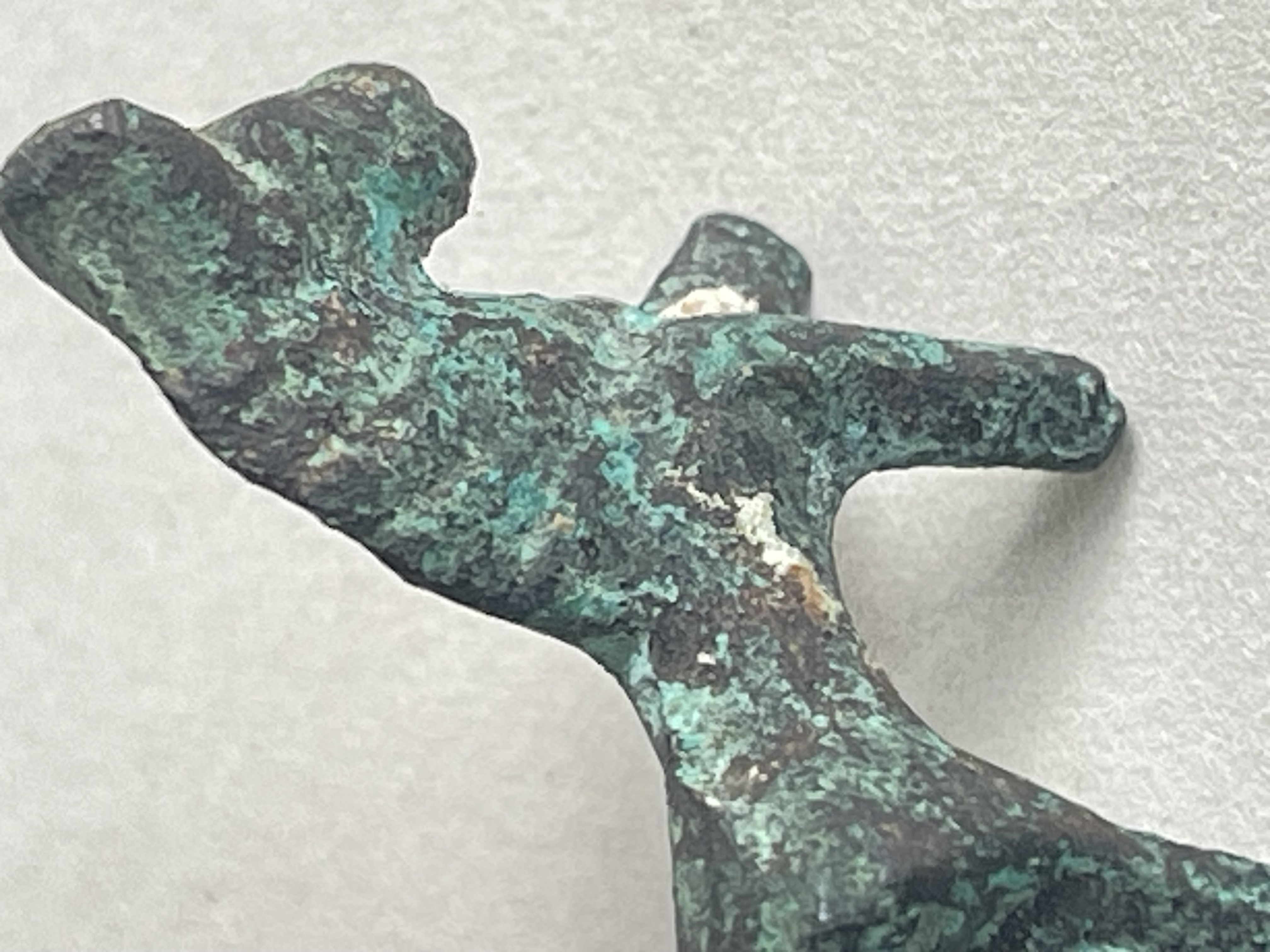
Rare miniature bronze equid figure attributed to the Southern Levant and associated with the Canaanite–Early Israelite cultural sphere. The animal is rendered in a highly schematic manner with enlarged head, disproportionately thick neck, compact body, and reduced anatomical detail. While the figure has previously been considered a horse, current research suggests it may more likely represent a donkey, though the highly symbolic rendering prevents definitive species identification.
The compact proportions, robust neck, and enlarged head are consistent with the interpretation as a donkey.
Miniature bronze equid votives from the Southern Levant are considerably rarer than their terracotta and stone counterparts. Their scarcity, combined with the cost of bronze production, suggests a specialized devotional, protective, or dedicatory role.
The figure belongs to a symbolic sculptural tradition in which recognition and meaning were prioritized over naturalistic representation. Rather than describing an animal anatomically, the sculptor reduced the form to its essential visual elements: head, neck, body, and legs. The disproportionately thick neck and enlarged head appear to be deliberate features of this visual language and find parallels among other miniature animal representations from the ancient Levant.
Whether understood as a donkey or more generally as an equid, the figure reflects the importance of pack and transport animals in Bronze and Early Iron Age society. Such animals were essential to trade, agriculture, pilgrimage, communication, and daily life throughout the ancient Near East.
This miniature demonstrates how seemingly modest objects can preserve evidence of belief systems that survive largely through material culture rather than written texts. Its size is of importance—a compression of spiritual force into miniature ritual form.
Unlike monumental sculpture intended for public display, objects of this scale were personal. They could be carried, dedicated, deposited, or retained as protective possessions. The figure offers a rare glimpse into the symbolic world of the ancient Southern Levant, where animals functioned not merely as economic resources but also as vehicles of meaning, devotion, identity, and protection.
Its rarity extends beyond its age. While miniature animal figures are well known from archaeological sites throughout the Southern Levant, the overwhelming majority survive in terracotta, clay, or stone. Miniature bronze equids represent a far less common category, reflecting the greater value of the material and the specialized circumstances of their production and ritual use. As a result, bronze examples are encountered significantly less frequently in collections and museum holdings than their ceramic counterparts.
Whether understood as a donkey or a generalized equid, the figure belongs to a scarce tradition of miniature bronze votive animals whose significance lies not only in what they depict, but in what they reveal about personal devotion, symbolic expression, and everyday religious life in the Late Bronze and Early Iron Age Levant.
Ancient bronze miniature in good archaeological condition with stable green and dark brown patination throughout. Surface shows expected age-related wear, mineral encrustation, and areas of corrosion consistent with long-term burial. No modern repairs observed. The figure remains complete and structurally sound. Please review all photographs carefully as they form part of the description.

Yes
This small archaeological metal object must be handled with care and securely mounted for display. Do not clean, wet, or apply any substance to the surface. Use gloves and appropriate supports during handling.
Yes
This small archaeological metal object must be handled with care and securely mounted for display. Do not clean, wet, or apply any substance to the surface. Use gloves and appropriate supports during handling.
Yes
This small archaeological metal object must be handled with care and securely mounted for display. Do not clean, wet, or apply any substance to the surface. Use gloves and appropriate supports during handling.
Yes
Professional photographs may be provided for scholarly or editorial reproduction on request.
Any published identification and chronology should be presented as provisional.
(Rental fees apply)
Yes
This small archaeological metal object must be handled with care and securely mounted for display. Do not clean, wet, or apply any substance to the surface. Use gloves and appropriate supports during handling.
(Rental fees apply)
Yes
This small archaeological metal object must be handled with care and securely mounted for display. Do not clean, wet, or apply any substance to the surface. Use gloves and appropriate supports during handling.
Distinguished objects available for short- or long-term rental to private residences, offices, hotels and exceptional spaces.
(Rental fees apply)
Yes
This small archaeological metal object must be handled with care and securely mounted for display. Do not clean, wet, or apply any substance to the surface. Use gloves and appropriate supports during handling.
Additional photography and physical measurements may be provided for scholarly research upon request.