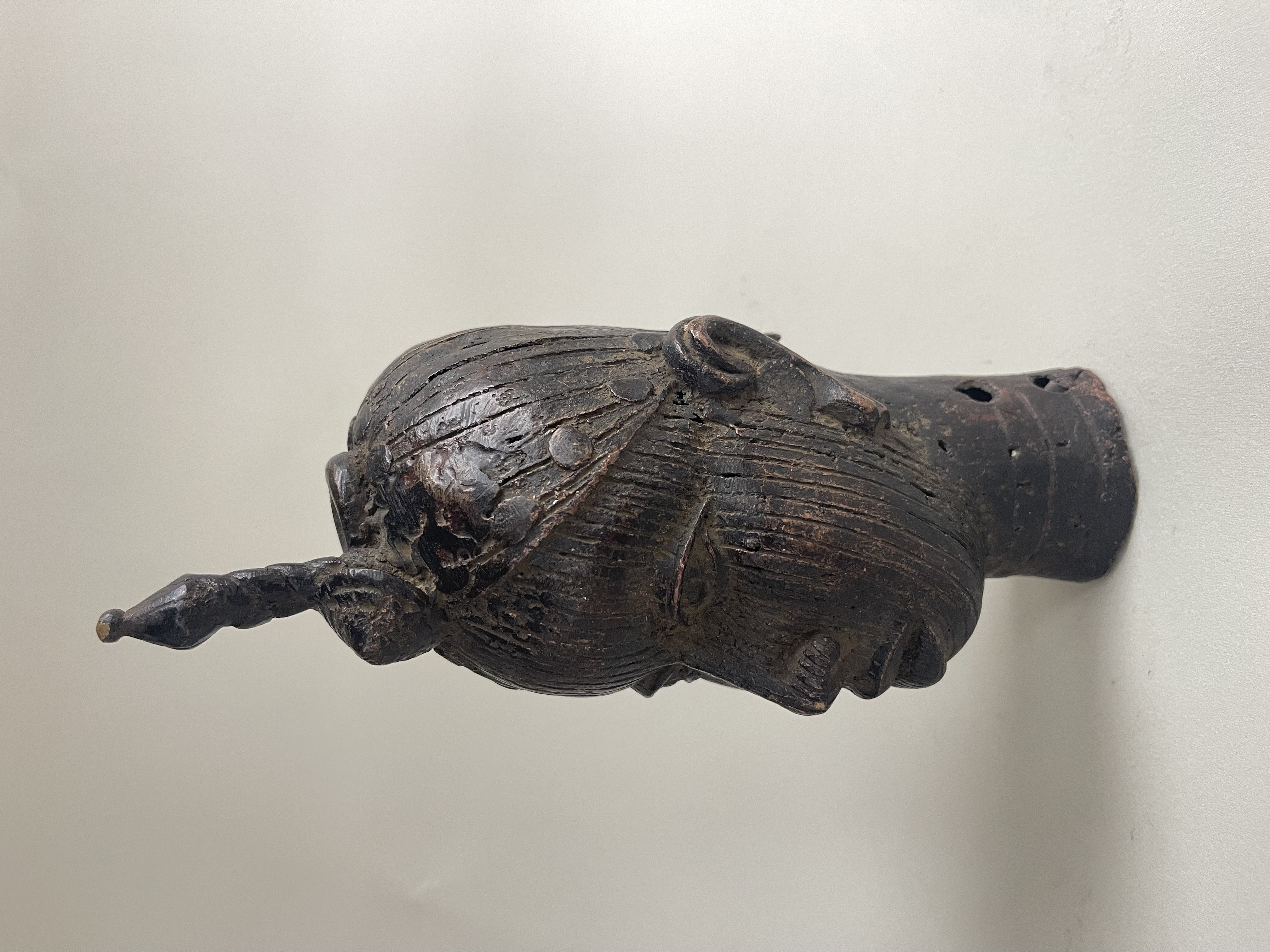
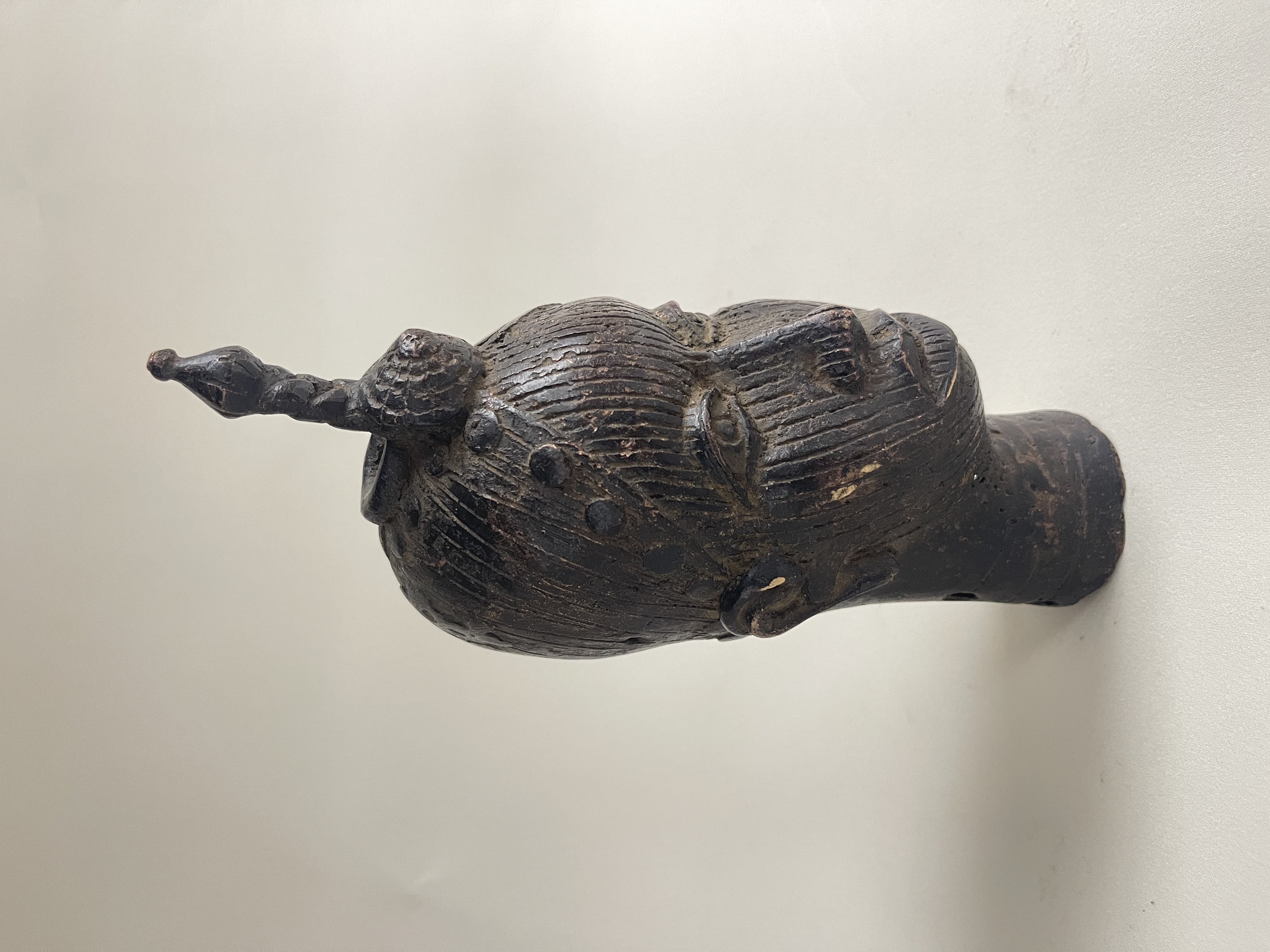
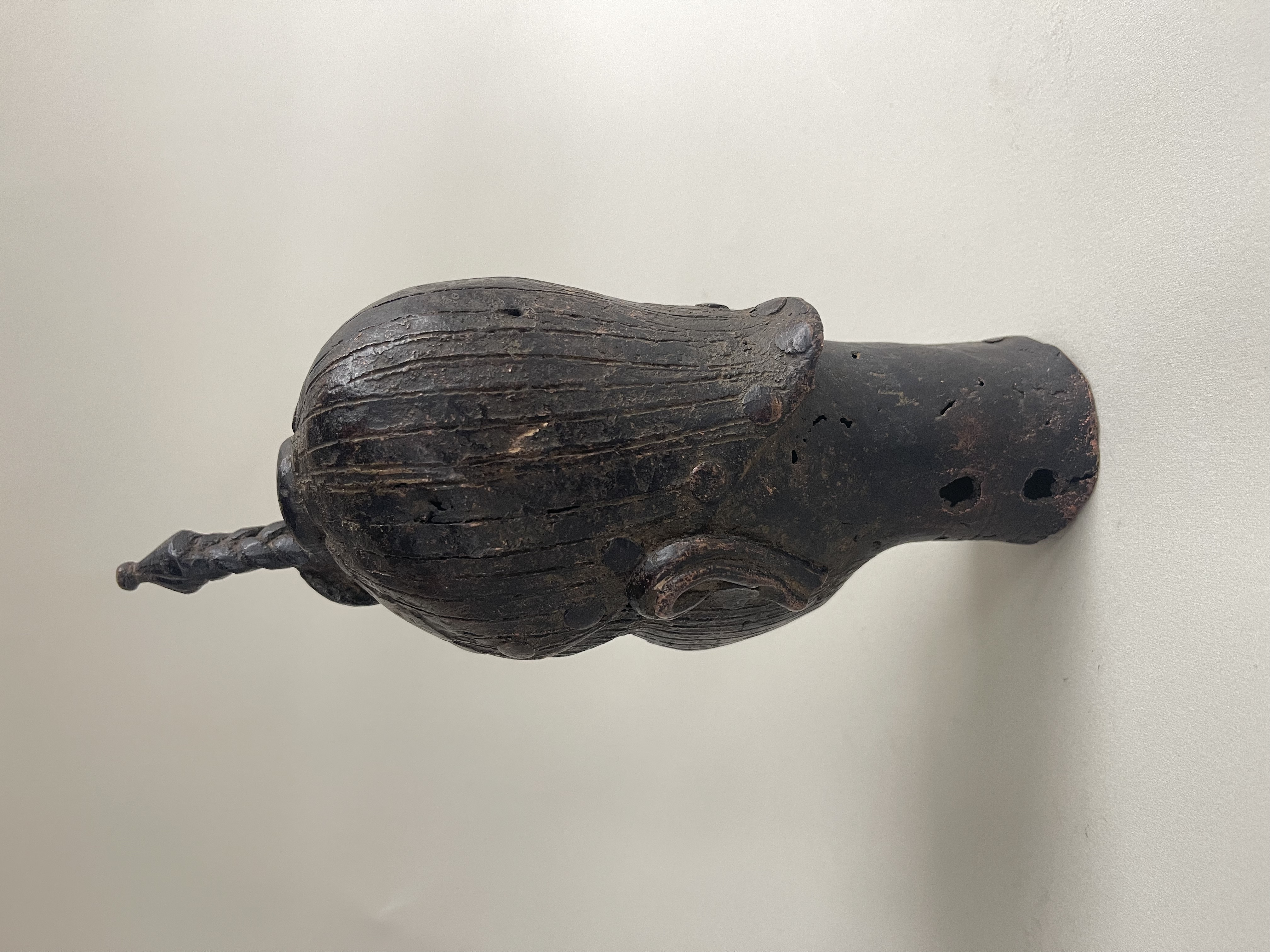
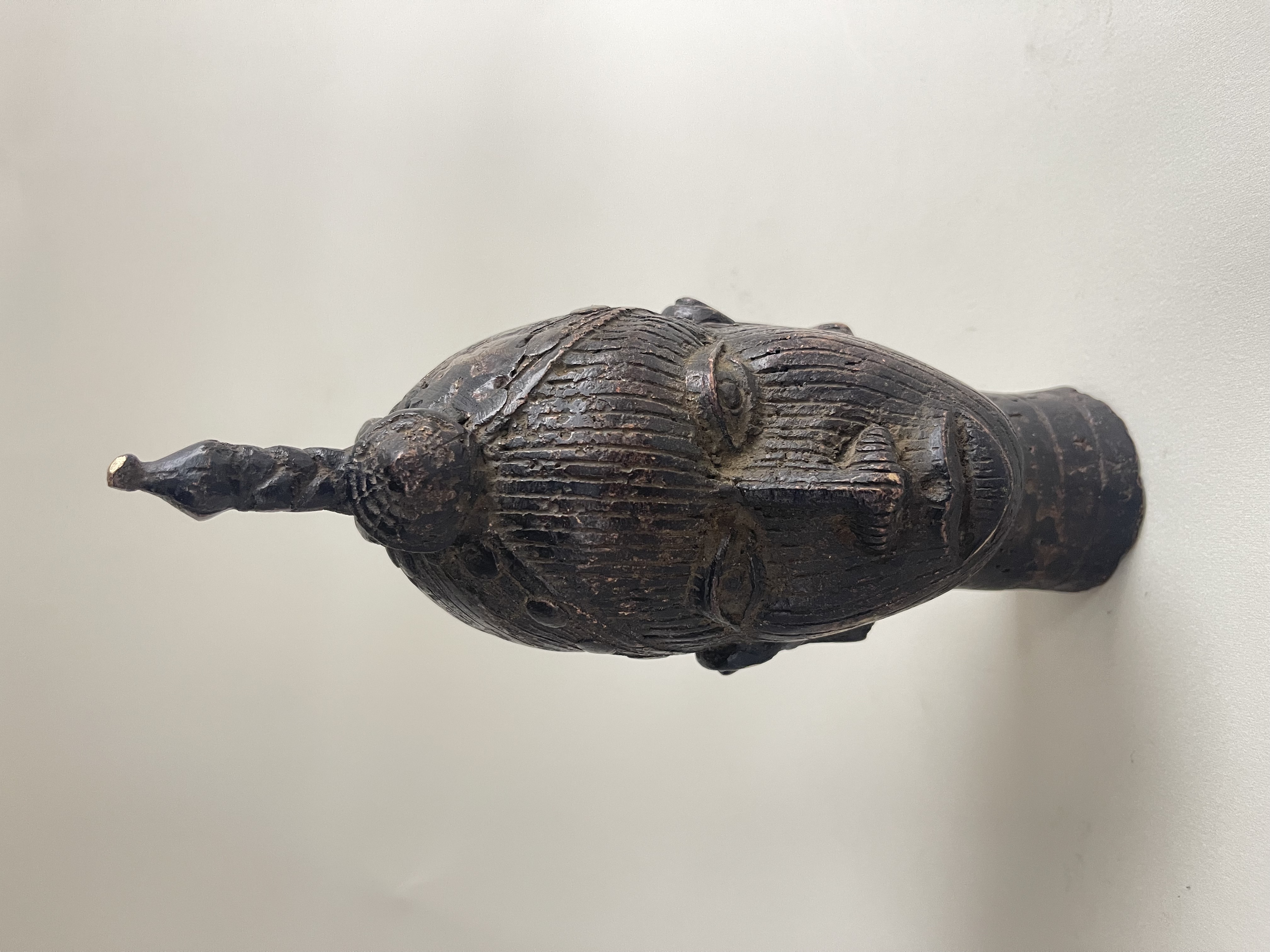
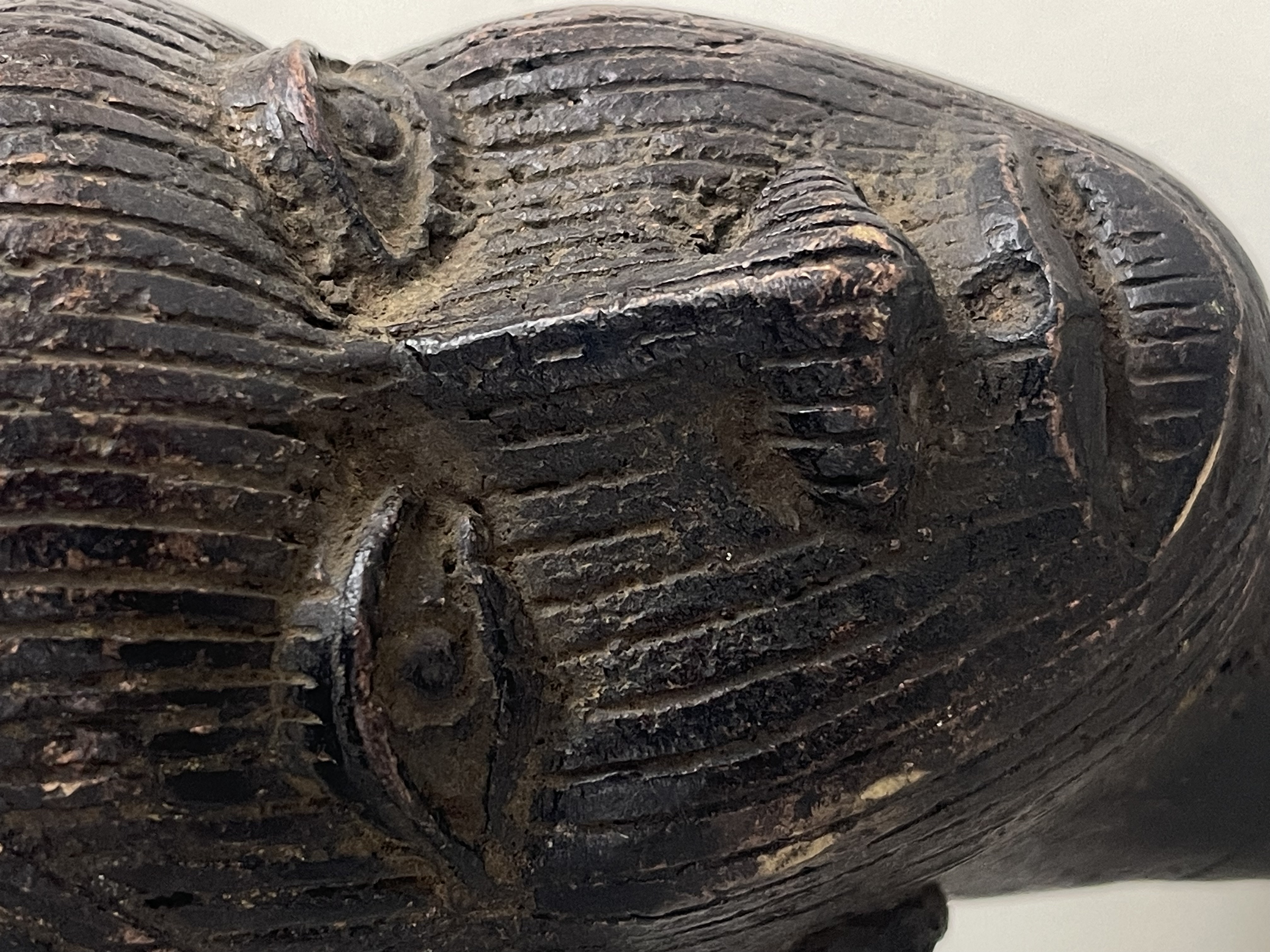
Hollow copper-alloy sculptural head attributed for comparative research to the Ile-Ife / Olokun-type tradition of Yoruba art in southwestern Nigeria. The face exhibits delicate linear striations; the crown incorporates a frontal element and a projecting finial. Partially preserved rings encircle the neck. These features invite close comparison with published Ife sculptural traditions.
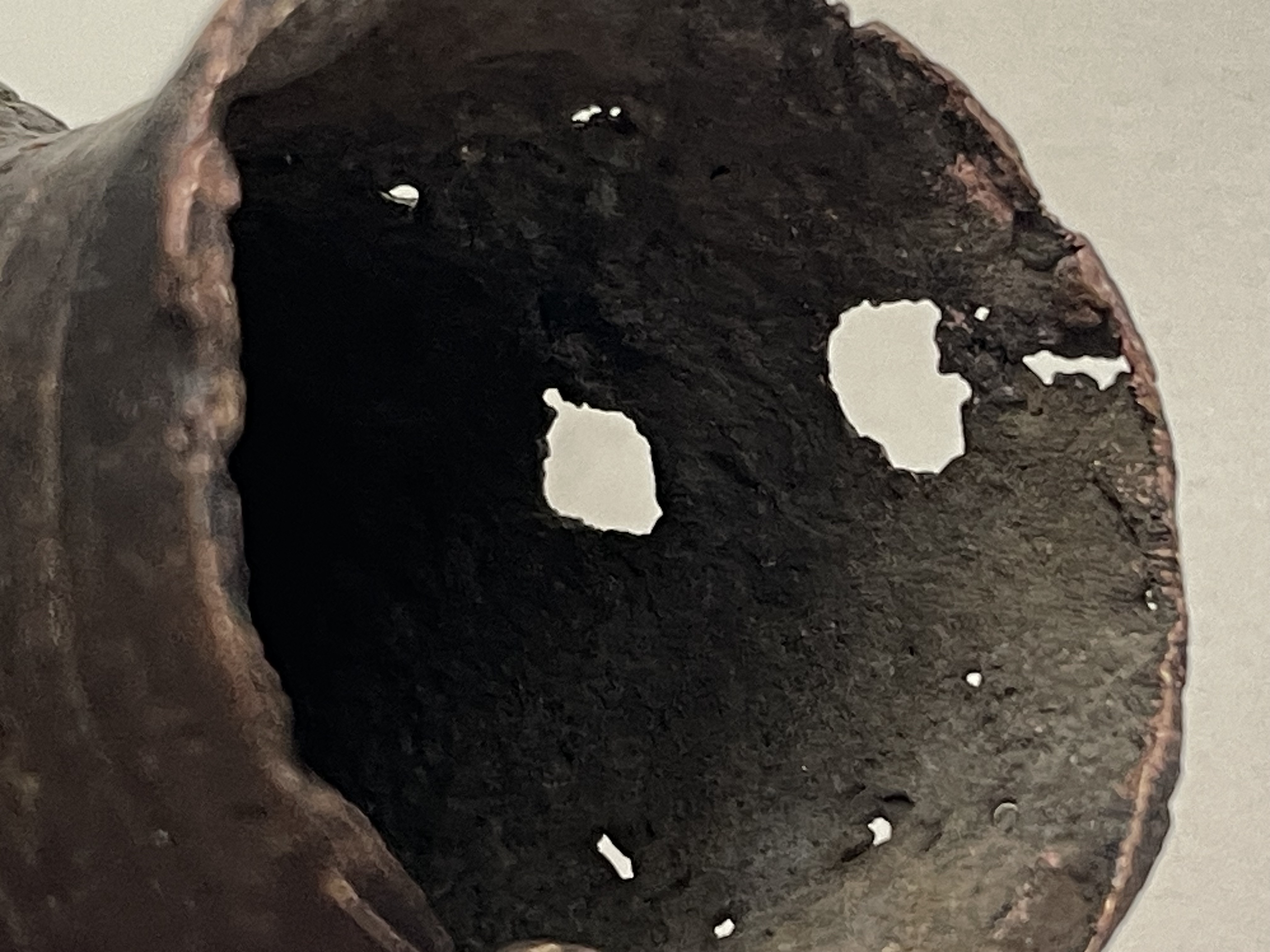
The exterior has a very dark, varied surface with green deposits in protected recesses. The interior reveals lighter copper-alloy surfaces, adhered soil or mineral deposits, and substantial black residue. Four perforations near the neck, approximately 2 mm across, may have served an attachment function, although their original purpose is not established.
Scholarly note
The proposed Ile-Ife / Olokun-type attribution and 13th–15th-century dating, with possible continuation into the 16th century, are research hypotheses rather than independently authenticated findings. Formal, technical, and material comparisons—including study of the casting structure, alloy, surface and interior residues—may refine the attribution and chronology.
Condition
Extensive surface corrosion and pronounced erosion of the copper alloy, with numerous irregular pits, cavities, and holes where the metal has been eaten away. The losses vary in shape and extent, with uneven, deteriorated edges and areas of reduced wall thickness, clearly distinct from the four small, more regular perforations near the neck that appear to have been intentionally made. The exterior retains a deep, varied dark patina with localized green corrosion deposits, particularly in recesses, together with substantial wear and casting irregularities. The hollow interior preserves mineral and soil accretions and dark residues, all left undisturbed. The corrosion-related perforations and metal loss are significant aspects of the object's condition and should be examined closely in the accompanying photographs.