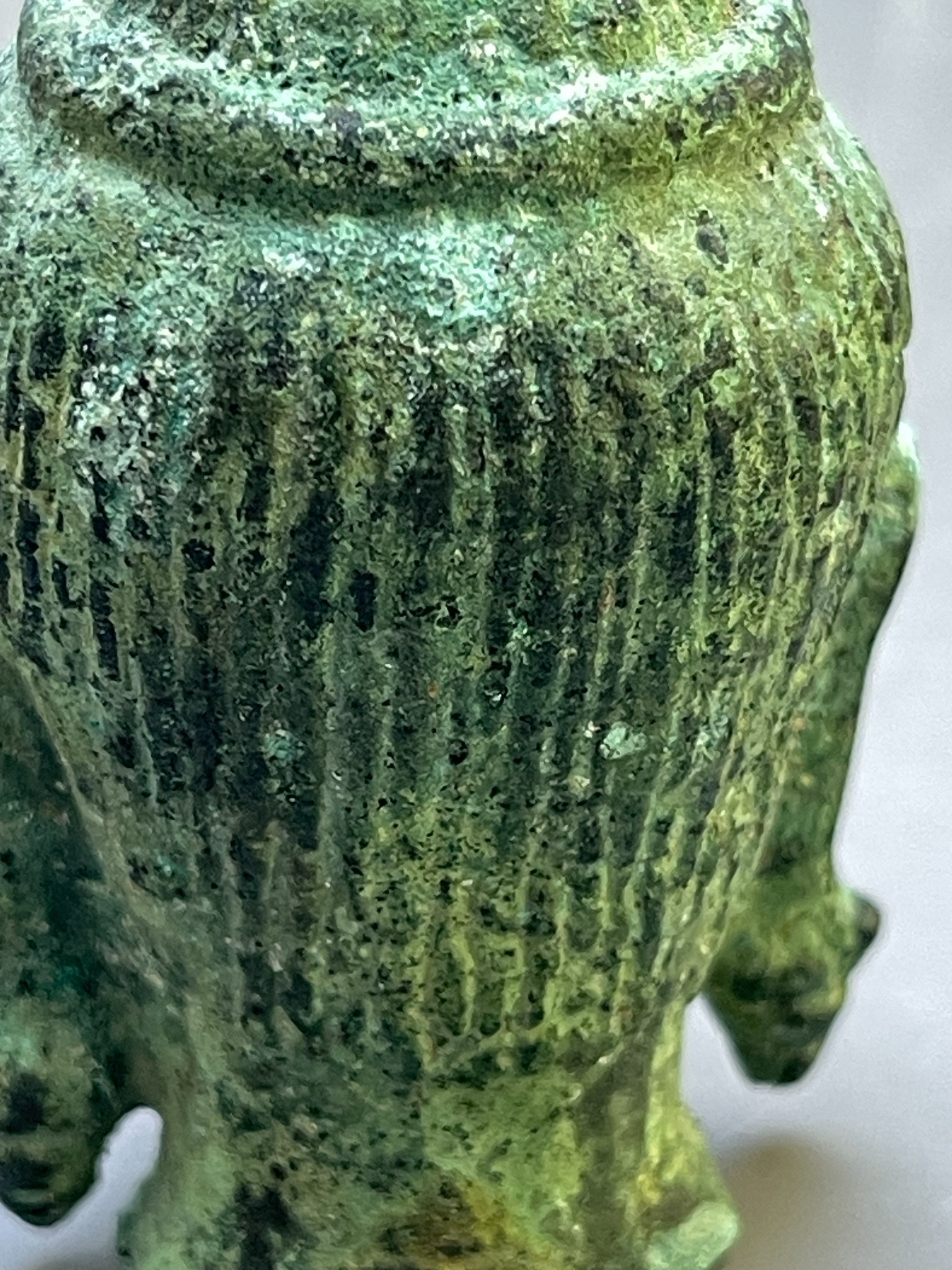
Khmer Bronze Buddha Head Fragment, Angkor Tradition
RRP-223

Khmer Bronze Buddha Head Fragment, Angkor Tradition

Culture / Origin
Attributed to the Khmer tradition, Cambodia or neighboring Southeast Asia
Dating
Circa 12th–13th century CE (stylistic attribution)
Material

Hollow-cast copper-alloy bronze with green and brown patination, mineral accretions and surface oxidation; attributed lost-wax casting

Measurements

Length approximately 3 1/4 in (8.3 cm); weight 138.6 g

Request Access← Back to CollectionInquire about this object →
Catalogue entry

Description

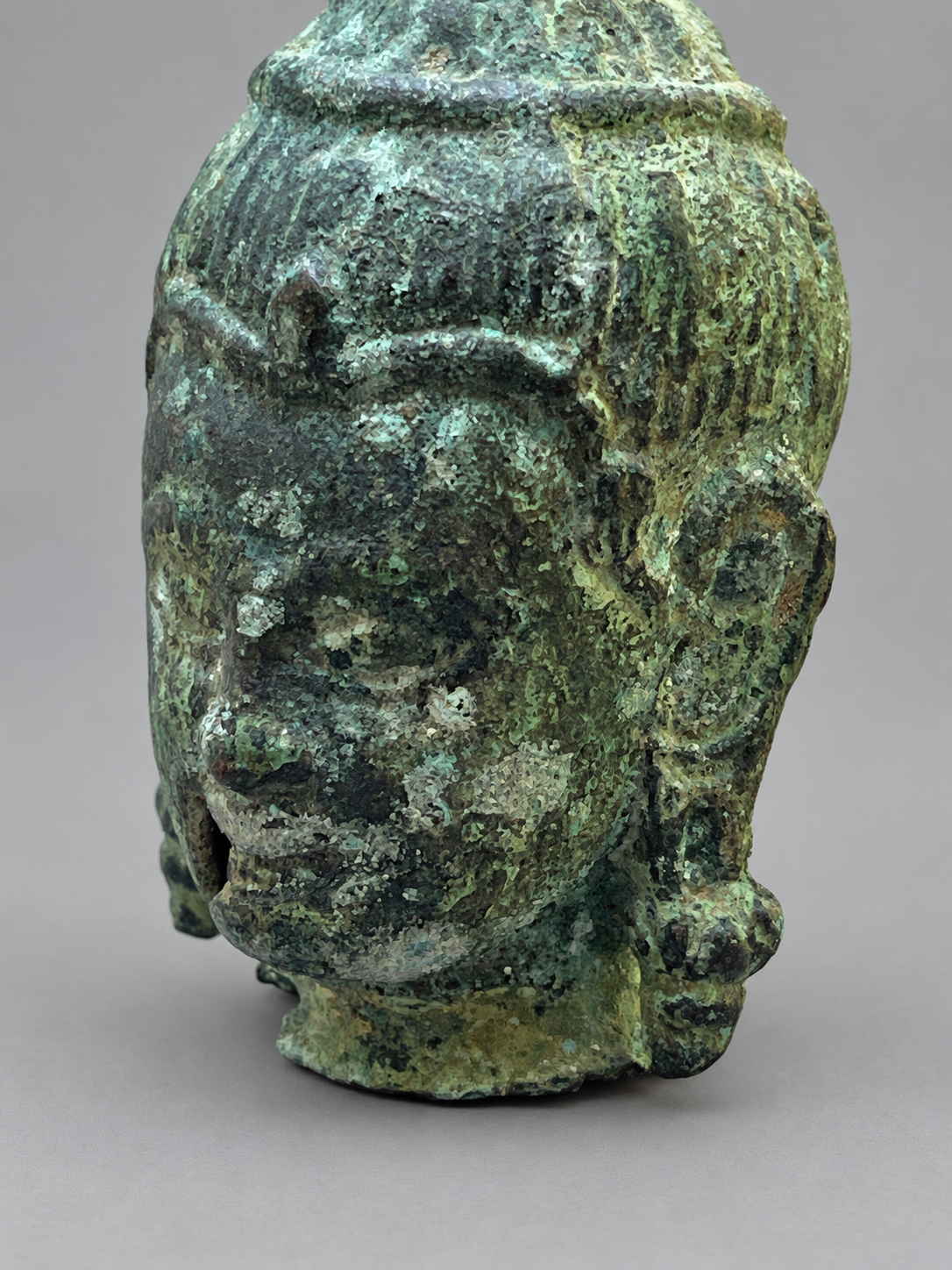
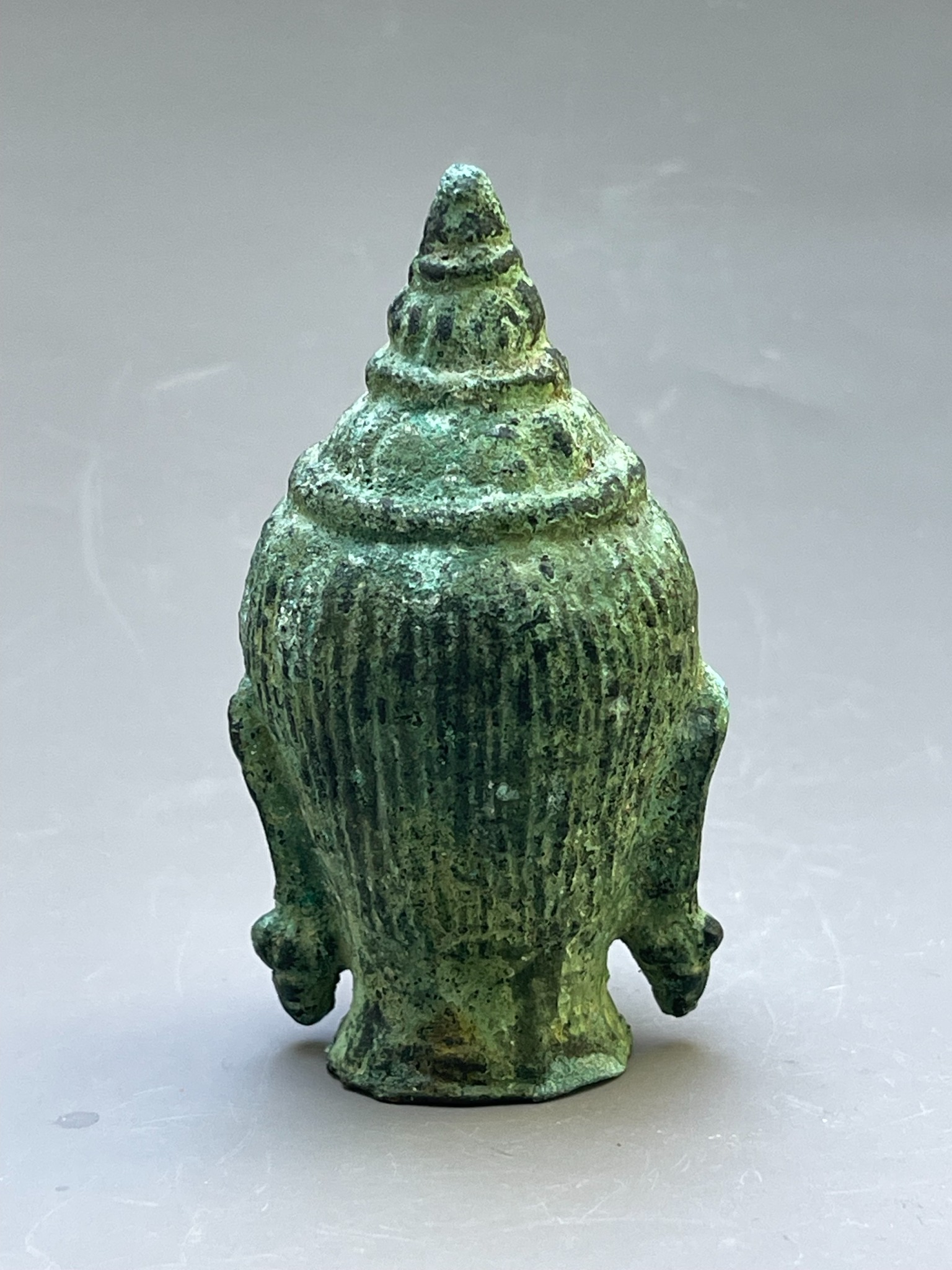
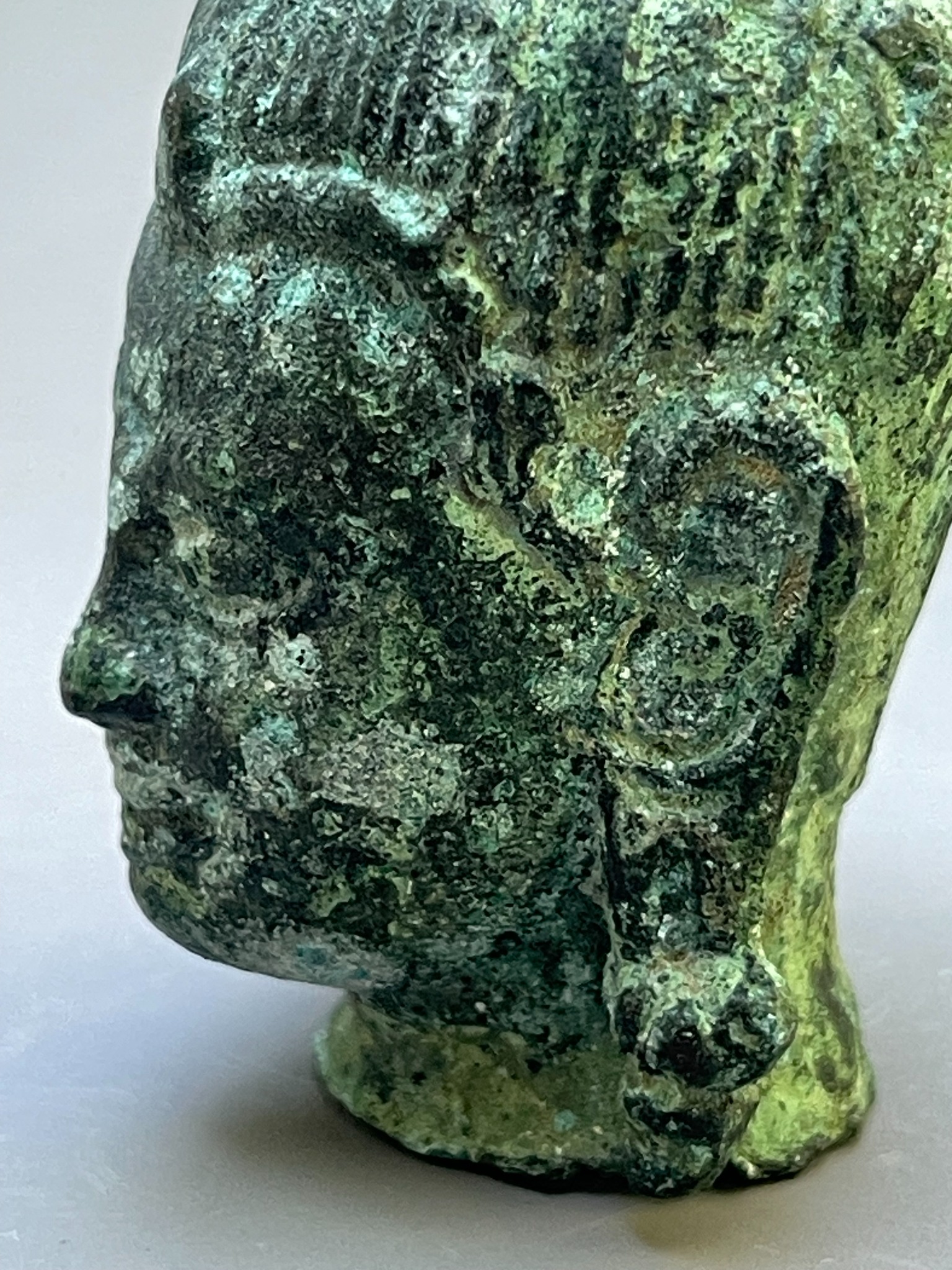
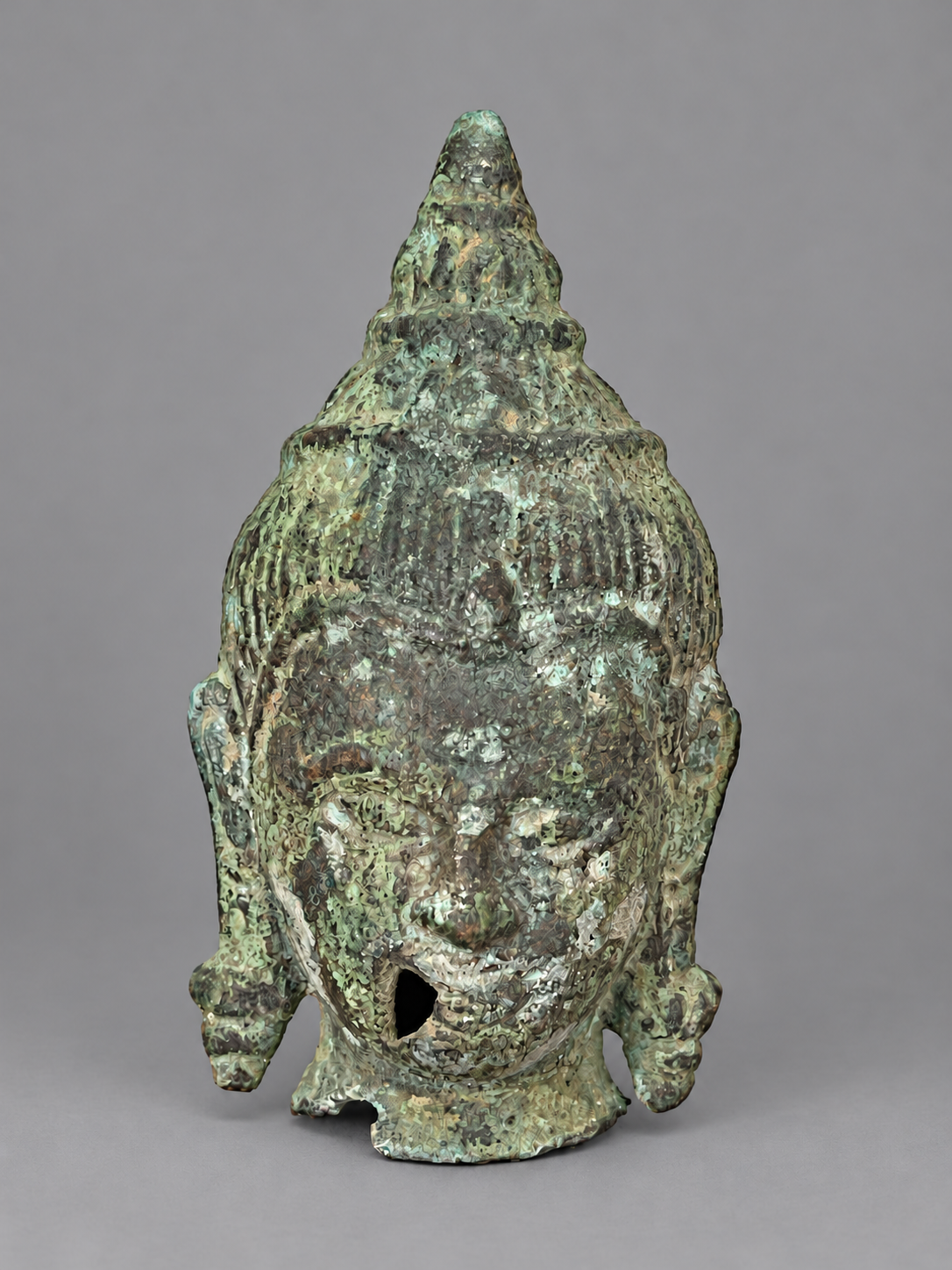
An evocative hollow-cast bronze head representing a Buddhist sacred figure, attributed to the Khmer artistic tradition of Southeast Asia, probably Cambodia, during the Angkor period. Gently modeled facial features, almond-shaped eyes, arched eyebrows, a restrained smile and elongated ears are framed by a vertically articulated arrangement of hair or headdress rising toward a tiered summit. Despite its fragmentary condition, the head retains a strong sculptural definition and devotional presence.

Casting technique and material

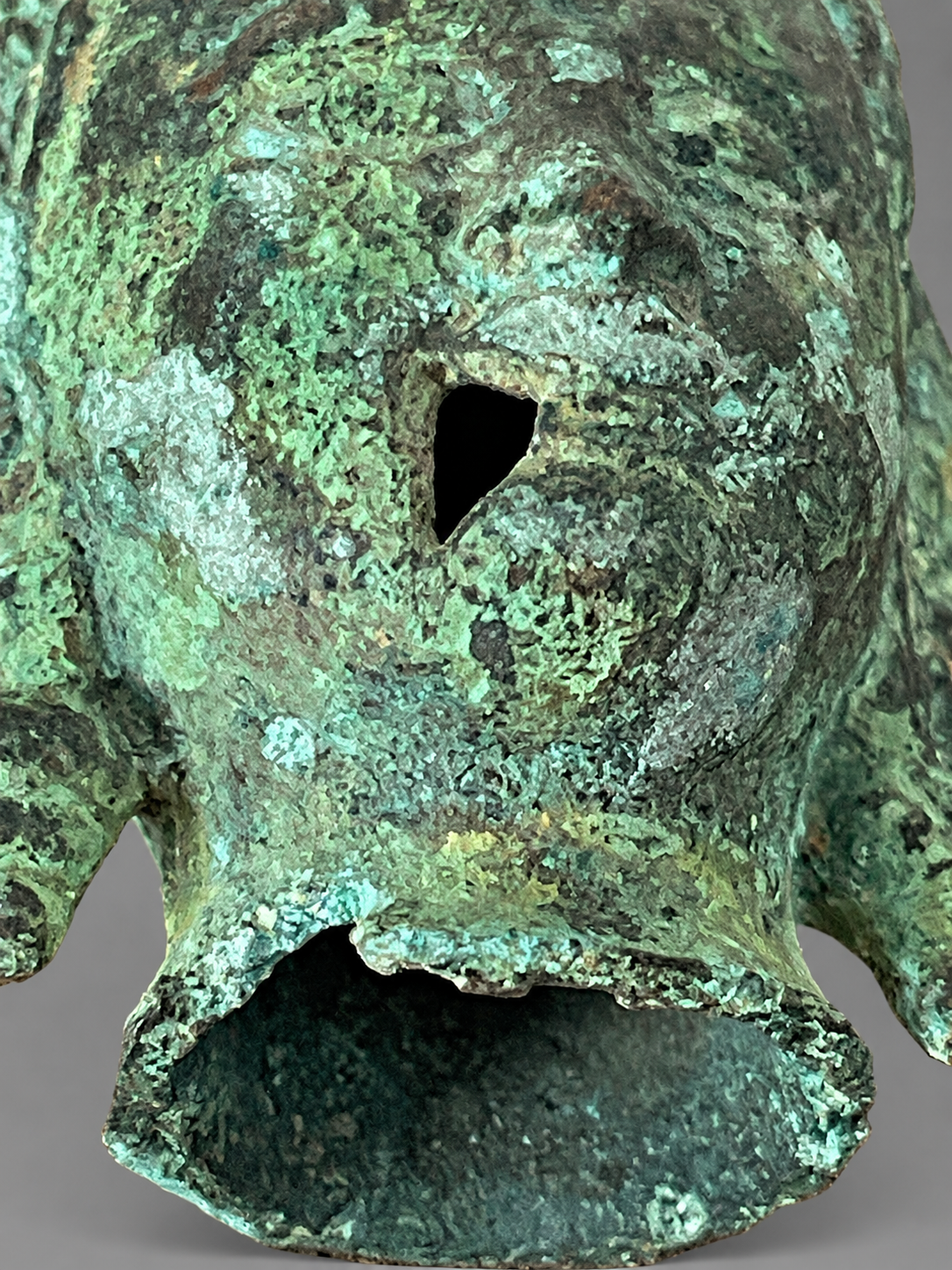
The open metallic interior preserves hollow-cast construction without visible retained clay or sand core material. Its weight of 138.6 grams relative to its compact dimensions invites study of the surviving metal volume and wall distribution. Copper-rich bronze, potentially containing lead, is proposed as a material possibility; precise alloy composition requires analysis. Neither density nor wall thickness alone establishes age or workshop origin.

The triangular facial opening: possible iconoclasm

A pronounced triangular opening penetrates the mouth and adjacent cheek. Its irregular edges carry oxidation and patination associated with the surrounding bronze. The concentrated position within the face raises the possibility of intentional defacement of a sacred image. If deliberate, damage to the mouth could be read as symbolically diminishing the represented figure's expressive agency.

The collection proposes comparison with the religious transformations of the late Angkor period, including the changing patronage of Buddhist and Shaivite institutions following Jayavarman VII. This historical setting provides a research context rather than proof of a particular event. The precise cause remains open, including impact-related breakage and localized corrosion. The fragment invites investigation into both Buddhist bronze sculpture and the historical treatment of sacred images.

Scholarly note: attribution and dating

The working Khmer attribution and proposed 12th–13th-century date rest primarily on facial proportions, expression, eyes, eyebrows and the vertically organized headdress. These features invite comparison with late Angkor Buddhist bronze sculpture, including the artistic environment of Jayavarman VII and subsequent regional developments. Relevant comparative collections include the Musée Guimet, National Museum of Cambodia and Metropolitan Museum of Art. Comparison with securely dated bronzes and metallurgical examination could refine chronology and workshop identification.

Condition

Fragmentary head with neck and original body absent. Substantial green and brown patination, mineral accretions, extensive surface oxidation and wear accompany the triangular facial opening and irregular lower edge. The hollow interior retains aged metallic surfaces without visible retained casting-core material. The facial opening's oxidized edges are documented for further study.
Access & use

Ways this object may be engaged

Research (No loan fee)

Yes

Fragile bronze fragment. Static display only in a fitted support. Support the body of the head and avoid pressure on ears, headdress, facial opening or lower edges. Do not clean, polish or expose to water or other substances. Use gloves.

Educational Programs (No loan fee)

Yes

Fragile bronze fragment. Static display only in a fitted support. Support the body of the head and avoid pressure on ears, headdress, facial opening or lower edges. Do not clean, polish or expose to water or other substances. Use gloves.

Exhibitions (No loan fee)

Yes

Fragile bronze fragment. Static display only in a fitted support. Support the body of the head and avoid pressure on ears, headdress, facial opening or lower edges. Do not clean, polish or expose to water or other substances. Use gloves.

Editorial — for books, articles, scholarly journals (No loan fee)

Yes

Original and studio-background photographs available for scholarly and editorial use.

Fragile bronze fragment. Static display only in a fitted support. Support the body of the head and avoid pressure on ears, headdress, facial opening or lower edges. Do not clean, polish or expose to water or other substances. Use gloves.

Film / TV

(Rental fees apply)

Yes

Fragile bronze fragment. Static display only in a fitted support. Support the body of the head and avoid pressure on ears, headdress, facial opening or lower edges. Do not clean, polish or expose to water or other substances. Use gloves.

Advertisement / Commercial Photography

(Rental fees apply)

Yes

Fragile bronze fragment. Static display only in a fitted support. Support the body of the head and avoid pressure on ears, headdress, facial opening or lower edges. Do not clean, polish or expose to water or other substances. Use gloves.

Prestige Rentals

Distinguished objects available for short- or long-term rental to private residences, offices, hotels and exceptional spaces.

(Rental fees apply)

Yes

Fragile bronze fragment. Static display only in a fitted support. Support the body of the head and avoid pressure on ears, headdress, facial opening or lower edges. Do not clean, polish or expose to water or other substances. Use gloves.

Documentation

Additional documentation

Ten original photographs document overall views, headdress, ears, surface, facial opening and hollow interior. Two selected views have digitally replaced neutral gray studio backgrounds; original files remain available for research.