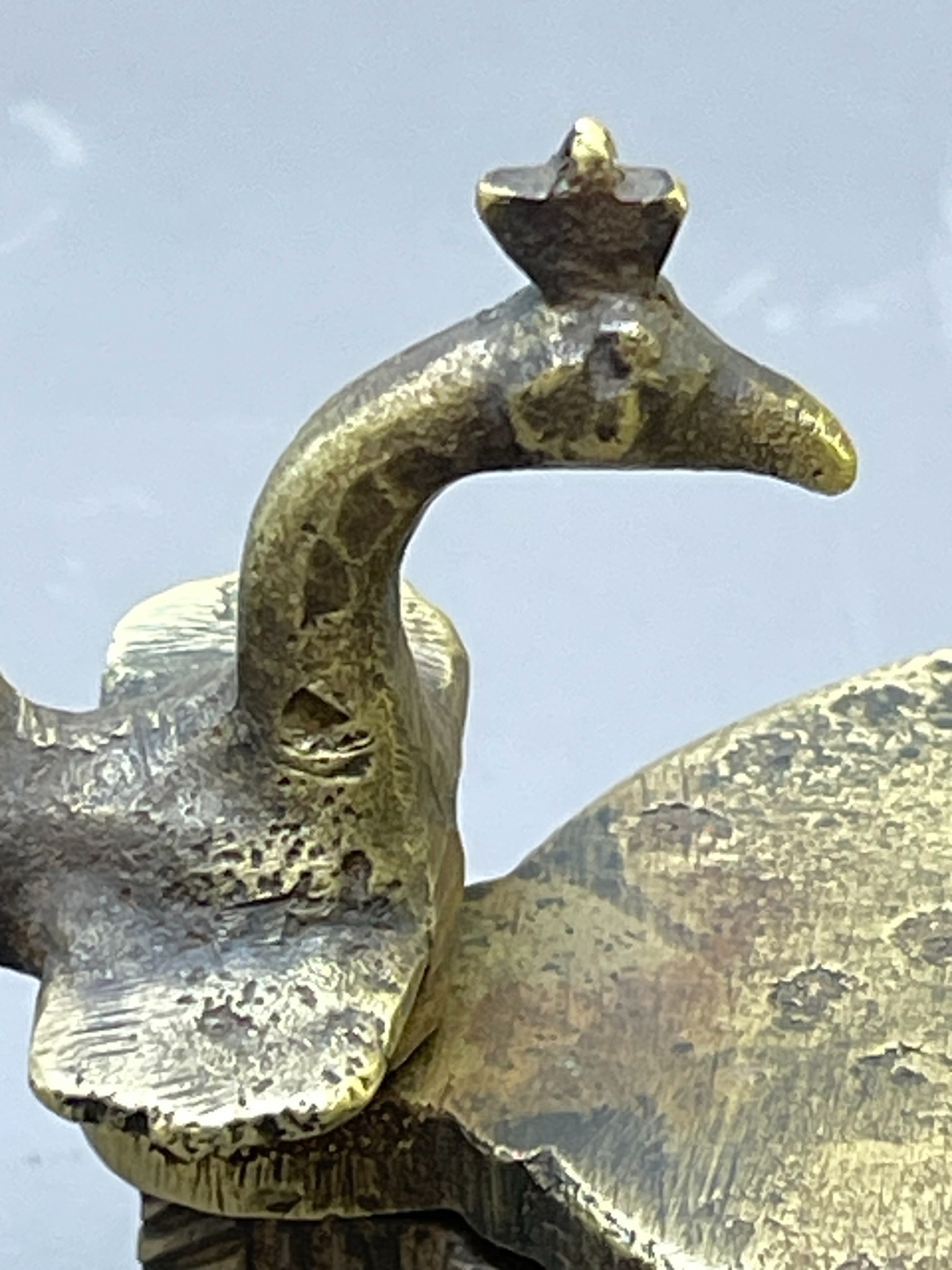
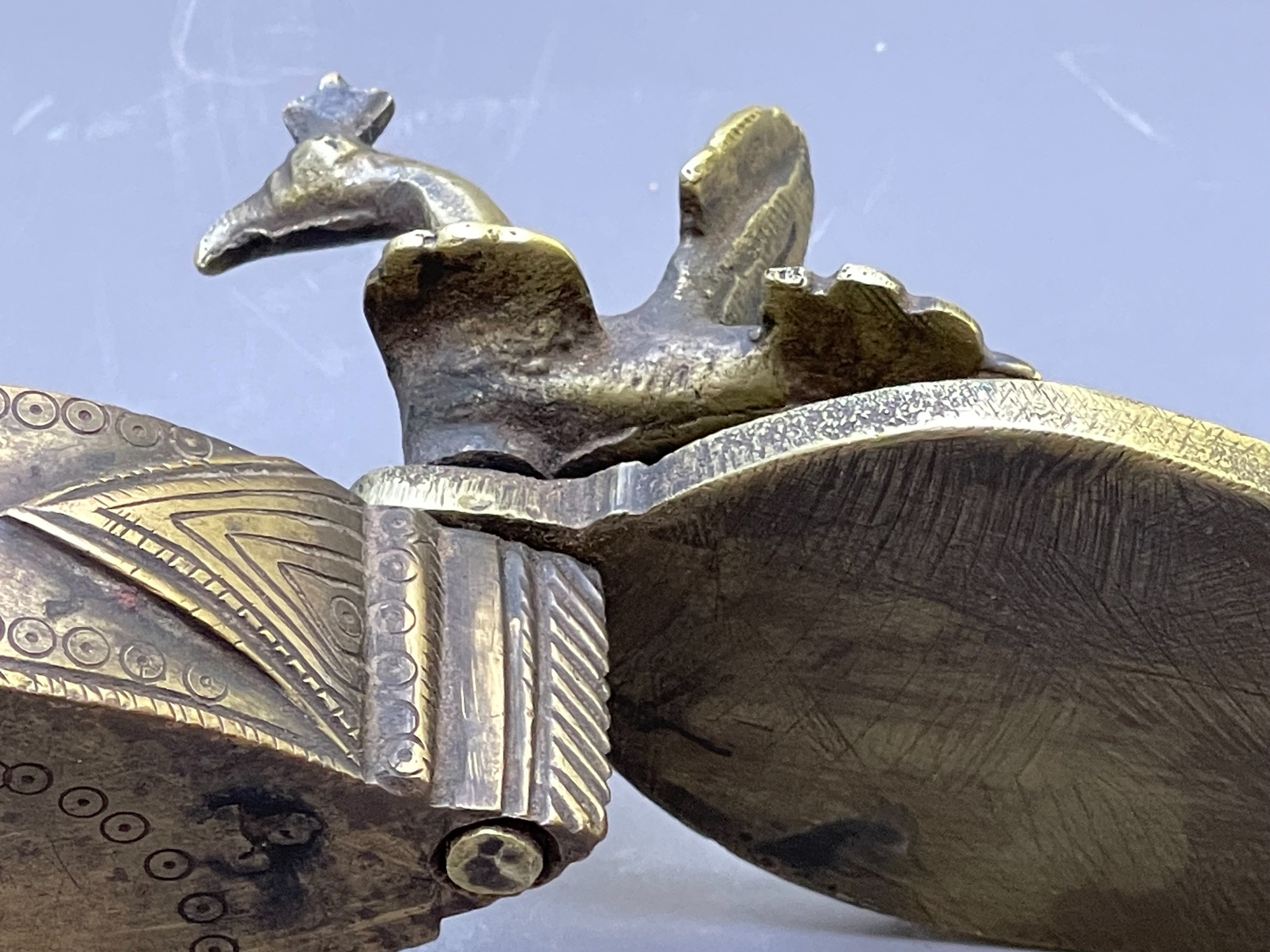
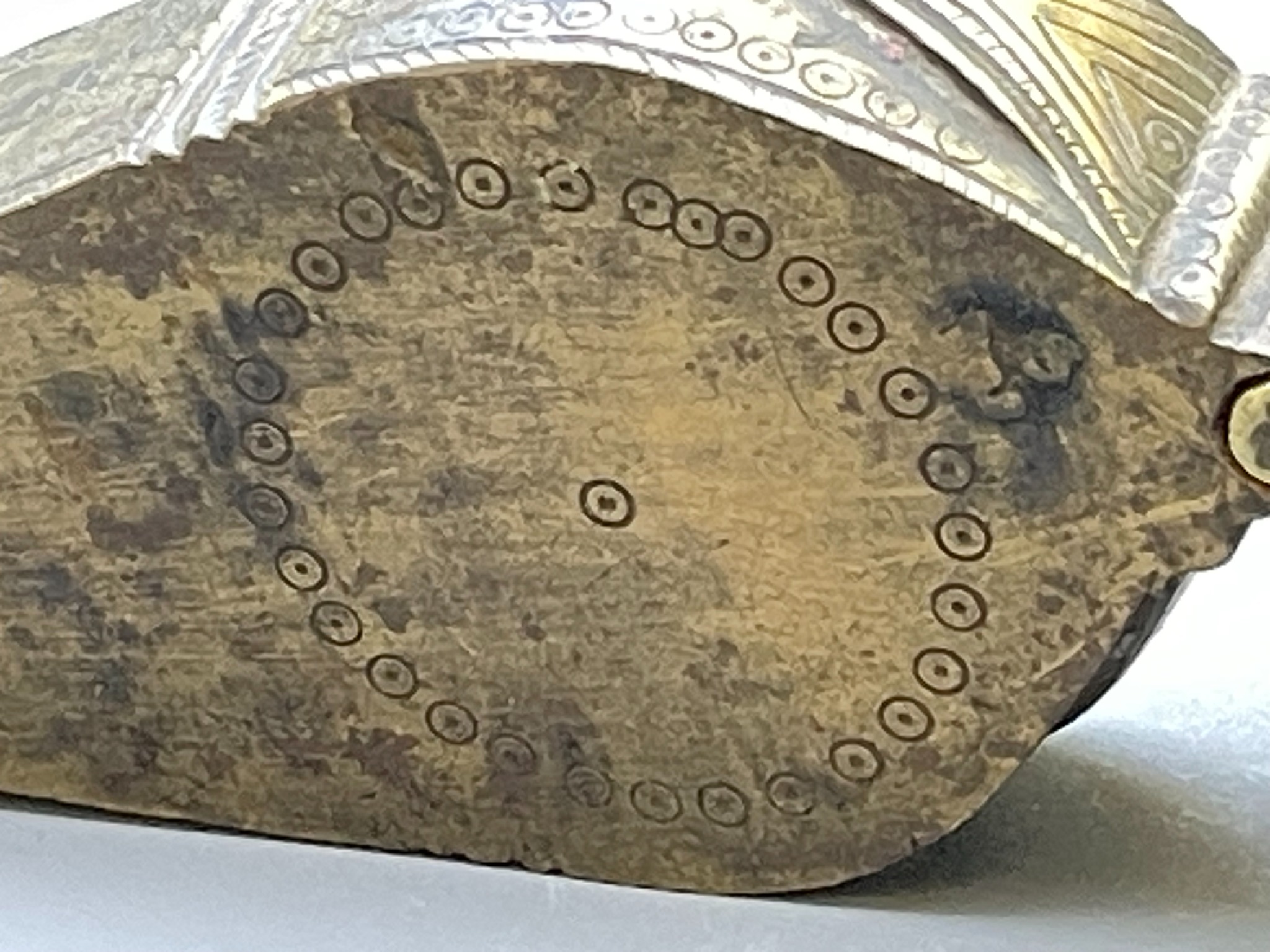
An elongated, tapering brass kumkum box with a pivoting cover surmounted by a stylized peacock. The shallow interior was intended to hold ritual powder or paste, such as kumkum, turmeric or sandalwood preparations, for Hindu devotional practice. Its combination of a protected cavity and sculptural finial joins practical storage with an auspicious visual presence.
Cultural significance
Kumkum containers belong to the material equipment of puja, supporting acts of marking, offering and blessing in household and temple worship. A small, durable vessel can sustain the repeated gestures through which religious knowledge passes between generations.
The peacock
The peacock is especially associated with Kartikeya, also known as Skanda or Murugan, whose vehicle is the bird. It also accompanies Saraswati in some artistic traditions. Here the finial can be read as an auspicious devotional ornament; the bird alone does not identify a particular deity, sect or workshop.
Ritual migration
Portable ritual equipment offers a way to study the movement of religious practice across oceans. In Indo-Caribbean communities, familiar vessels and repeated acts of puja helped establish sacred domestic spaces while traditions adapted to new conditions. Such objects could be carried, inherited or imported later. This box invites consideration within that history of ritual continuity and adaptation.
Condition
Owner reports an intact, functional hinge; light abrasions and minor casting pores; warm golden patina associated with historical polishing and use; and no structural breaks or repairs. The photographs show engraved ring-and-dot decoration, crosshatched finishing marks, darkened recesses and a divided interior.