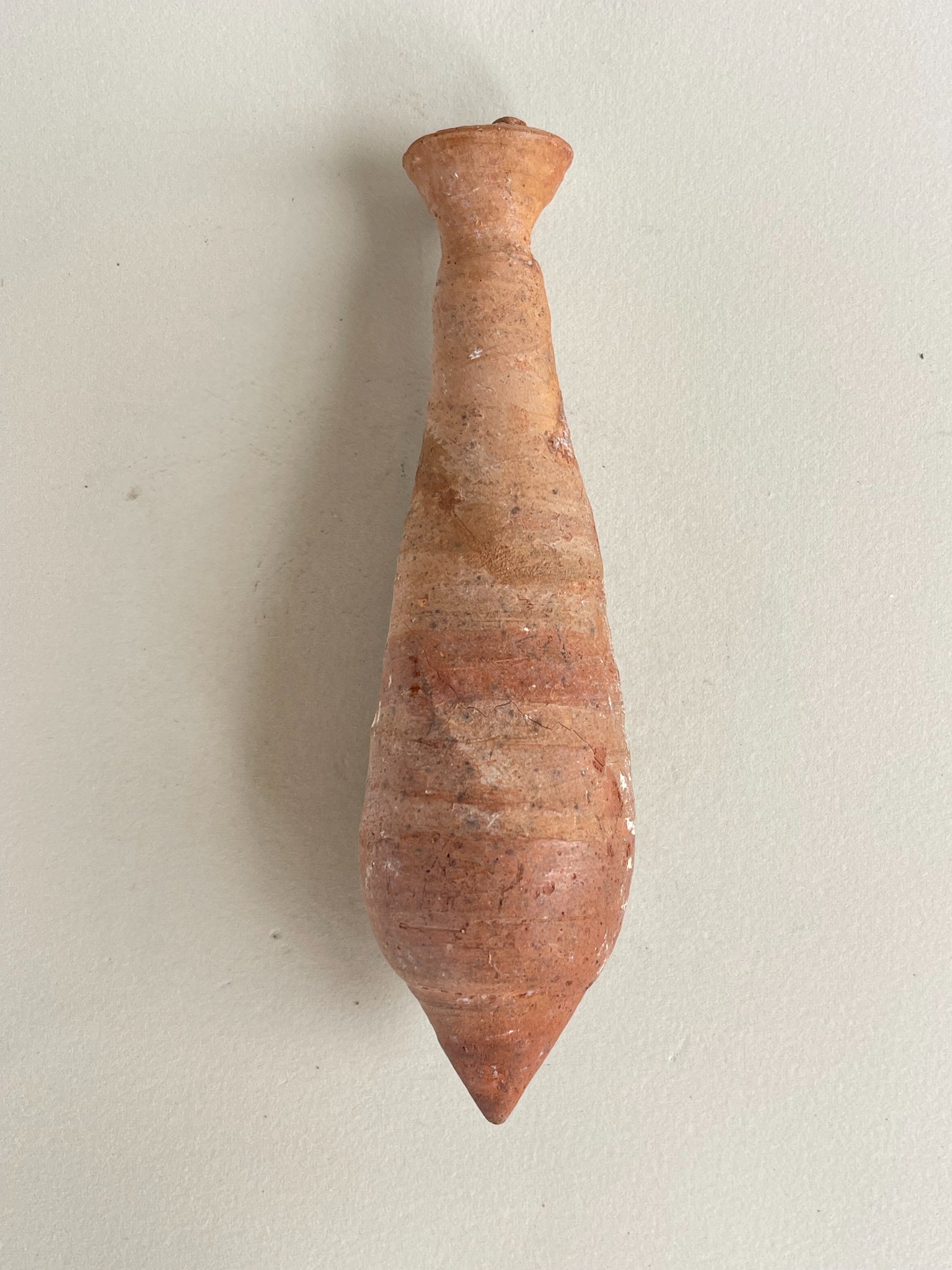
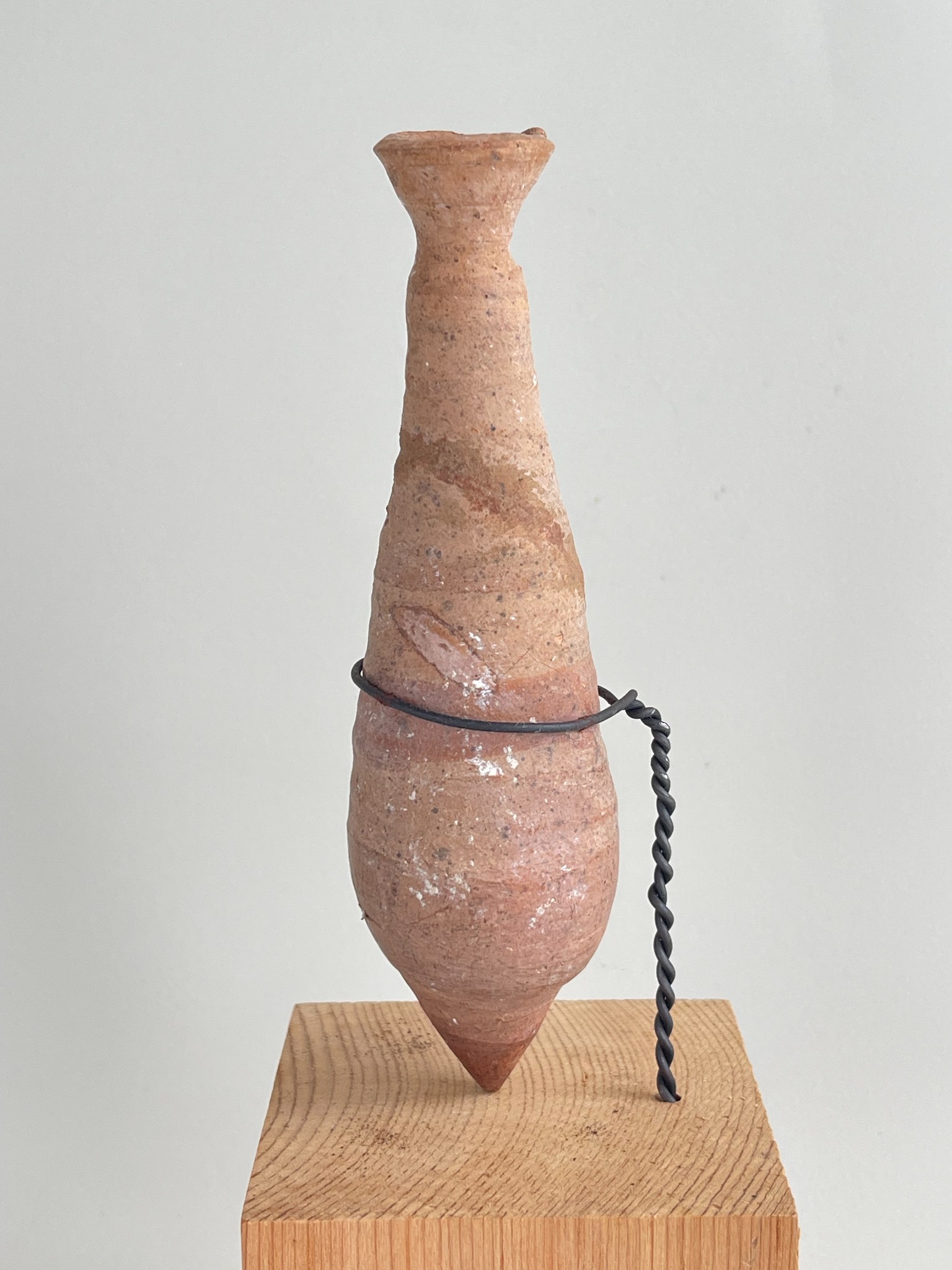
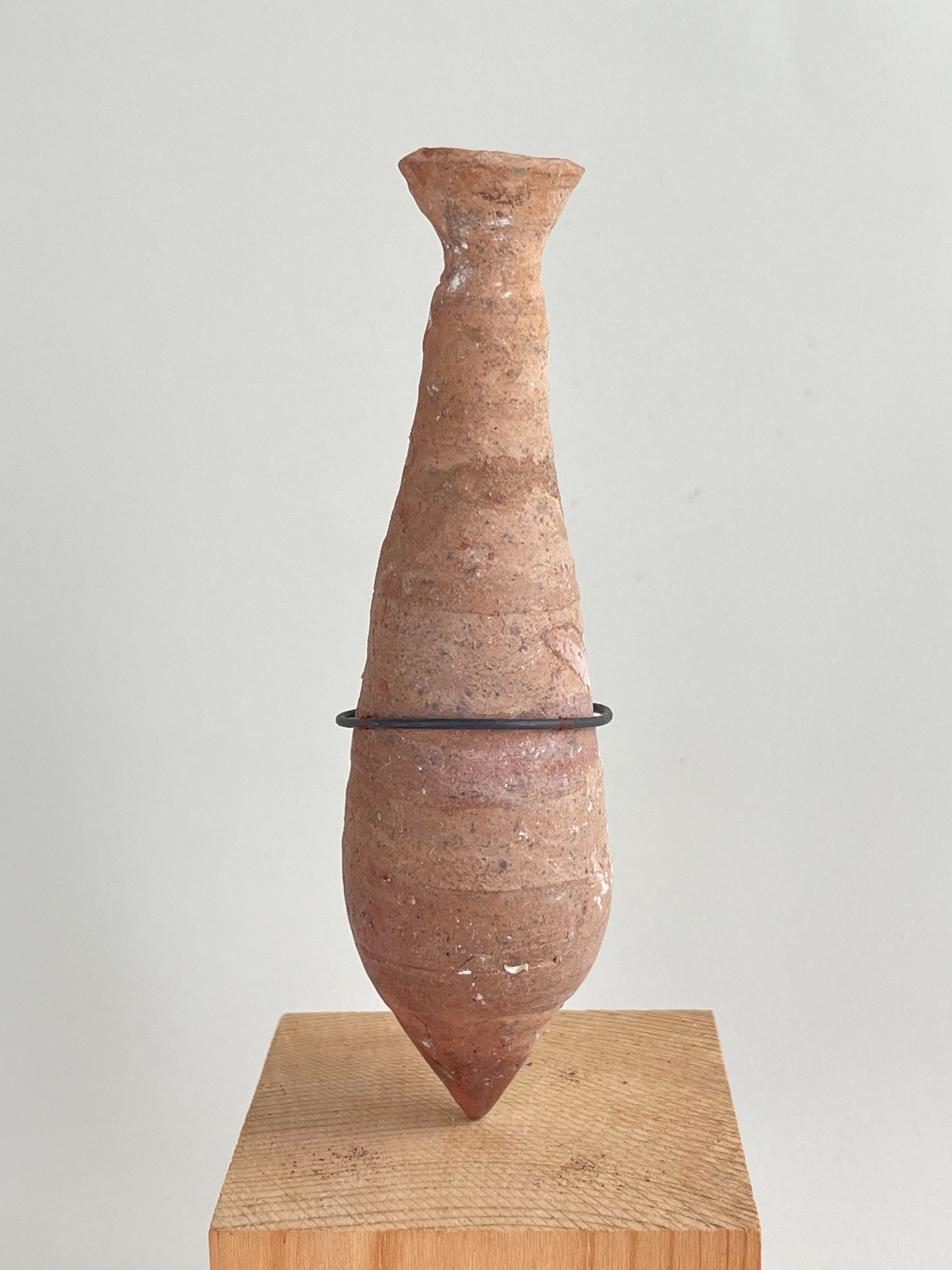
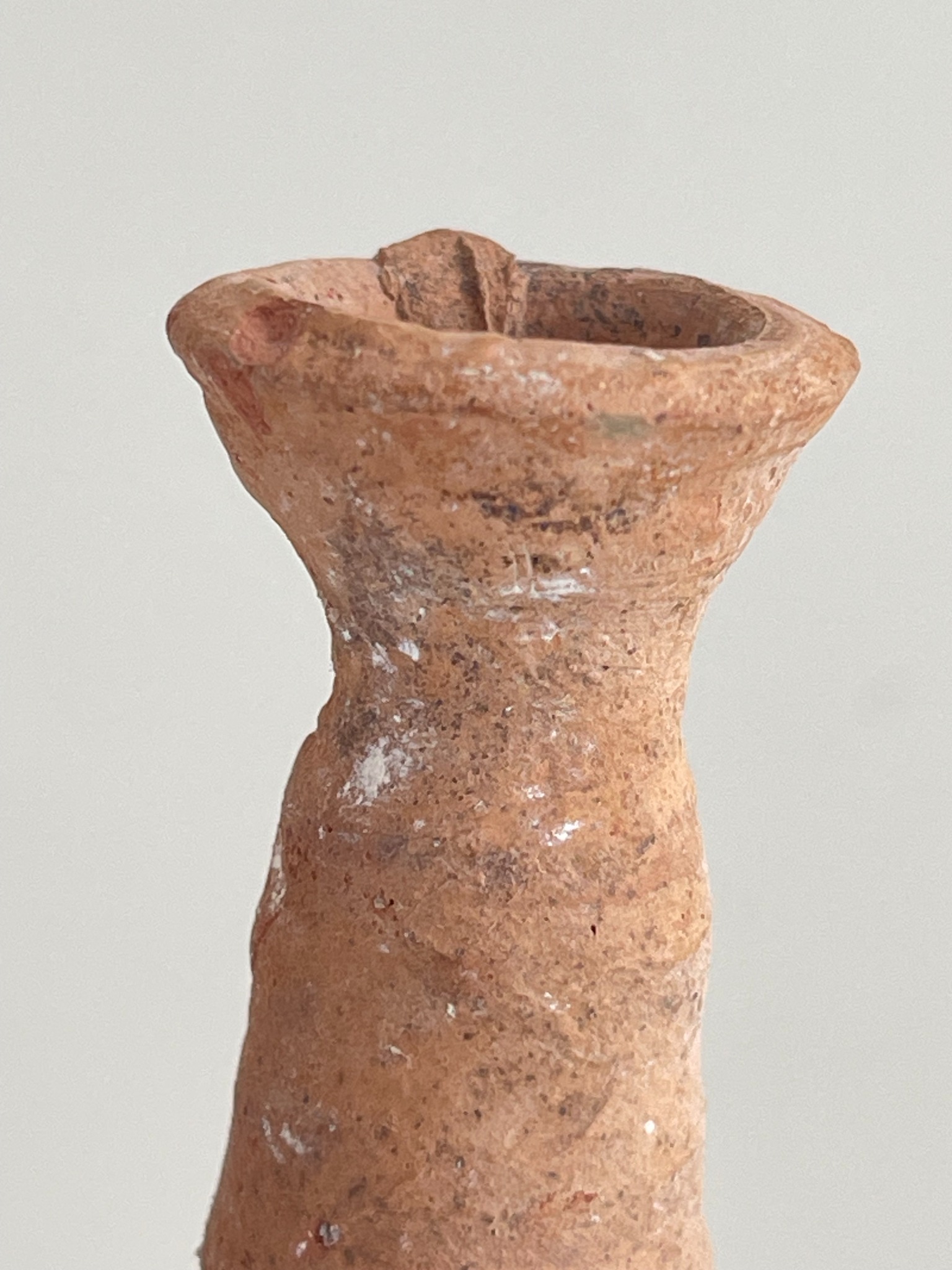
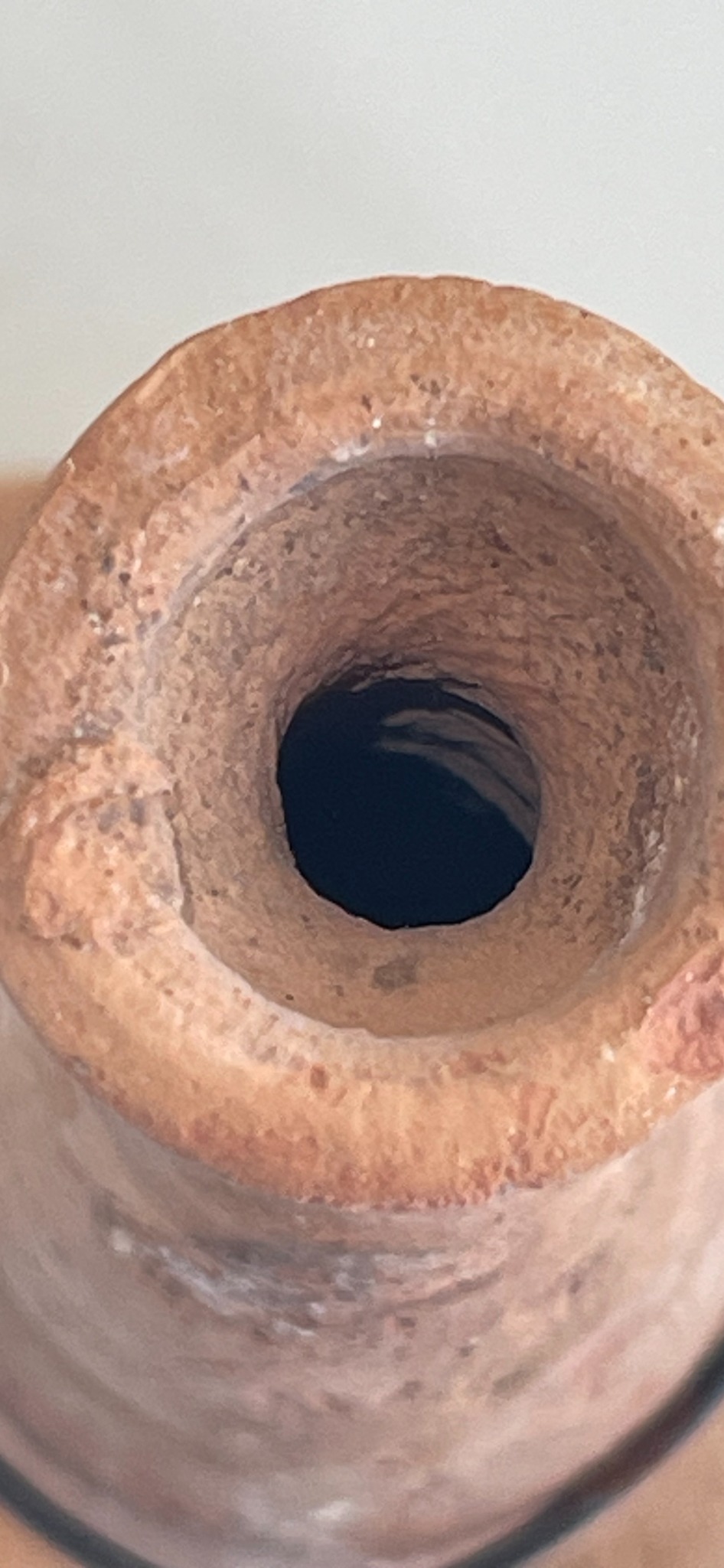
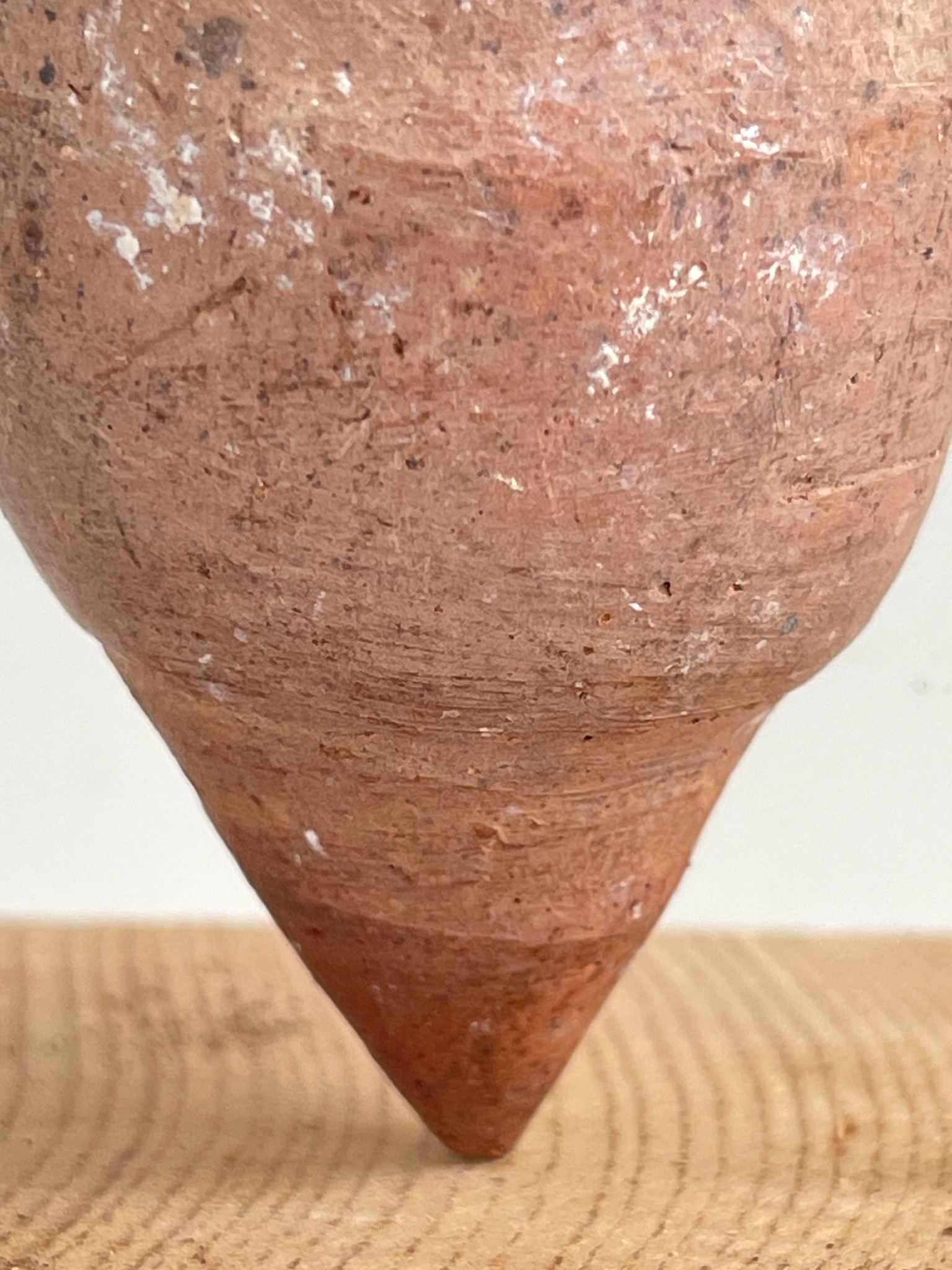
A slender Roman-period earthenware unguentarium attributed to Judaea, preserving its elongated neck, flared mouth and complete tapered point. The reddish ceramic body carries visible wheel striations, irregular firing coloration, surface abrasion and pale mineral accretions. Its compact mouth and narrow neck are suited to the controlled dispensing of small quantities of oil or other valued liquids.
The intact pointed base is a particularly engaging feature: the vessel requires a support, suspension or another arrangement for upright storage. Its plain surface and controlled proportions offer a focused study of how ancient containers shaped the handling of their contents.
Scholarly interpretation
The collection proposes a Jewish ritual reading, considering the vessel as a possible material expression of halakhic logic: an object through which rules governing purity, handling and the separation of sacred substances could be enacted physically. Under this interpretation, the non-standing form invites discussion of elevation, support and deliberate storage, and of how intangible religious systems can become embedded in everyday material life.
This is an interpretive research proposition. The pointed form and undecorated surface alone do not establish Jewish manufacture, sacred contents or a specific purity-law function; comparable unguentaria circulated across several eastern Mediterranean cultural settings. The vessel provides an opportunity for comparative ceramic, religious-historical and residue research.
Condition
Complete profile with neck and pointed tip preserved; minor rim erosion and localized losses, surface wear and mineral accretion. The owner reports no repairs or restoration. Fine surface lines visible in the closeups merit examination to distinguish superficial marks from structural fissures. The modern display support shown in several photographs is separate from the ancient vessel.