RRP-218
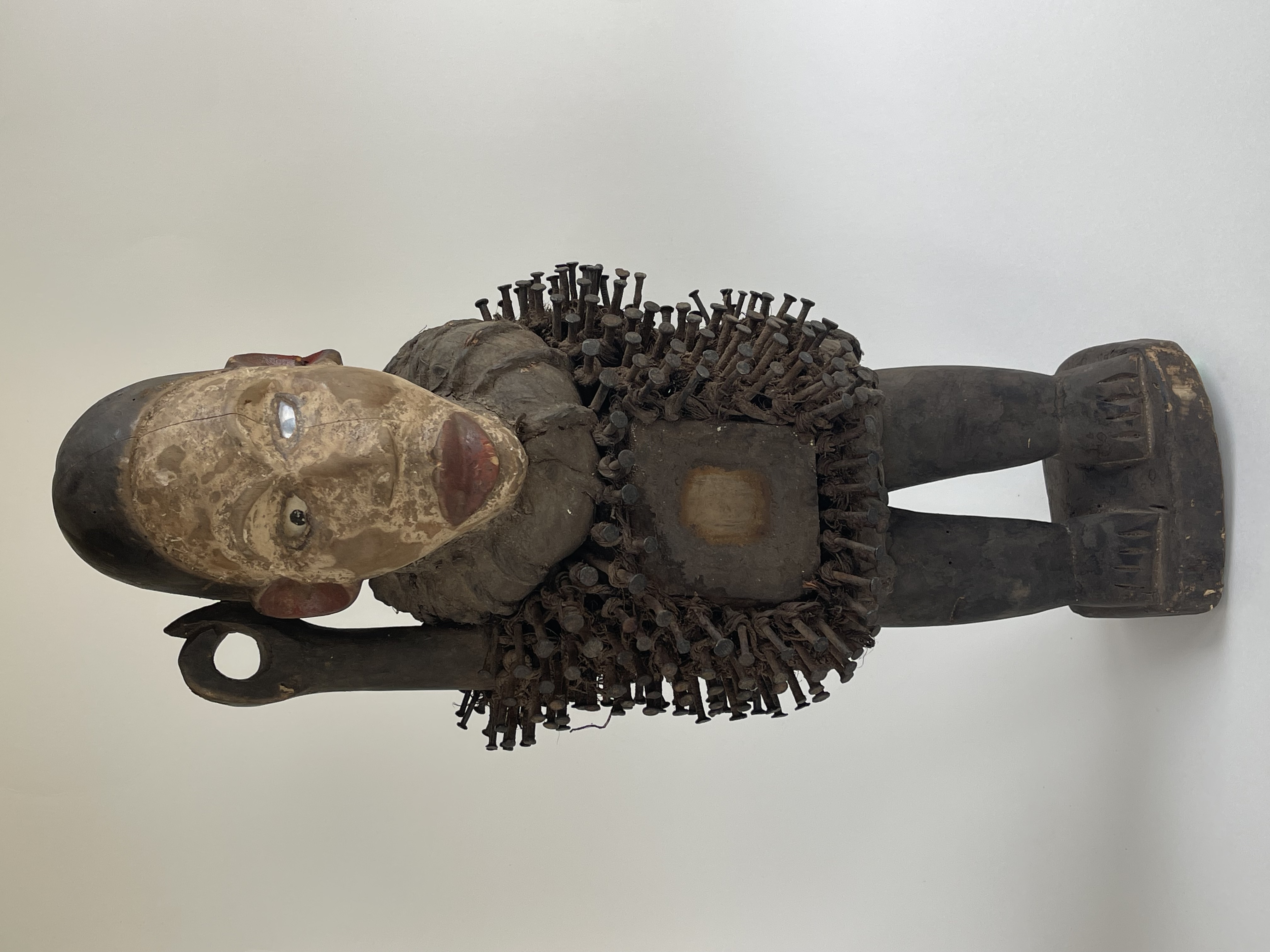
Antique Kongo Nkisi Nkondi Power Figure Nail Fetish c.1880–1920
Request Access← Back to CollectionInquire about this object →Catalogue entry
Description
Antique Kongo Nkisi Nkondi Power Figure Nail Fetish c.1880–1920
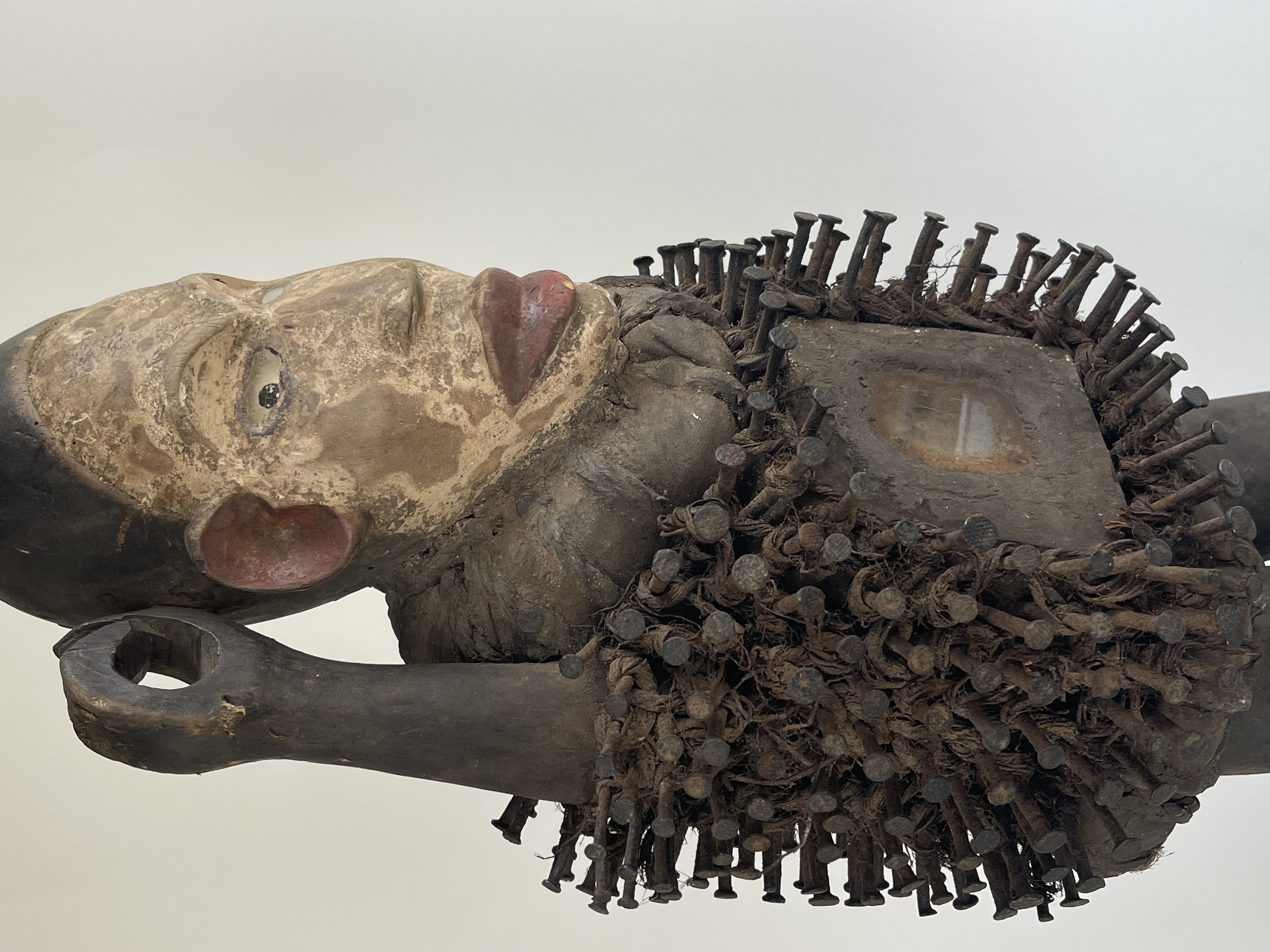
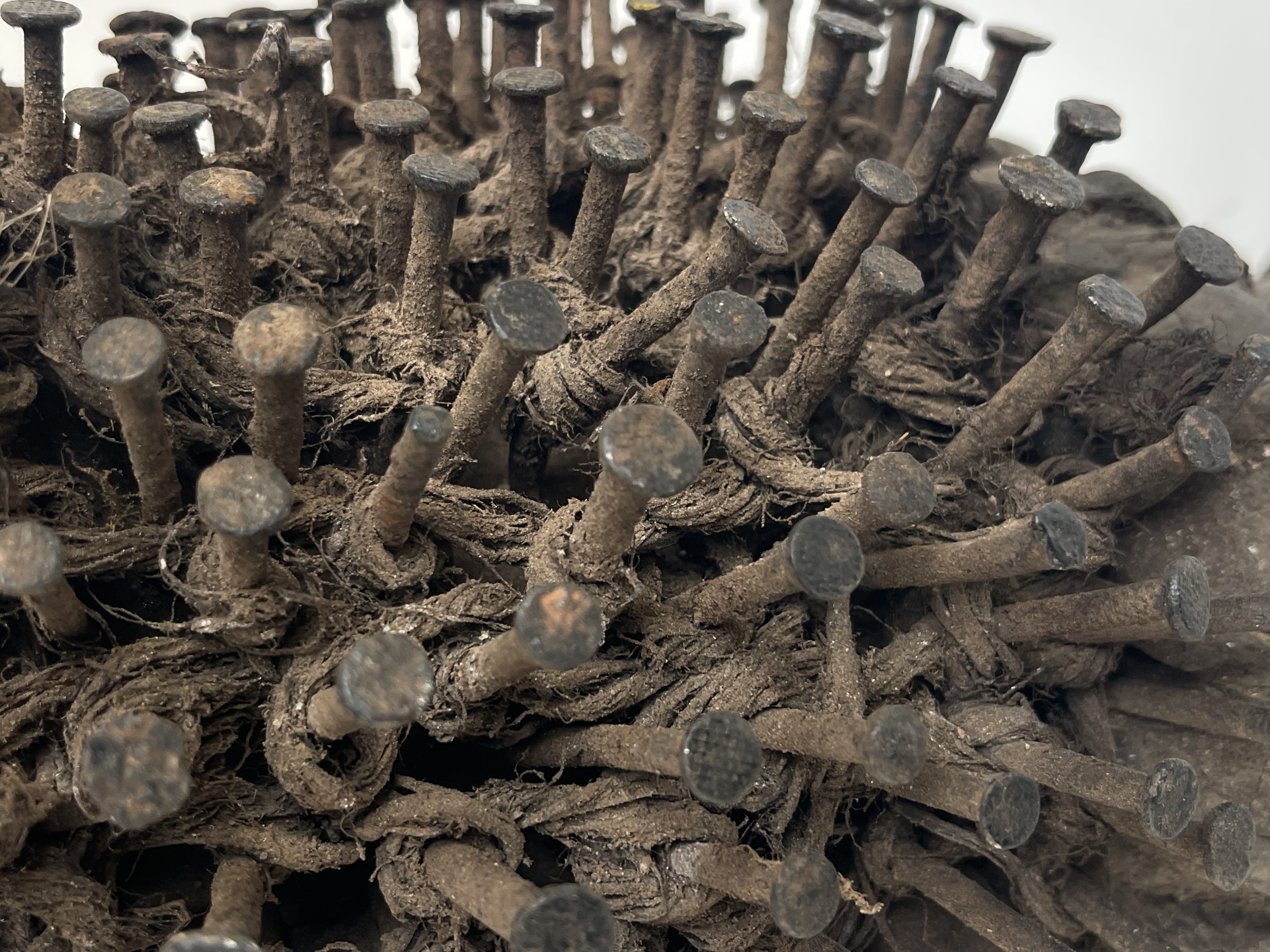
A Kongo nkisi nkondi power figure from the Congo region, attributed to the late nineteenth to early twentieth century, circa 1880–1920. Carved in hardwood, the figure stands upright on an integral base, with an expressive head, raised arm element, and a dense circumferential nail field embedded through layered organic bindings.
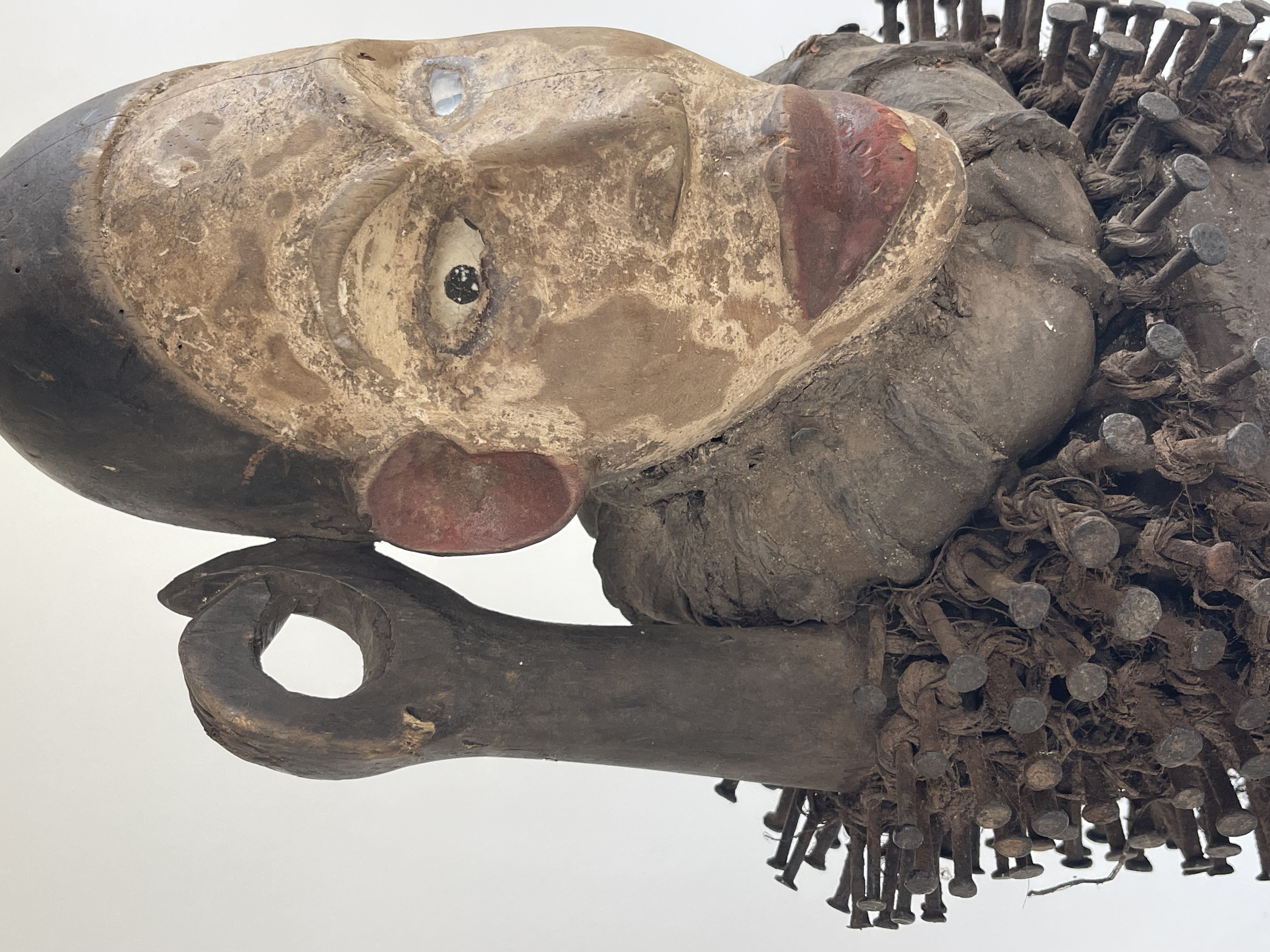
The face retains traces of white kaolin pigment (mpemba), worn and integrated into the wood surface. Red pigment remains visible on the lips and ears. The originally inset eyes display asymmetrical survival. The vertical facial age crack, pigment erosion, and worked surface form part of the object's recorded material history.
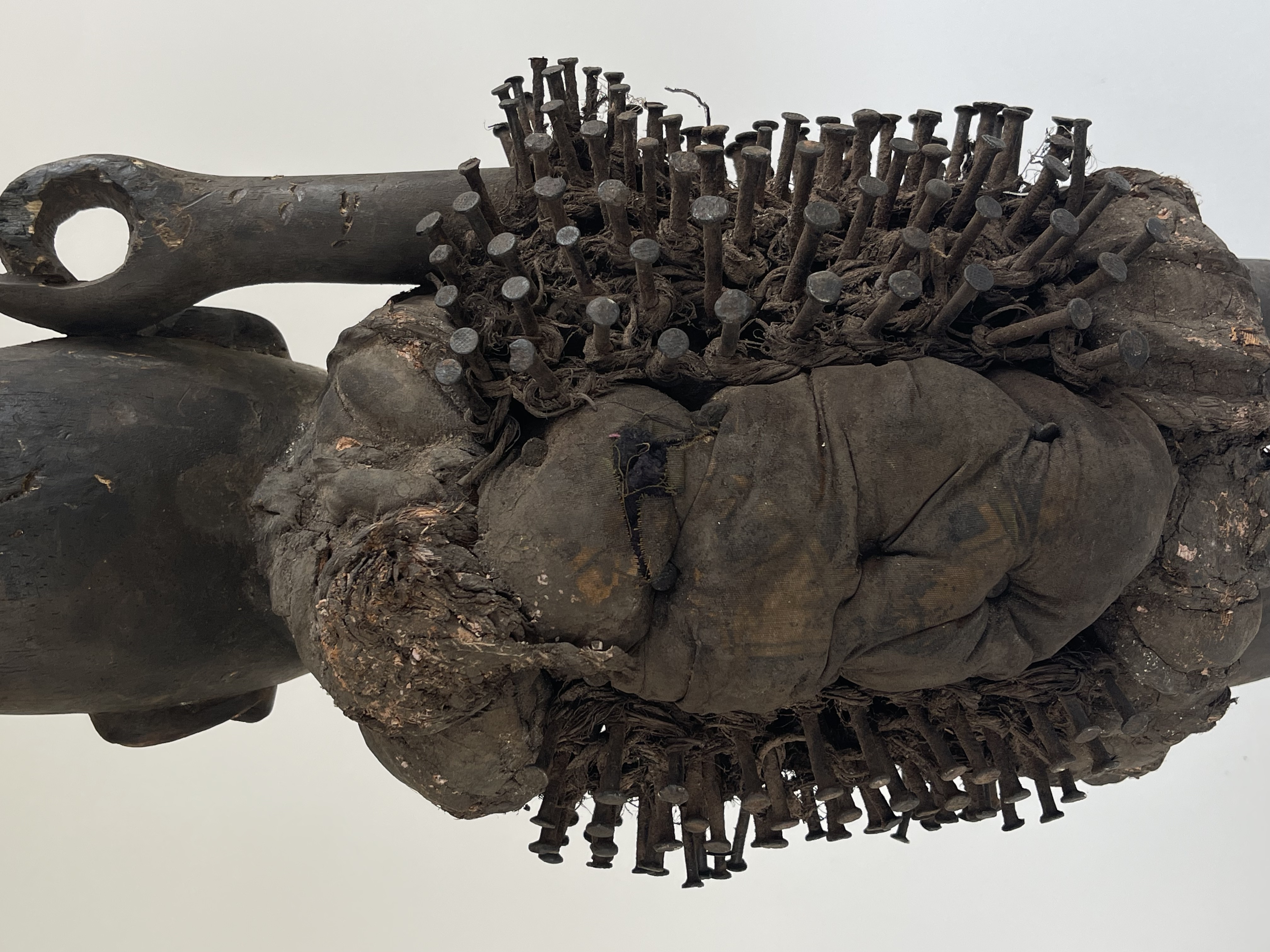
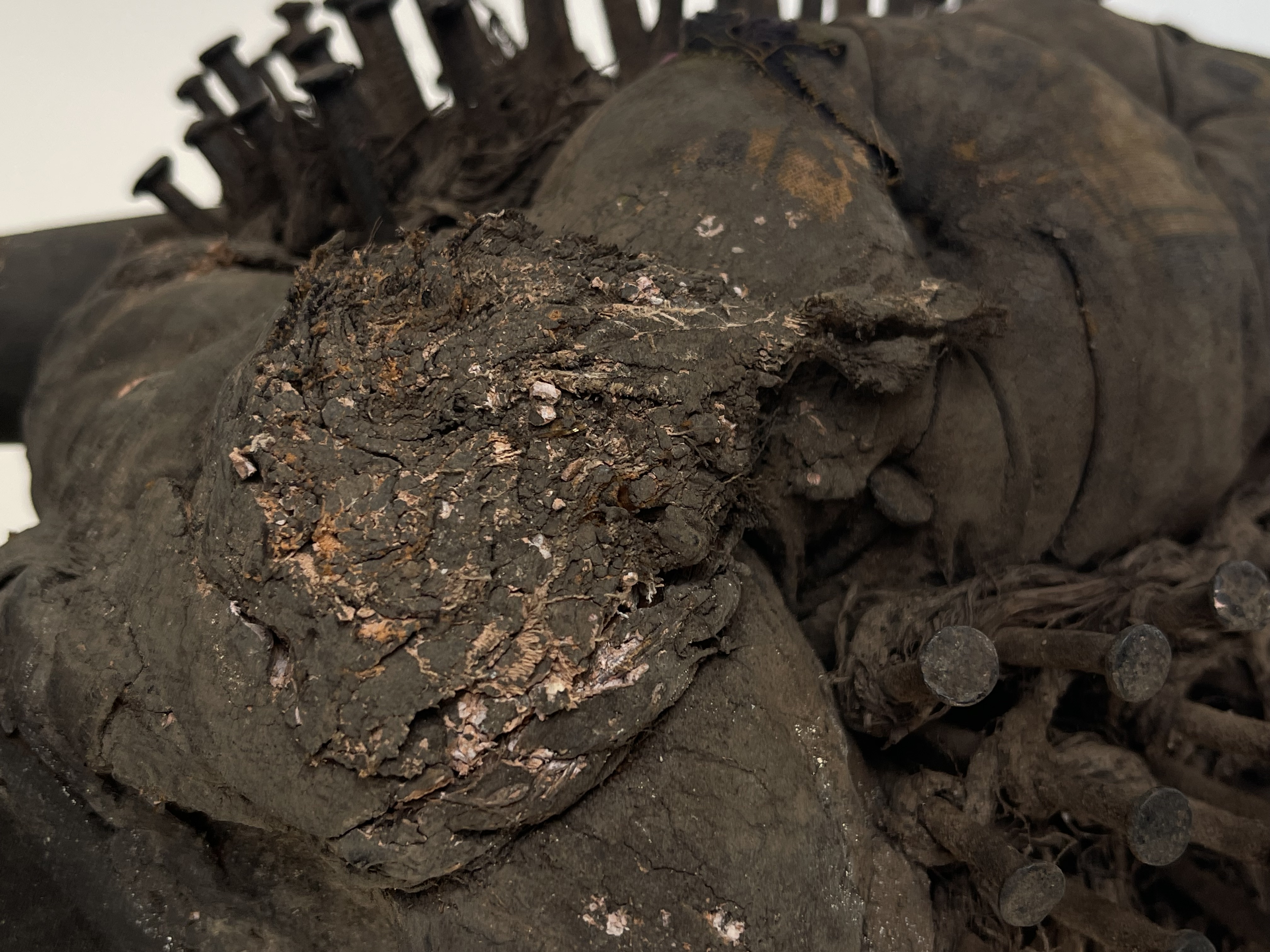
A dense accumulation of iron nails encircles the torso, passing through fiber and cloth bindings. Differences in corrosion, angle, and insertion depth are consistent with successive ritual interventions. The rectangular central bilongo housing plate shows abrasion around its central area. Layered cloth, fibers, and compacted organic material survive around the torso and at the rear.
The raised arm, carved with a circular opening, is integral to the figure's composition. The base retains wear from handling and placement.
Condition
Ritual condition with evidence of extended use. Surface wear, pigment loss and oxidation; stable vertical age crack through the face. Organic cloth, fibers, and packed substances survive in naturally desiccated and partly collapsed condition. The nail field survives with corrosion and variation. The bilongo plate has surface abrasion and the base exhibits handling and placement wear. No restoration observed by the owner.
Scholarly note
Nkisi nkondi figures served as agents of spiritual enforcement within Kongo societies. Ritual specialists (nganga) used them in contexts including oaths, disputes, and agreements. Nail insertion and other additions could mark individual acts of invocation. The surviving nail field, bilongo interface, and organic binding mass preserve evidence of the object's successive ritual engagement.
Collector's note
This example's importance lies in the continuity of its accumulated materials: iron nails, dense bindings, the central bilongo interface, and traces of pigment. Together they make visible the process by which ritual agency was enacted and maintained, rather than only the sculptural form.
Photographic gallery

Access & use
Ways this object may be engaged
Educational Programs (No loan fee)
Exhibitions (No loan fee)
Editorial — for books, articles, scholarly journals (No loan fee)
Film / TV
(Rental fees apply)
Advertisement / Commercial Photography
(Rental fees apply)
Prestige Rentals
Distinguished objects available for short- or long-term rental to private residences, offices, hotels and exceptional spaces.
(Rental fees apply)
Documentation
Additional documentation
Eight owner-supplied photographs document the frontal, side, and rear views; face; bilongo plate; organic bundles; and nail field. Source image upload and gallery assignment remain pending.