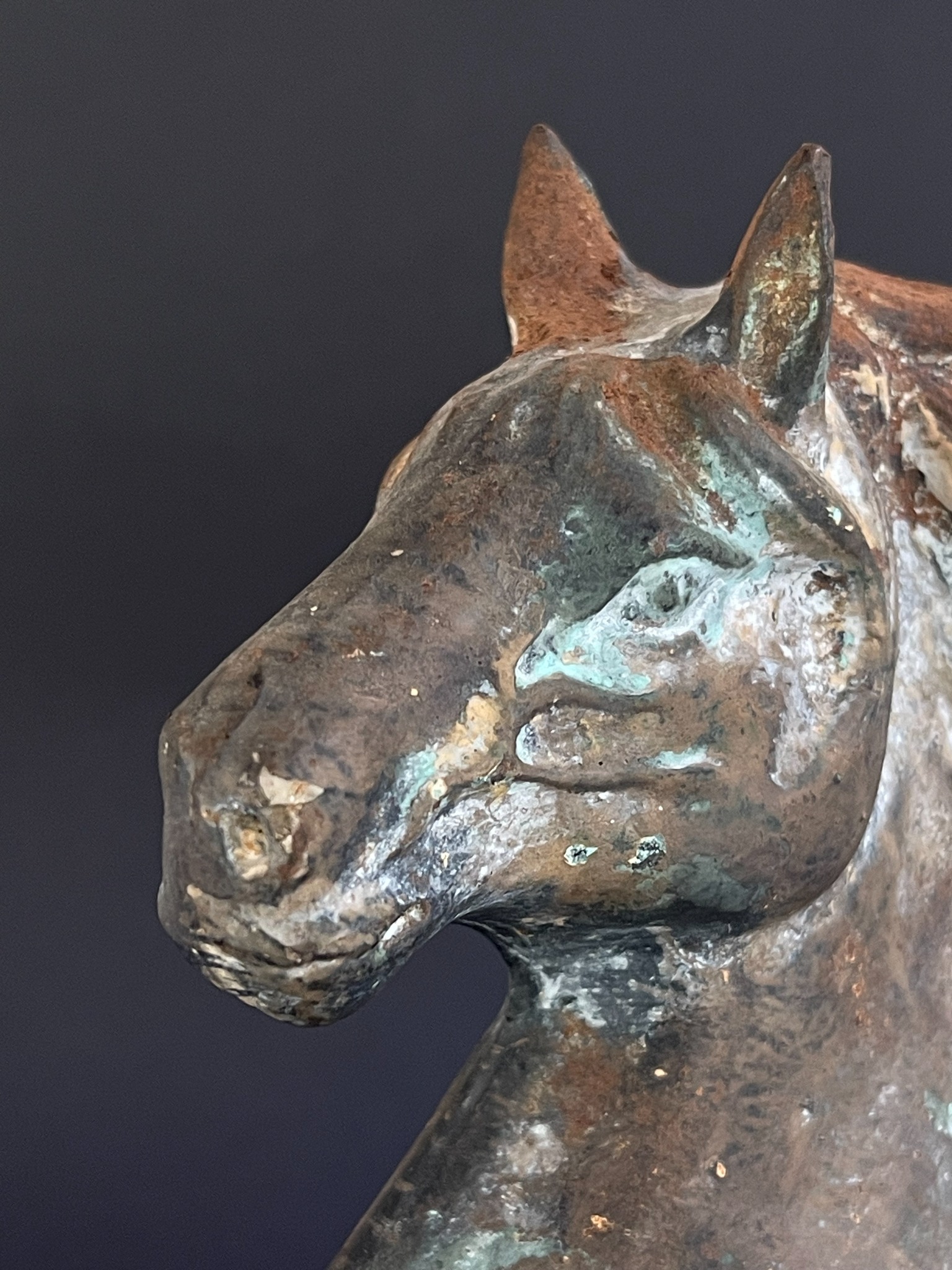
An expressive cast-iron horse sculpture conceived as a study of movement and living energy. The horse advances in a spirited stride, its raised foreleg, elevated neck, alert gaze, outward-projecting mane, and sweeping tail forming a continuous visual rhythm. Rounded volumes and softened musculature carry the eye through the composition.
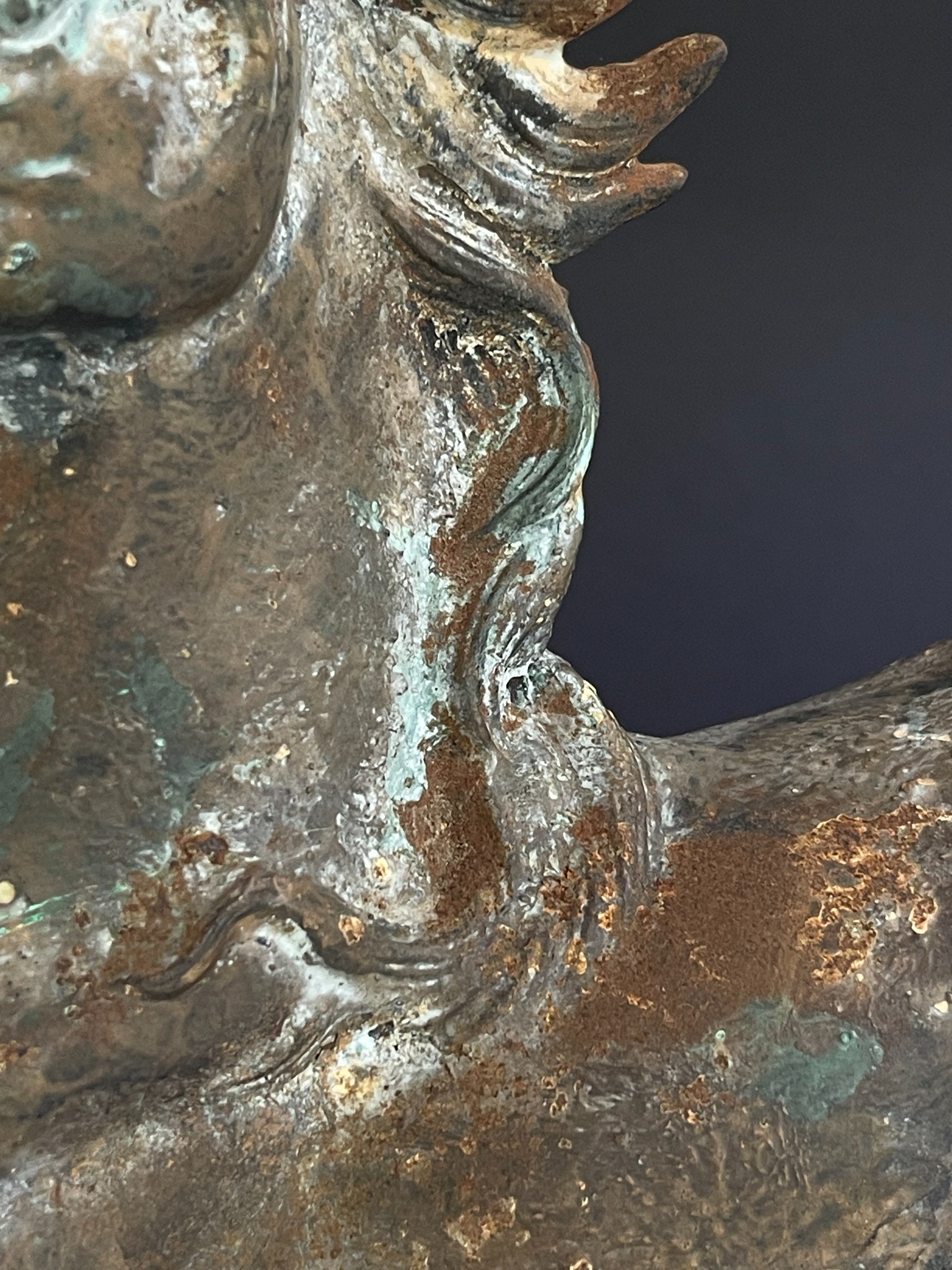
Two additional flowing elements, beneath the chest and along the side of the face, are interpreted in the supplied study as visual expressions of wind and motion. Their relationship to the mane and tail gives the sculpture an individual character and suggests an interest in communicating the forces acting upon the animal as well as its recognizable form.
The proposed European attribution and date of circa 1890–1925 place the work within a period of expanding artistic interest in dynamism, energy, and expressive contour. The interpretation presented here considers a relationship between traditional figurative craftsmanship and broader modernist concerns. A specific maker, workshop, or direct affiliation with an artistic movement has not been established.
Its significance lies in the synthesis of recognizable equestrian imagery and inventive flowing forms. The sculptor uses subtle shifts of contour to turn a static material into an image of movement passing through the body. The mane, tail, and sculptural extensions make the sensation of wind and speed central to the viewing experience.
Collector’s note: The horse has long carried associations of strength, prestige, freedom, and beauty. This example gives particular attention to the challenge of making invisible forces visible, transforming cast iron into an image of living motion with a distinctive artistic presence.
Reported condition is very good, with age-related surface wear, oxidation, darkened iron, and traces of older finish. Minor casting irregularities remain visible. The owner reports no observed structural repairs or visible cracks and describes the sculpture as solid and stable. The historic surface is retained.