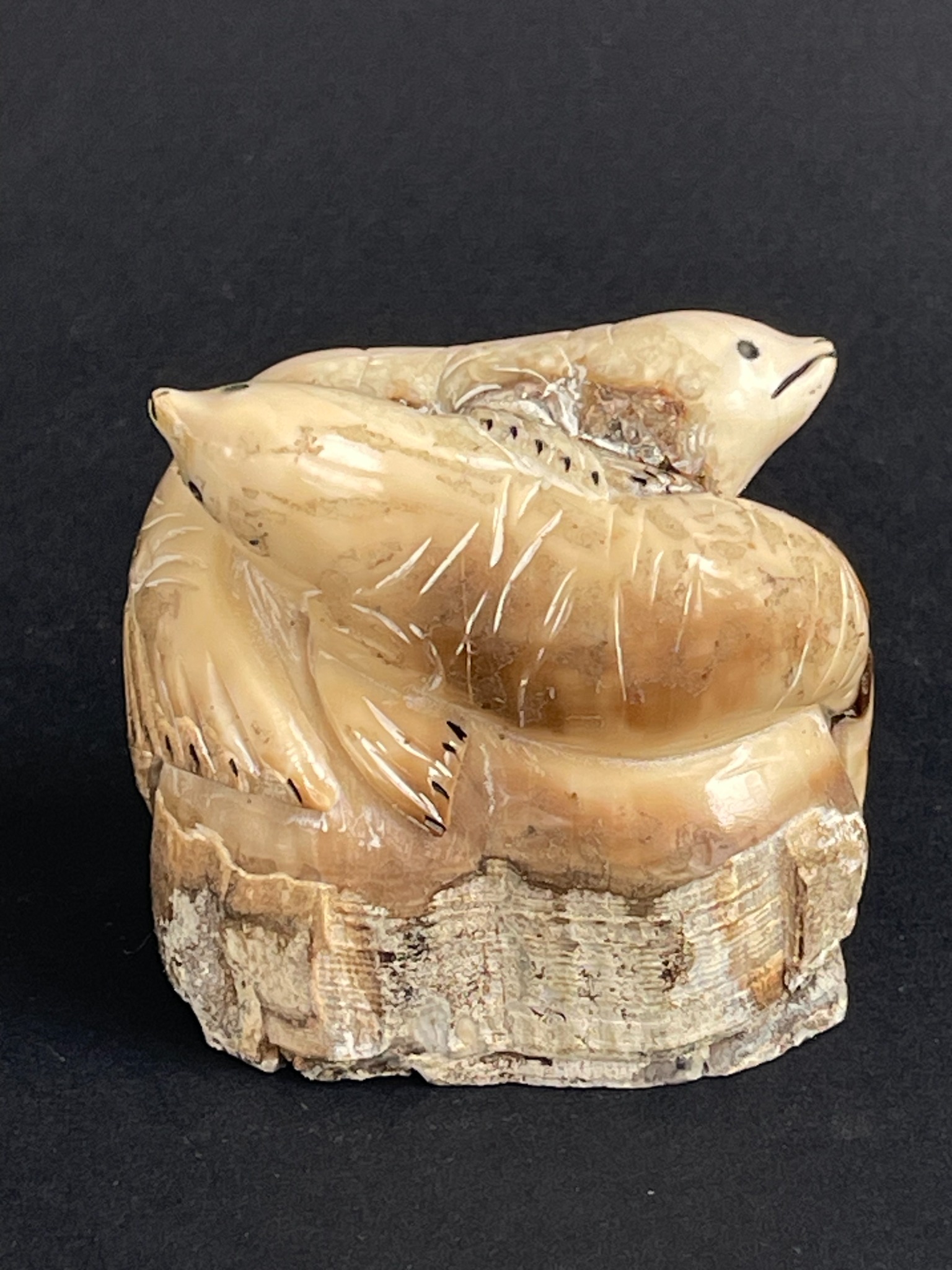
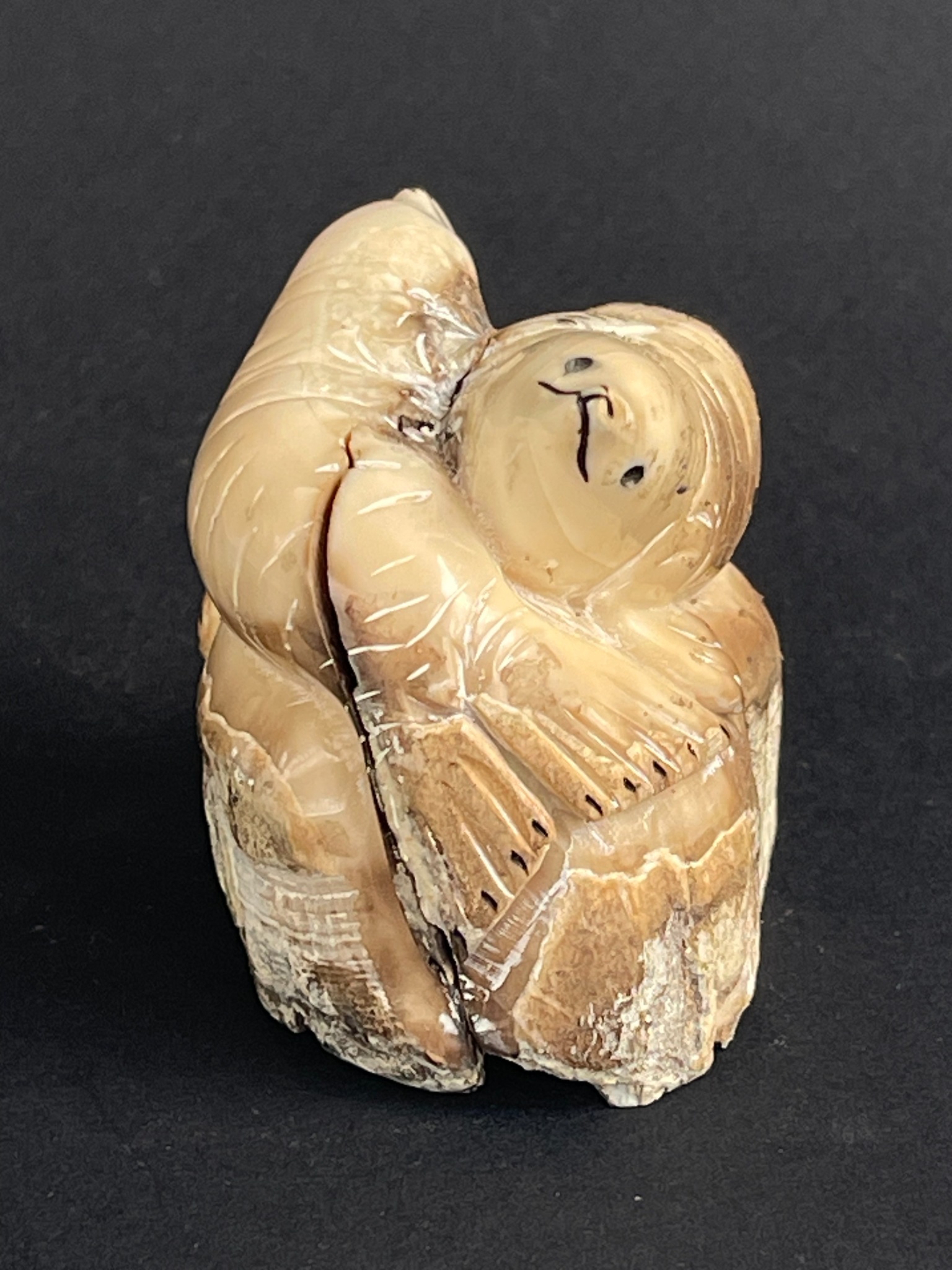
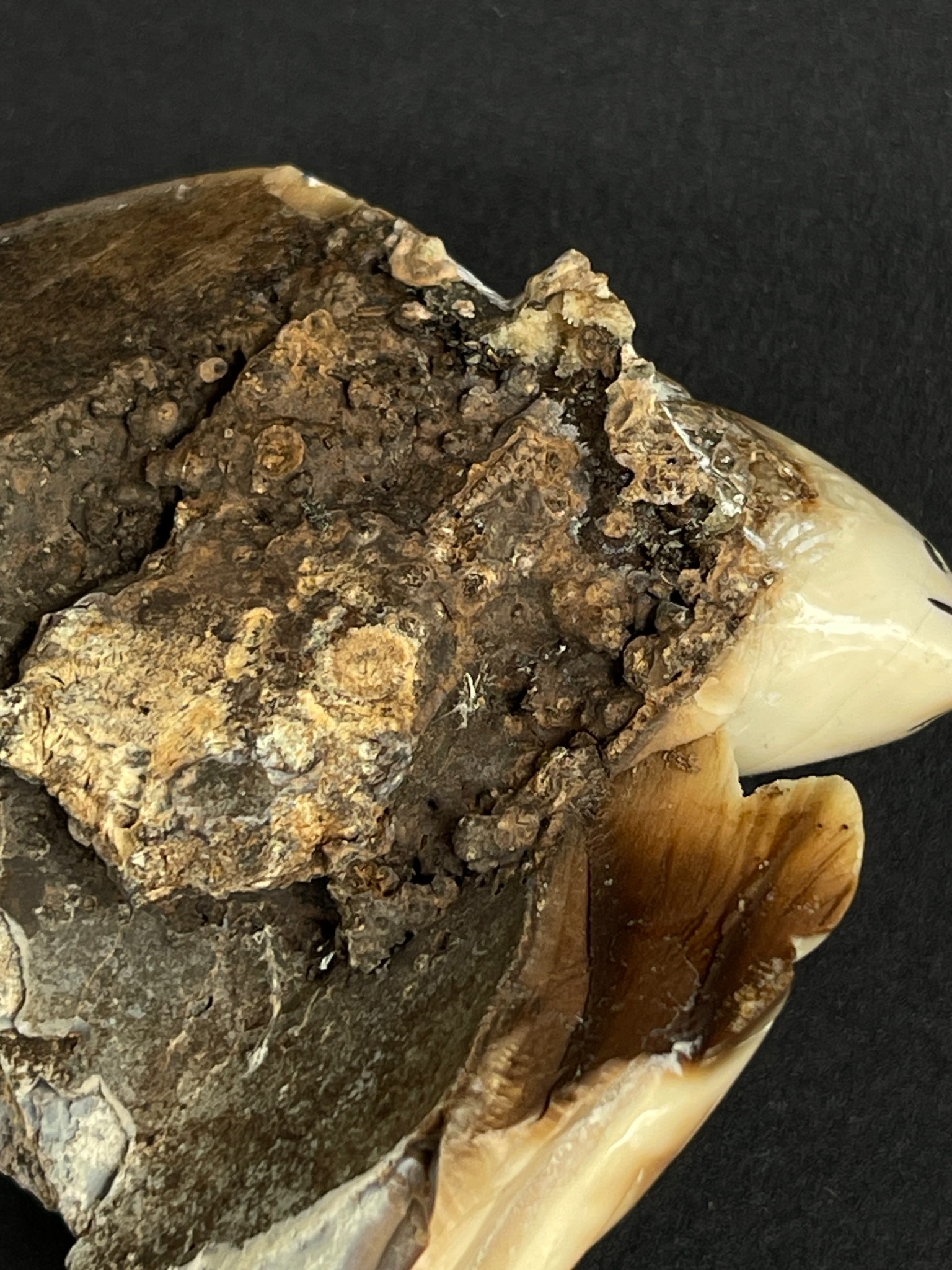
A compact hand-carved group of seal-like animals worked into the natural curvature of a hollow fossil-bone section, identified by the owner as proboscidean, mammoth-type material. Rounded polished bodies and black-pigmented incisions defining faces, flippers, and contours contrast with the rough mineralized matrix. The supplied attribution places the carving in a northern Eurasian, likely Siberian context, in the late 19th or early 20th century; the proposed geological age of the material is recorded separately.
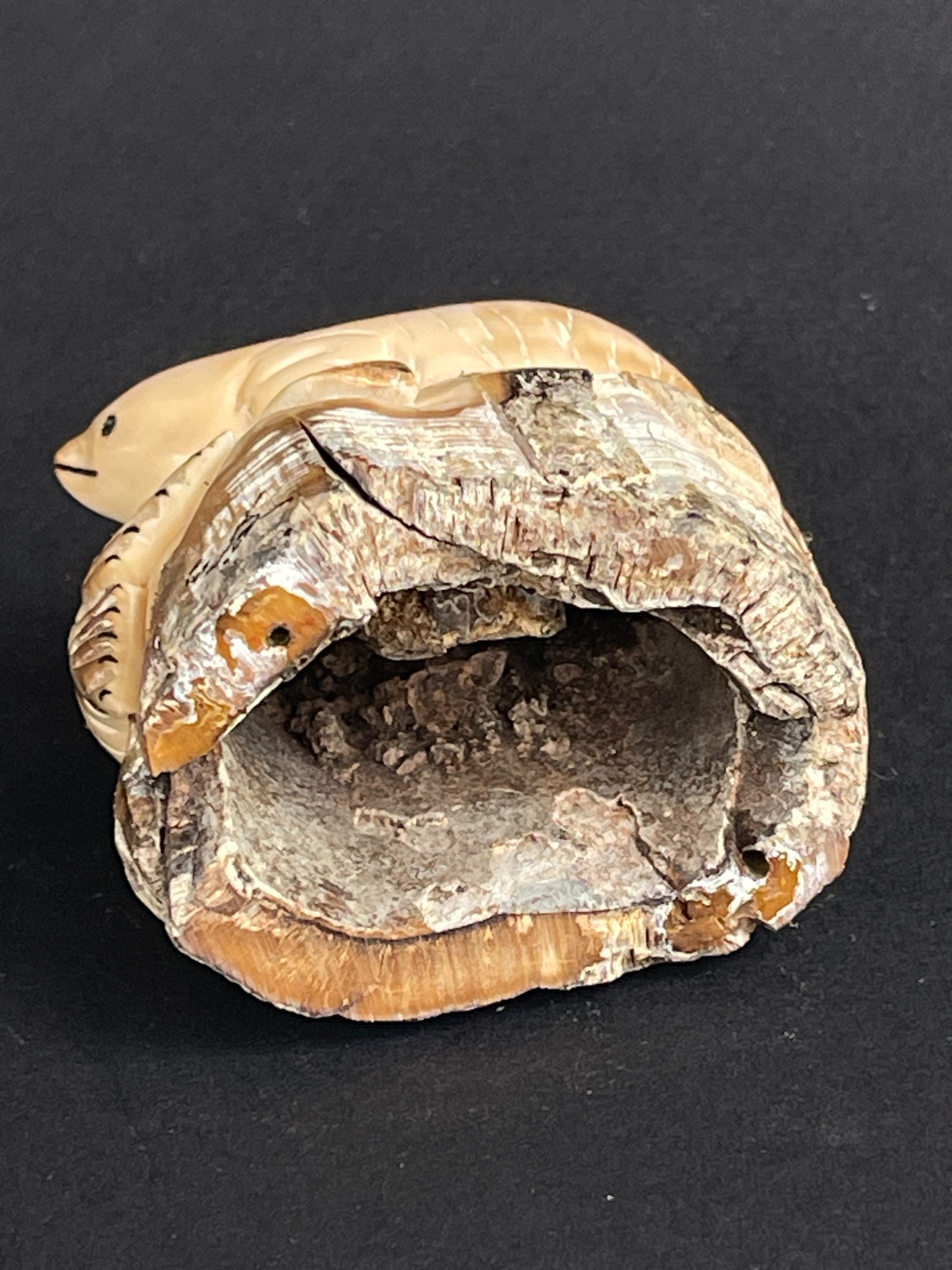
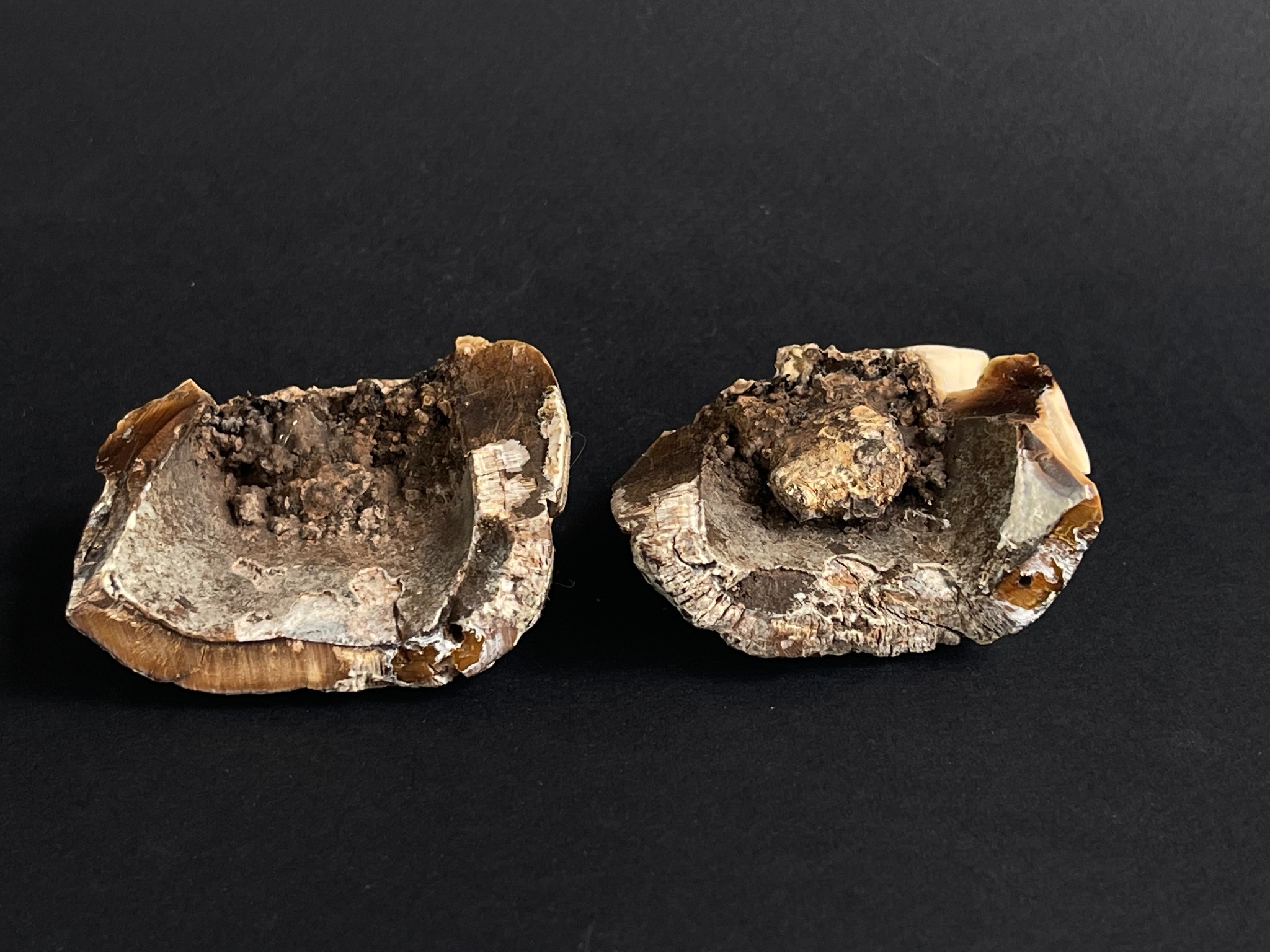
The object survives in two corresponding sections along a fracture described by the owner as following the natural fossil structure. Both sections are present and align. Their exposed interiors reveal the hollow, mineral accretions, and compacted deposits. Two drilled openings at the base suggest a former mounting on a peg or shaft, although the exact original mounting and use remain undetermined.
The composition follows the material’s existing boundaries, retaining the visible relationship between carved animal forms and fossil matrix. This material-responsive approach gives the object a dual interest as sculpture and as a record of transformation from an older organic substrate into a worked object. The supplied interpretation emphasizes the continued visibility of the hollow, fracture, and mineralized structure.
Reported condition includes preserved structural integrity within each section, the matching fracture, minor abrasions to polished surfaces, and softened black pigment retained in incisions. The owner reports no evidence of modern recarving, artificial aging, or composite construction. The proposed species identification, geological age, carving date, and fracture history remain supplied assessments rather than results of laboratory testing.