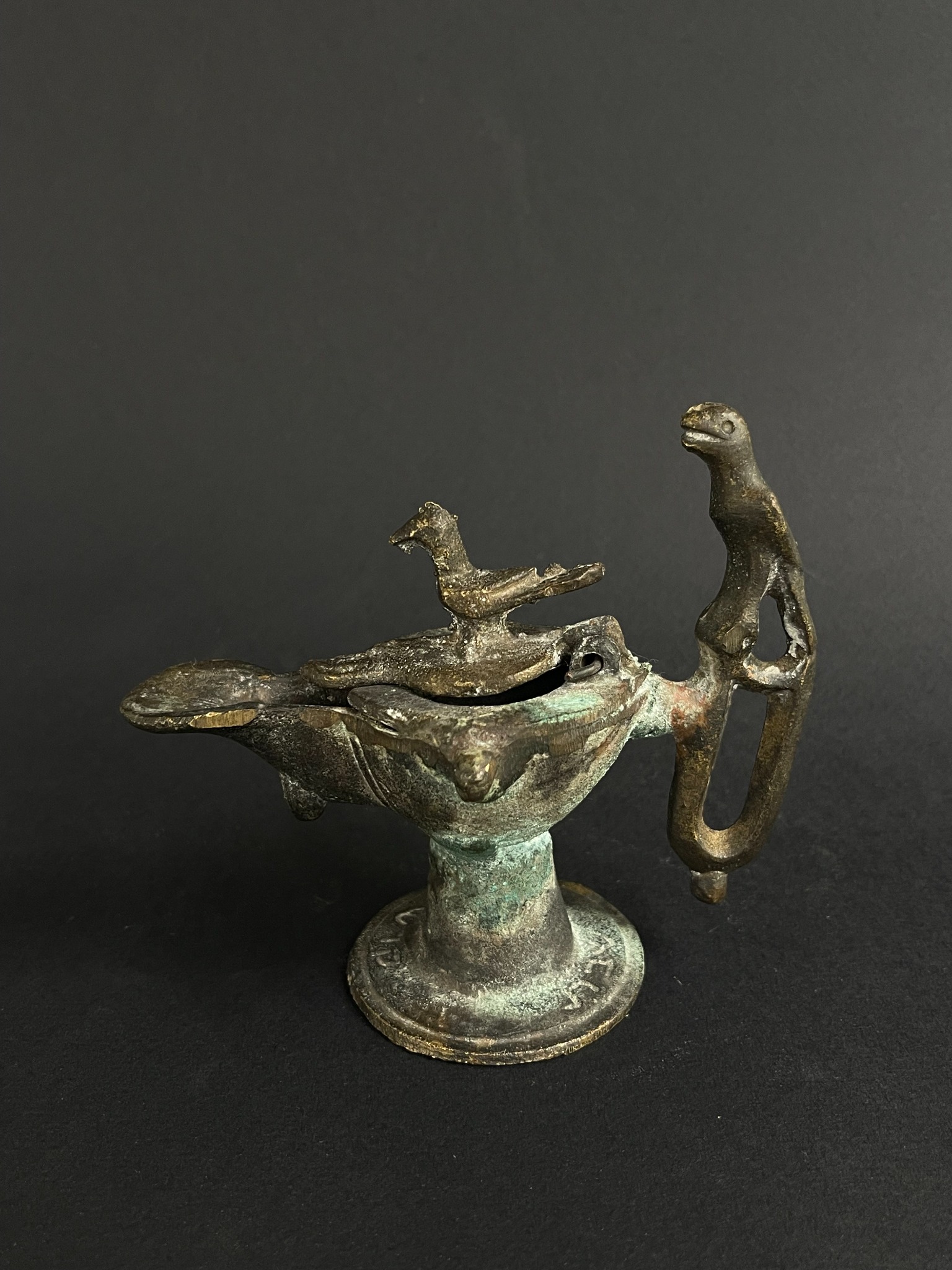
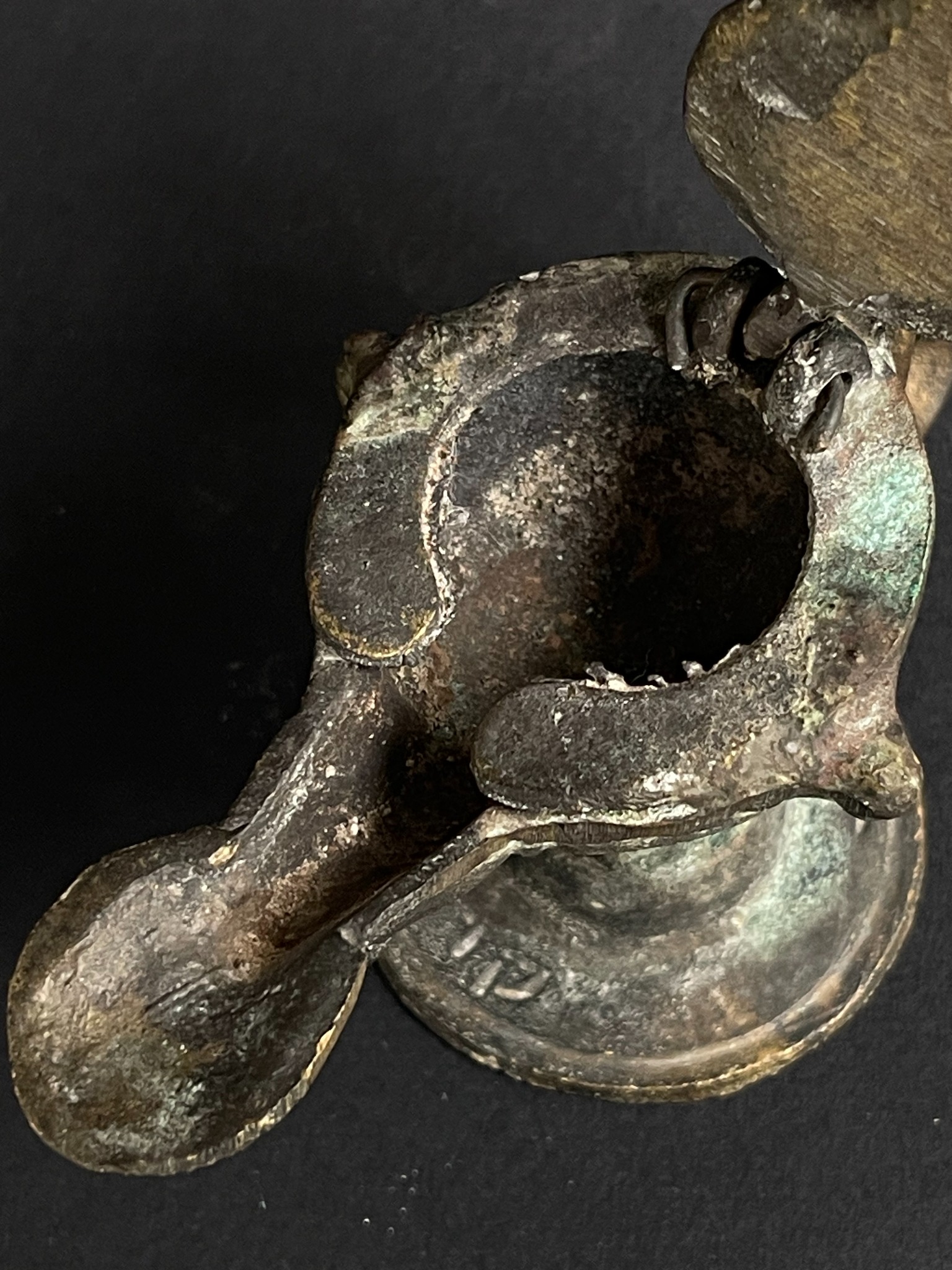
A compact bronze Shabbat oil lamp attributed to an Ashkenazi Jewish context in Central or Eastern Europe and dated circa 1600–1750. The elevated oil reservoir stands on a circular foot, with a forward-projecting wick spout and hinged lid. Two stylized birds articulate the silhouette: one forms the lid finial, while the other is integrated into the tall vertical handle. Remnants of the Hebrew inscription שבת קודש, “Holy Sabbath,” in square Hebrew script identify its ritual association. A simple wire-loop hinge connects the lid and body and remains functional.
The lamp brings domestic ritual, sculptural form, and symbolic interpretation together. Shabbat lighting marks the passage into sacred time. The supplied scholarly interpretation connects the paired birds with neshama yetera, the additional soul associated with Shabbat, and with images of spiritual ascent, transition, containment, and release. The placement of one bird on the handle and another on the lid offers a reading in which physical handling and access to the reservoir participate in a shared symbolic vocabulary. This is presented as a contextual interpretation of the double-bird motif rather than a documented object-specific intention.
The surface retains deep brown patina, green oxidation, and mineral accretions in recesses. Reported condition includes consistent wear at the spout, lid, and handle; wear and deformation of the intact hinge; casting irregularities, pitting, tool marks, minor edge losses, and softened detail at the rim and foot. No modern repairs or synthetic interventions are reported. Its hand-cast, tactile construction and surviving ritual inscription preserve evidence of a long material biography. The supplied collector’s account emphasizes continuity across generations of Jewish domestic practice and the cultural significance of survival through disruption and loss.