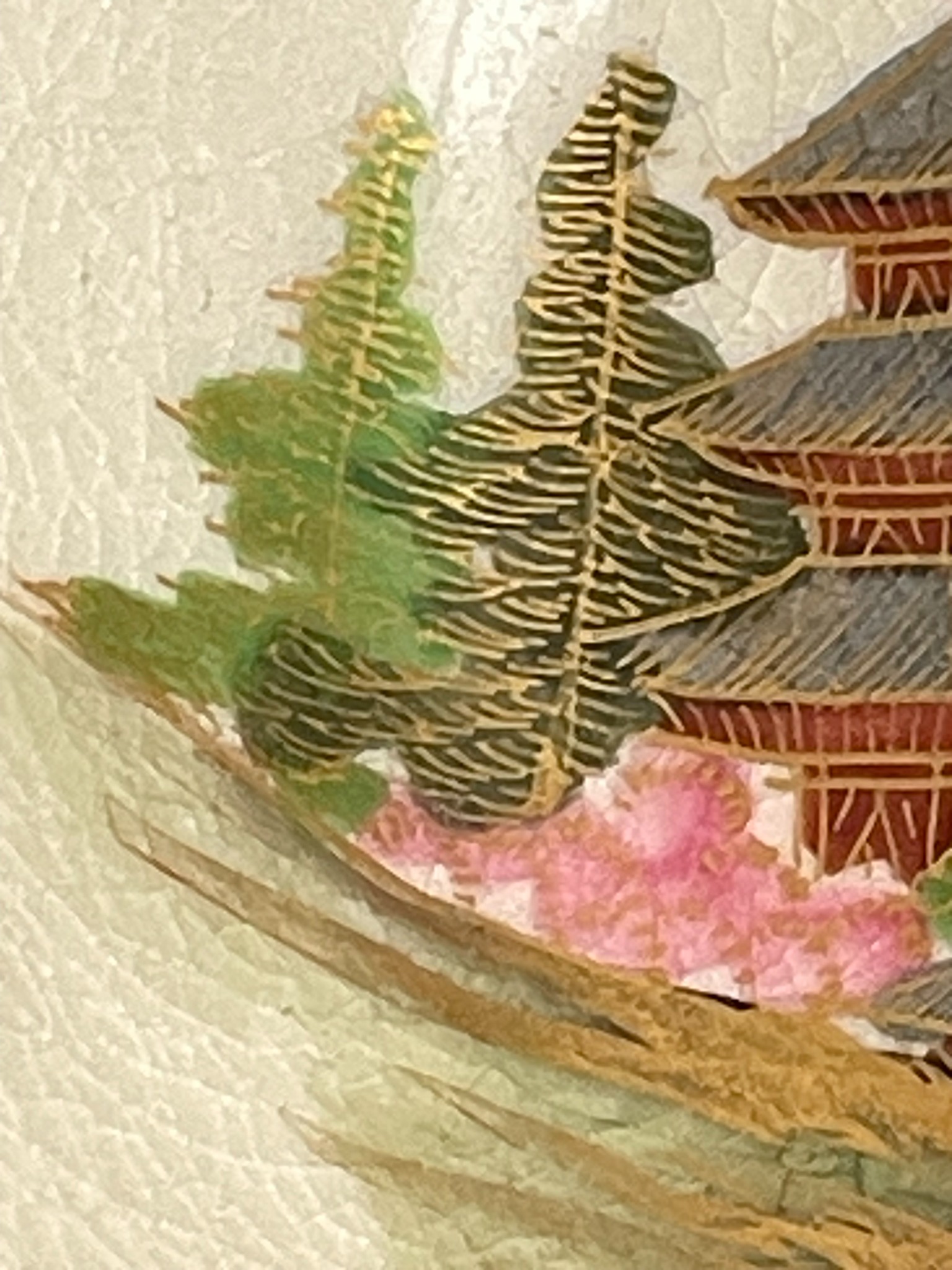
A finely potted sencha bowl attributed to Kyoto and dated circa 1855–1870, with a shallow foot ring and scalloped rim. Restrained gold-traced wisteria decorates the exterior, while a richly painted interior presents a Japanese temple among misty hills, trees, and cascading purple wisteria. Fine natural craquelure extends across the glazed surface. The base bears a two-character 薩摩 (Satsuma) mark in gilt over iron-red.
The supplied catalog places the bowl in the foundational period of Kyo-Satsuma production and interprets its interior-oriented composition through Kyoto sencha culture. As translucent tea covers and gradually reveals the landscape, the image can evoke a garden reflected in water. This proposed relationship between decoration and use offers an interpretive connection with yūgen, mono no aware, and miegakure, the aesthetic of partial concealment and revelation. The suggested elite domestic, seasonal, or ritual setting is an interpretation supplied with the object.
Reported condition is excellent for its age: no chips, cracks, or restoration; intact, unpolished gilding; natural fine craquelure throughout; and no UV fluorescence or signs of modern repair reported by the owner. Acquired in the United States through an online antique-shop platform in the 2020s; the source seller reported that it came from their father's private collection.