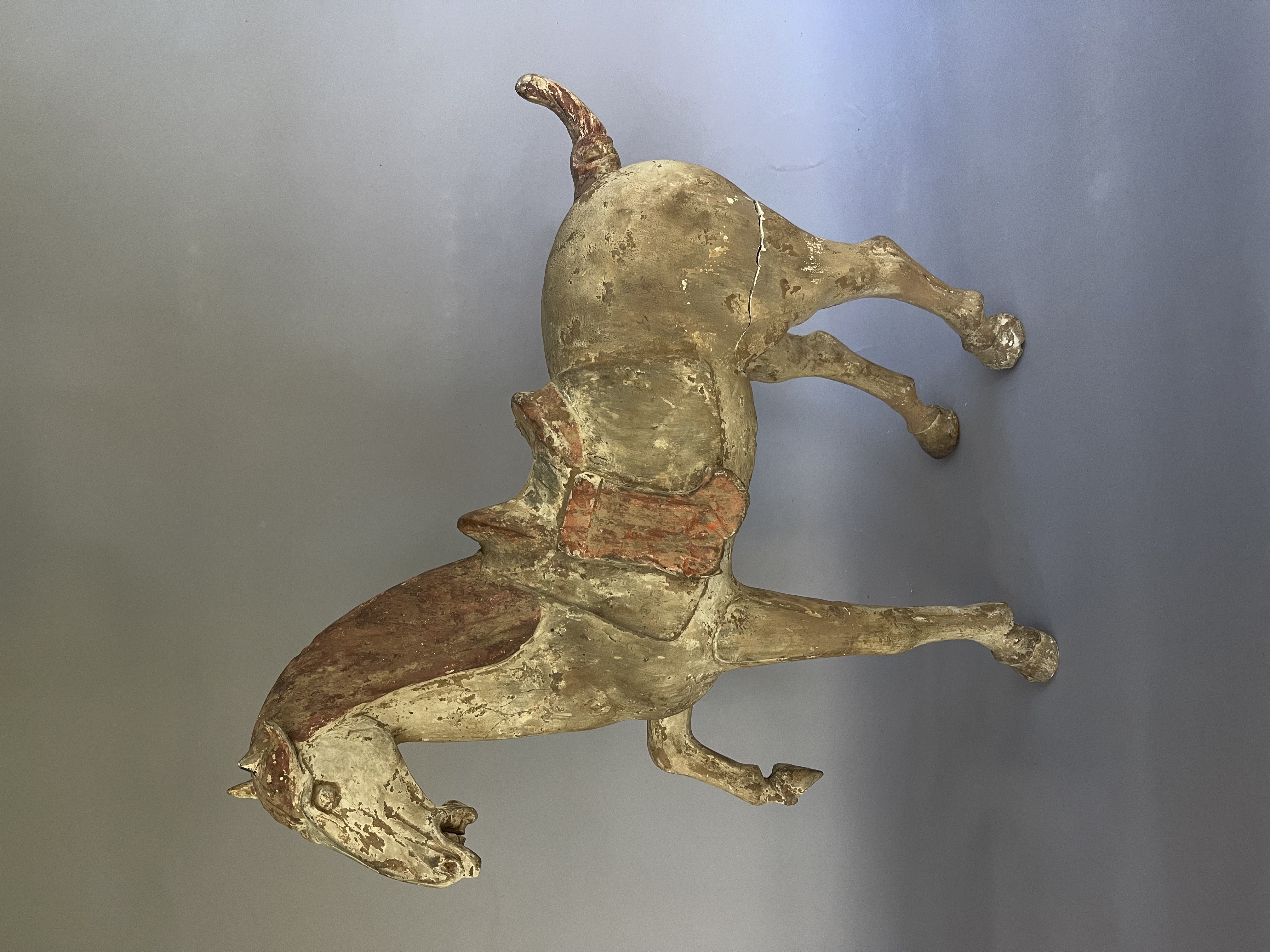
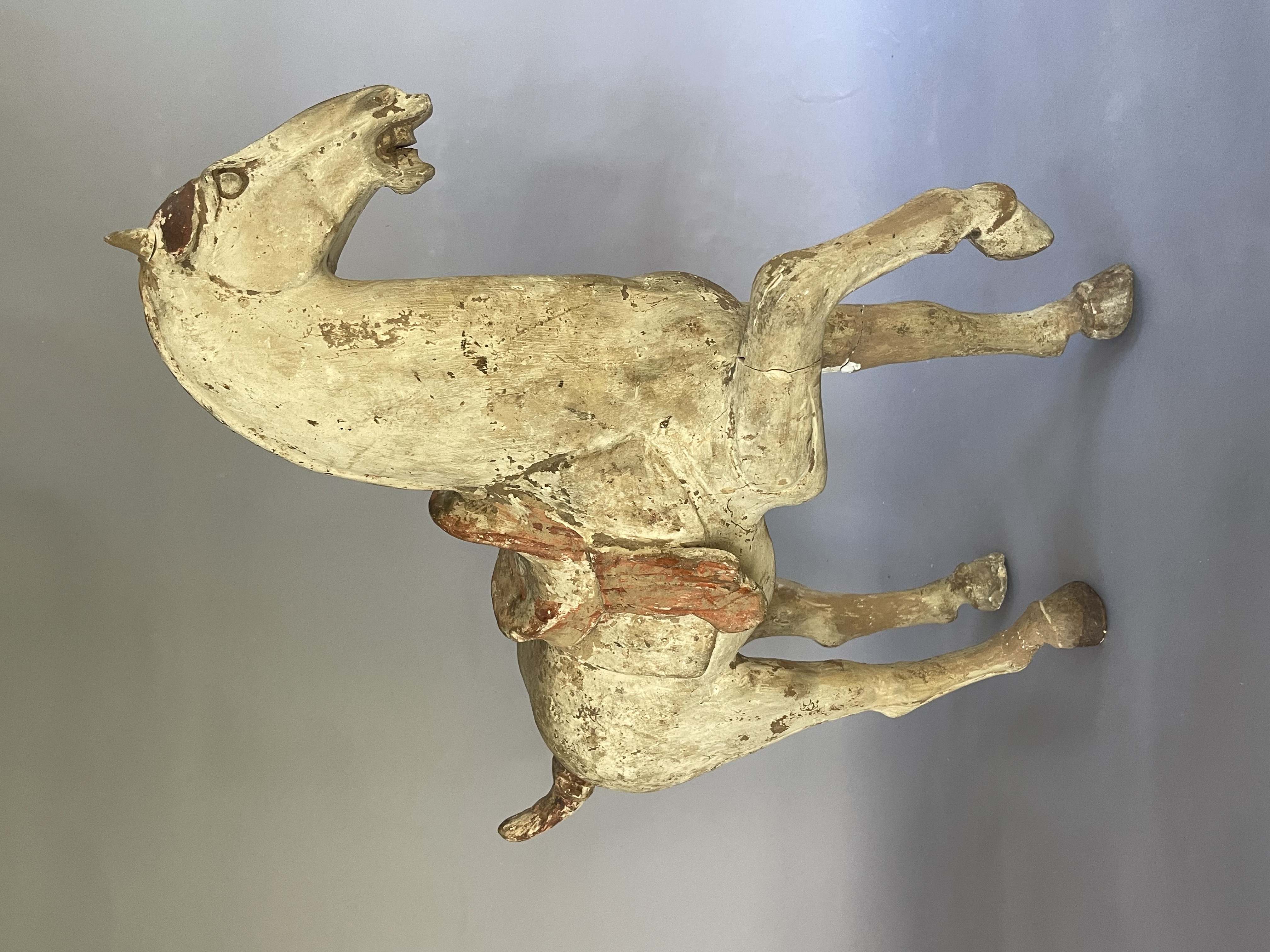
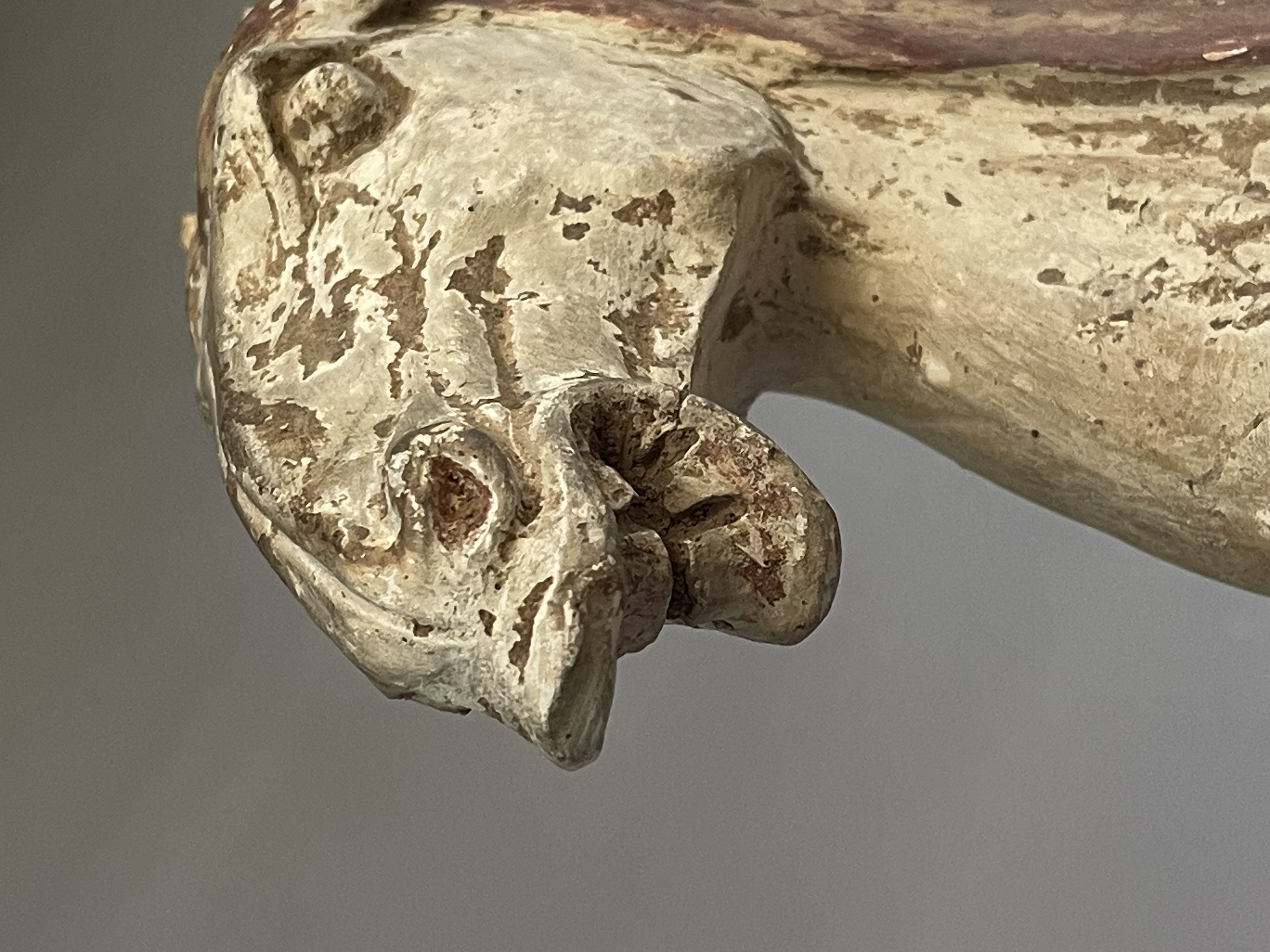
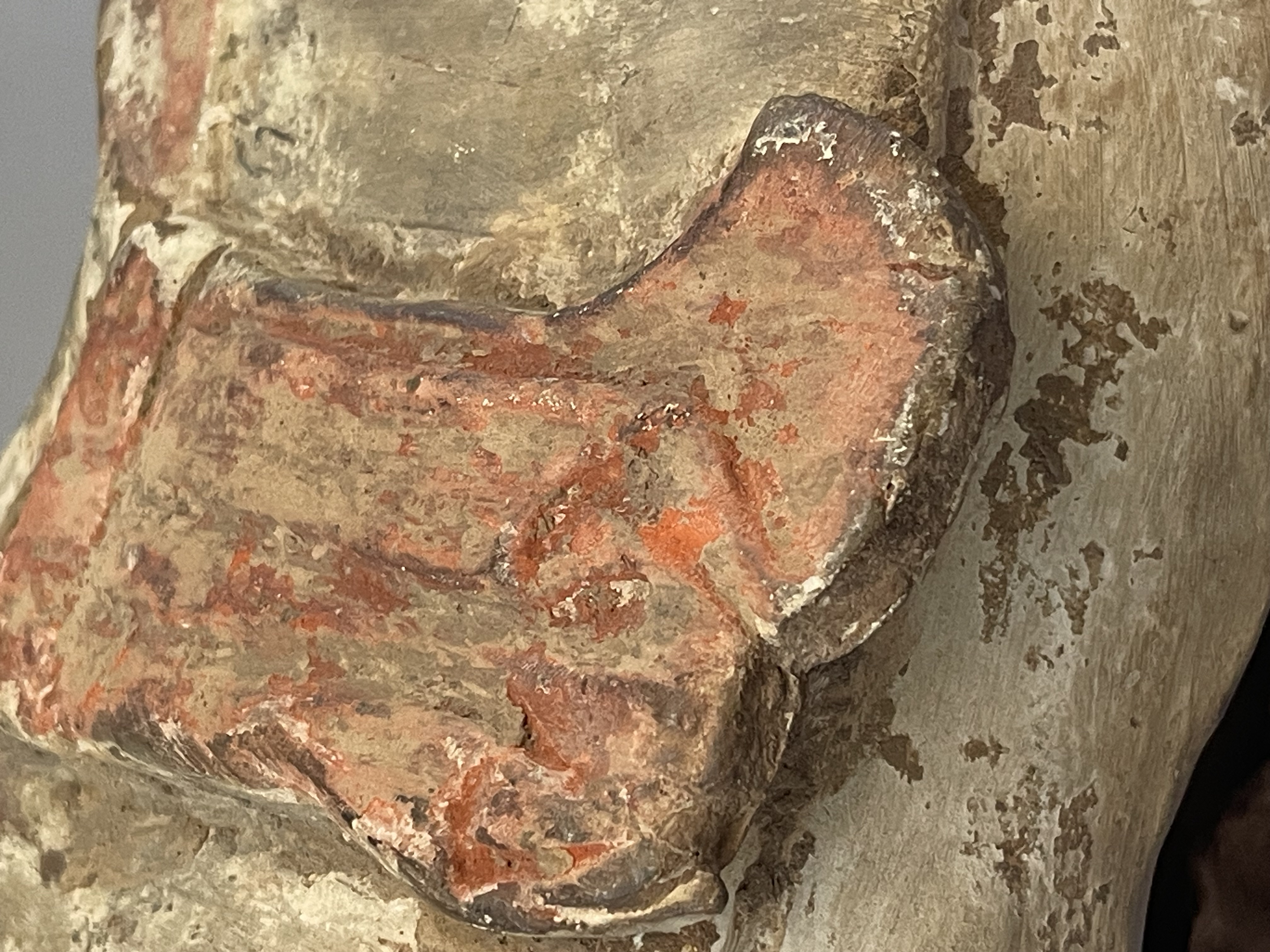
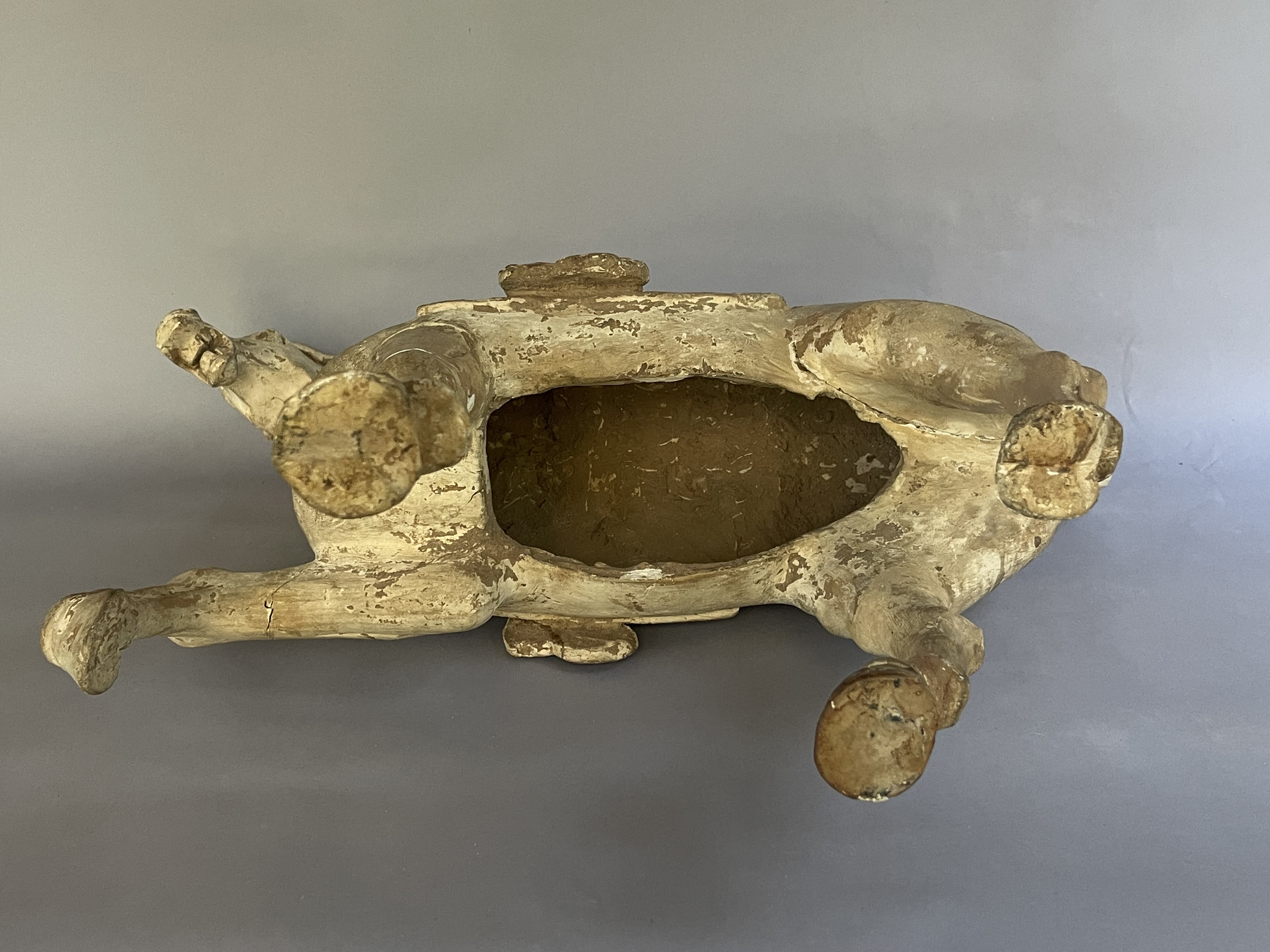
Monumental Chinese painted earthenware funerary horse of the Tang dynasty, modeled as a highly animated prancing or dancing horse with the right foreleg projected forward and the sculpture independently balanced on the remaining three legs without an integral base. The movement extends through the projected chest, sharply rising neck, elevated open-mouthed head, sweeping integral mane, pitched hindquarters, differentiated rear legs and raised tail. Extensive pale ground and red pigment survive across the mane, head, saddle, pendant trappings and tail. Internal camera examination documents a thick-walled hollow torso, a hollow neck passage extending approximately 3–4 inches before denser reinforcement, substantial separately formed limbs and rough clay reinforcement at structural junctions. The archaeological surface preserves layered slip, pigment, exposed earthenware, abrasion, staining and mineral or soil accretions. Restoration is localized: each leg has a fracture line, several stabilized with later adhesive; the raised foreleg retains a visible untreated crack; the left rear ankle shows less than approximately 0.5 mm movement only when deliberately unloaded; the tail preserves an older drilled mechanical pin or dowel repair with later localized adhesive reinforcement; and both ear tips have small losses. The principal hollow torso remains intact, with no observed major body reconstruction, replacement limbs or substituted body sections. UV examination leaves the ceramic body and original surface largely non-fluorescent, with fluorescence concentrated at identifiable later adhesive interventions. The convergence of monumental scale, unsupported three-leg balance, whole-body animation, elaborate horse furniture, expressive integral mane and tail, surviving painted program, internal construction and readable restoration chronology places the sculpture toward the upper tier of the Tang prancing or dancing-horse tradition. Thermoluminescence testing remains planned.