Chinese Dragon Shrine or Altar Openwork Wood Carving
RRP-147

Chinese Dragon Shrine or Altar Openwork Wood Carving

Culture / Origin
China
Dating
Late Qing dynasty to early Republic period, circa 1880–1930
Material

Carved wood with aged lacquered surface

Measurements

H 15 in; W 7.5 in; D 1.5 in

Request Access← Back to CollectionInquire about this object →
Catalogue entry

Description

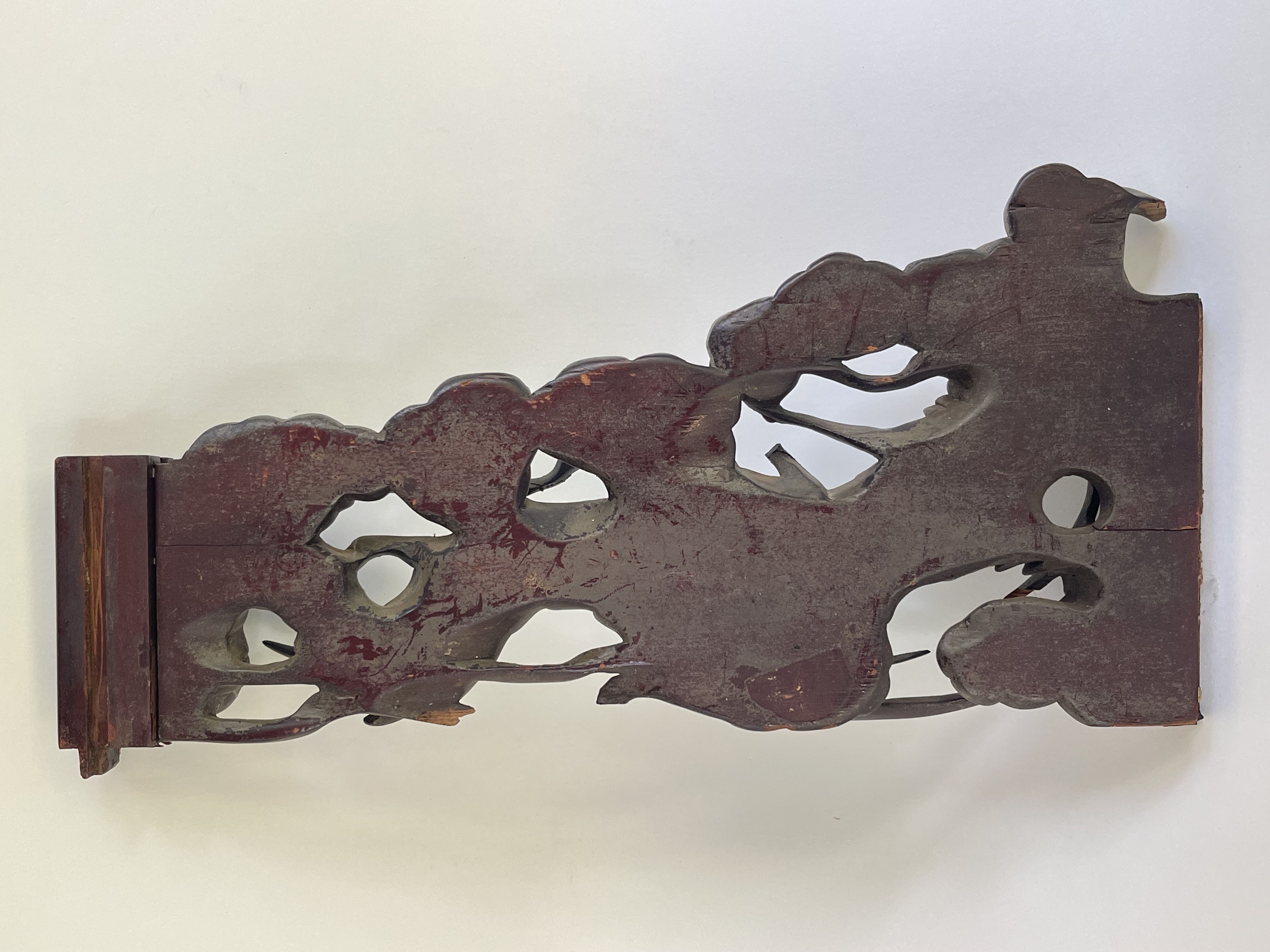
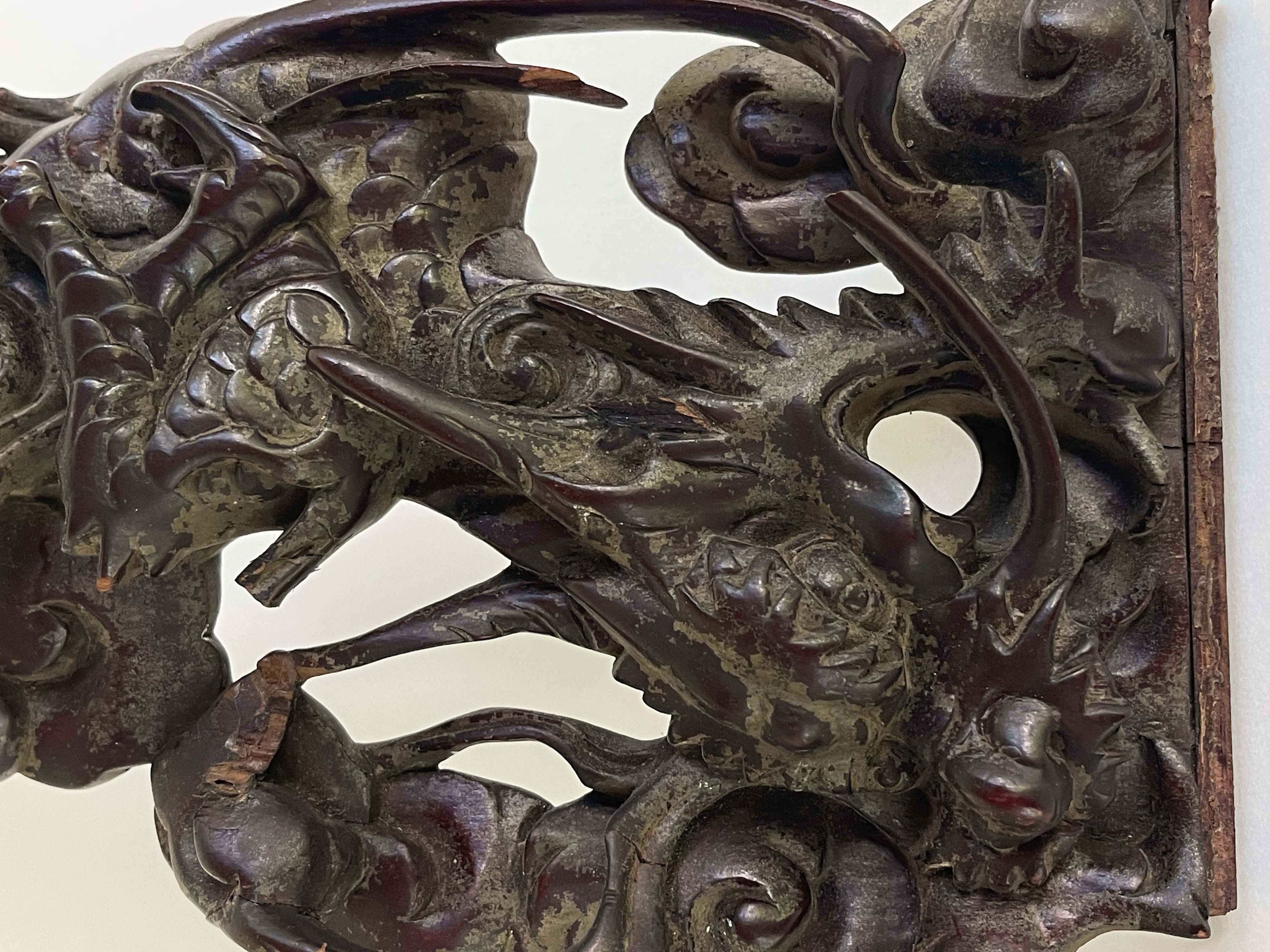
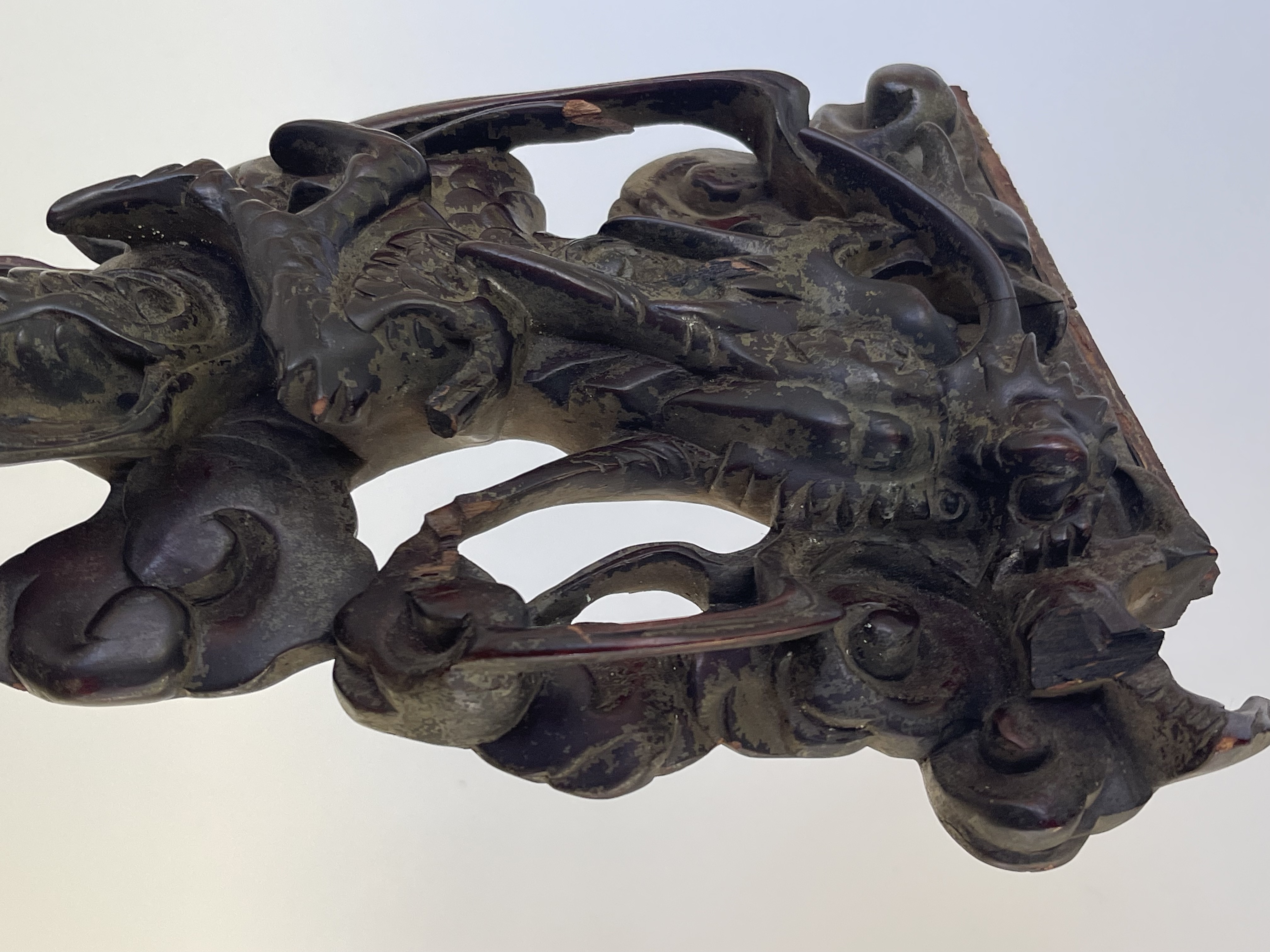
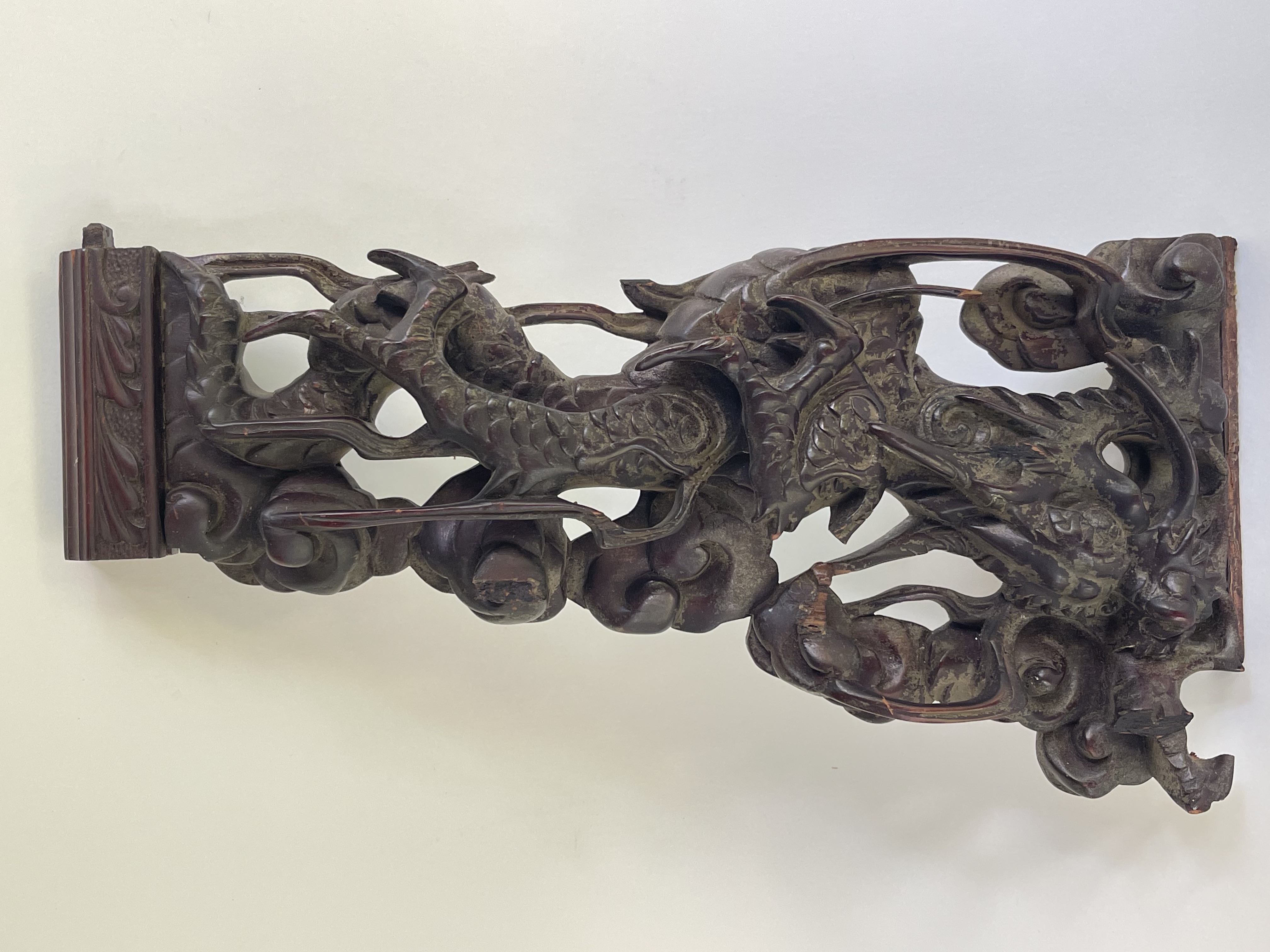
Expressive Chinese openwork architectural carving depicting a guardian dragon emerging from swirling clouds. The enlarged head, projecting whiskers, exposed teeth, dramatic eyes, and forward-thrusting posture create an unusually immediate sculptural presence. Deep undercutting, pierced passages, suspended curves, and delicate bridges of wood produce remarkable visual depth despite the carving's shallow profile. Surviving mortise-and-tenon attachment evidence indicates that it originally formed part of a larger shrine, altar, or devotional architectural ensemble. Old losses to vulnerable projecting elements, stable age cracks, surface wear, lacquer loss, oxidation, and accumulated patina preserve its long history of use and survival. Structurally stable and highly displayable.
Access & use

Ways this object may be engaged

Research (No loan fee)

Yes

This object may be fragile and must be handled with care. It must be secured for display to prevent it from falling or being subjected to contact or pressure.

This object must not be cleaned by any method or come into contact with water or any other substance.

Use gloves to avoid staining the object.

Educational Programs (No loan fee)

Yes

This object may be fragile and must be handled with care. It must be secured for display to prevent it from falling or being subjected to contact or pressure.

This object must not be cleaned by any method or come into contact with water or any other substance.

Use gloves to avoid staining the object.

Exhibitions (No loan fee)

Yes

This object may be fragile and must be handled with care. It must be secured for display to prevent it from falling or being subjected to contact or pressure.

This object must not be cleaned by any method or come into contact with water or any other substance.

Use gloves to avoid staining the object.

Editorial — for books, articles, scholarly journals (No loan fee)

Yes

Professional photographs of this object can be provided on request if the physical object is not required.

This object may be fragile and must be handled with care. It must be secured for display to prevent it from falling or being subjected to contact or pressure.

This object must not be cleaned by any method or come into contact with water or any other substance.

Use gloves to avoid staining the object.

Film / TV

(Rental fees apply)

Yes

This object may be fragile and must be handled with care. It must be secured for display to prevent it from falling or being subjected to contact or pressure.

This object must not be cleaned by any method or come into contact with water or any other substance.

Use gloves to avoid staining the object.

Advertisement / Commercial Photography

(Rental fees apply)

Yes

This object may be fragile and must be handled with care. It must be secured for display to prevent it from falling or being subjected to contact or pressure.

This object must not be cleaned by any method or come into contact with water or any other substance.

Use gloves to avoid staining the object.

Prestige Rentals

Distinguished objects available for short- or long-term rental to private residences, offices, hotels and exceptional spaces.

(Rental fees apply)

Yes

This object may be fragile and must be handled with care. It must be secured for display to prevent it from falling or being subjected to contact or pressure.

This object must not be cleaned by any method or come into contact with water or any other substance.

Use gloves to avoid staining the object.

Documentation

Additional documentation

Ten photographs available. Owner records multiple old breaks and losses to whiskers, cloud scrolls, and openwork extremities; stable age cracks; surface wear, oxidation, lacquer loss, and accumulated patina; and visible mortise-and-tenon attachment evidence. No modern restoration is reported.