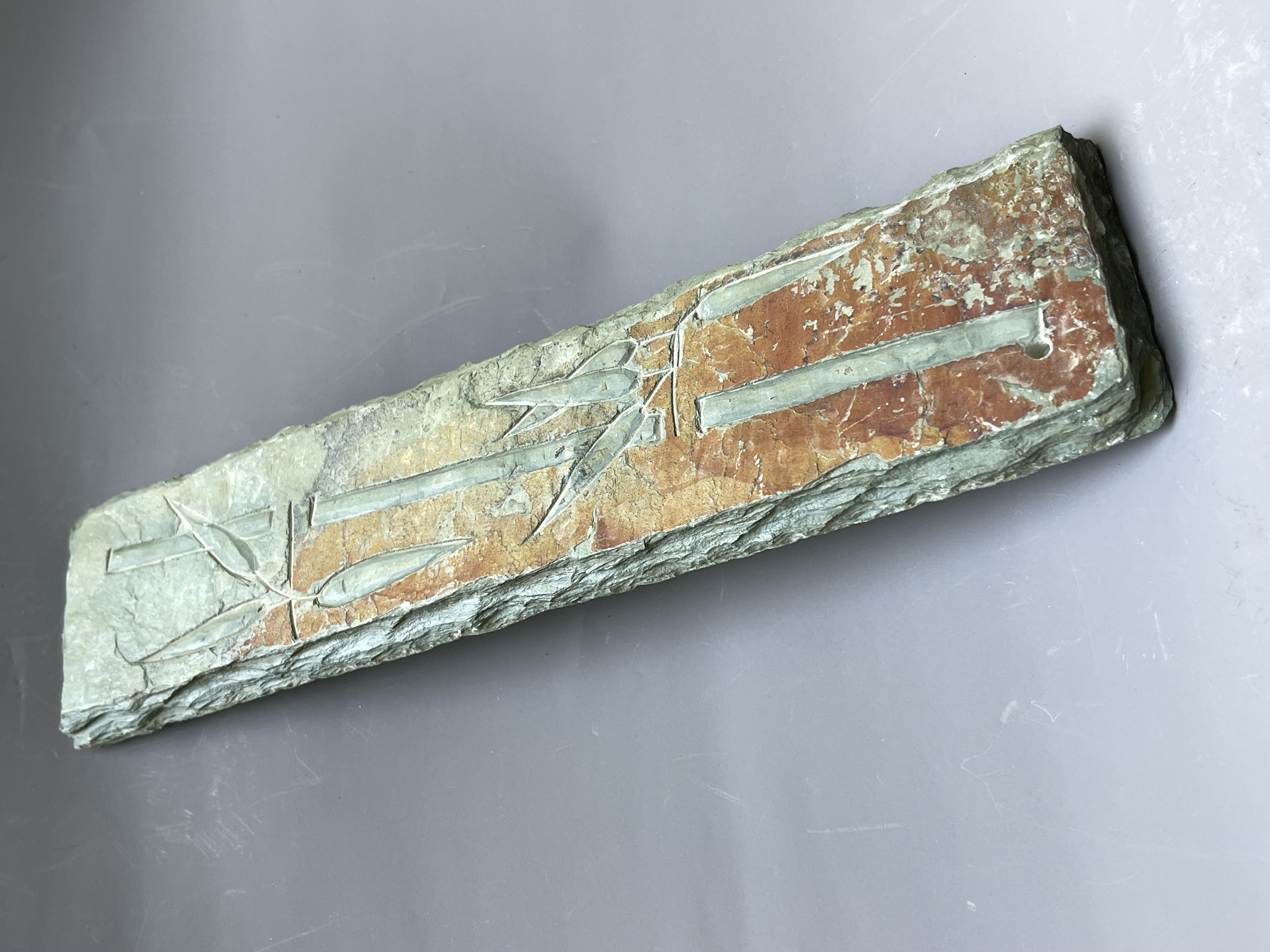
Chinese Slate Incense Tray with Carved Bamboo
RRP-131

Chinese Slate Incense Tray with Carved Bamboo

Culture / Origin
China; Southern Chinese workshop, possibly Fujian or Zhejiang (attributed)
Dating
Late Qing dynasty to Republic period, circa 1890–1930 (attributed)
Material

Fine-grained slate or related cleaved stone, low-relief carved; reddish iron-rich surface staining

Measurements

Length 10 in (25.4 cm); width 2.4 in (6.1 cm); thickness 0.4 in (1.0 cm); weight 375 g

Request Access← Back to CollectionInquire about this object →
Catalogue entry

Description

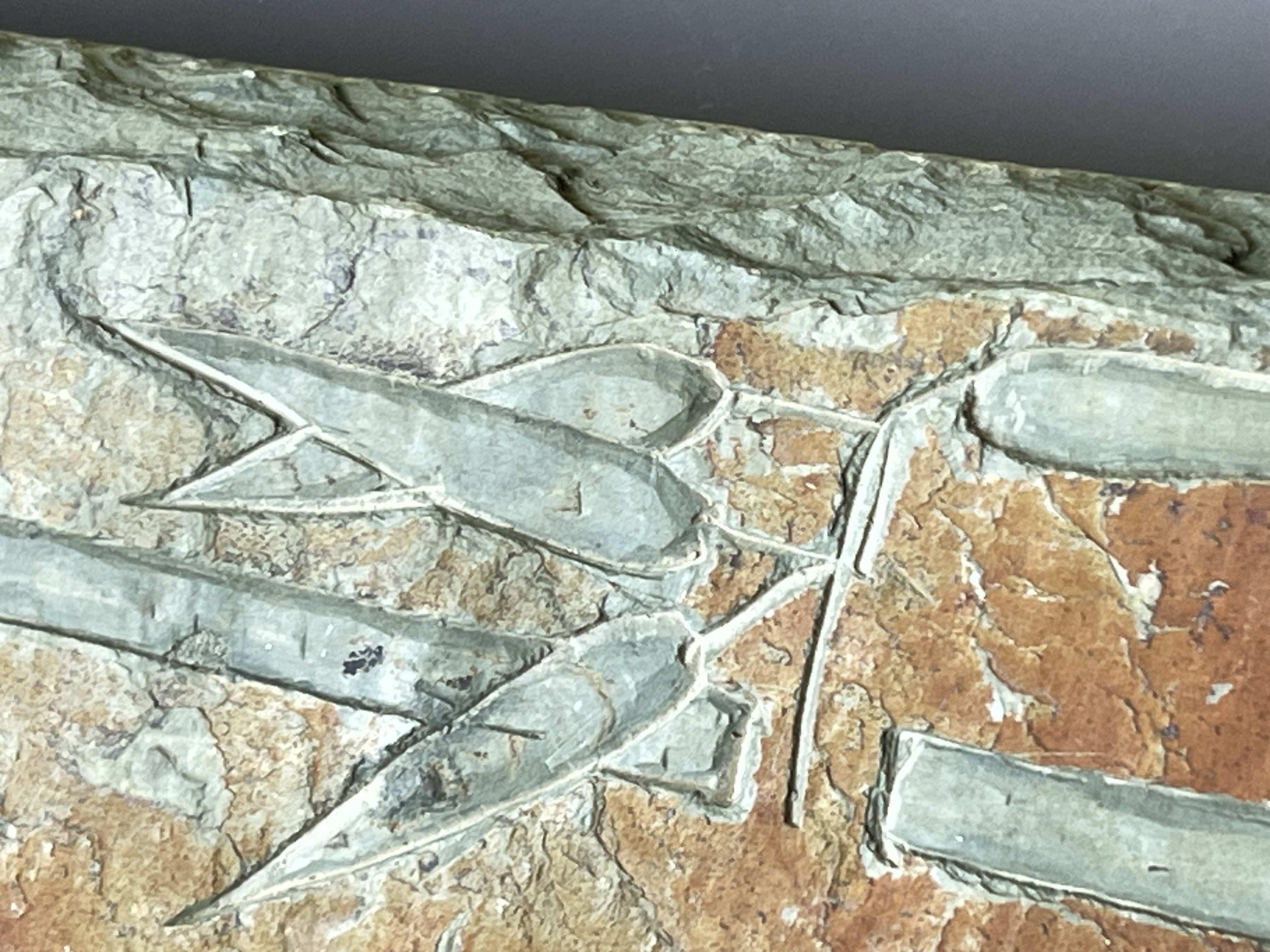
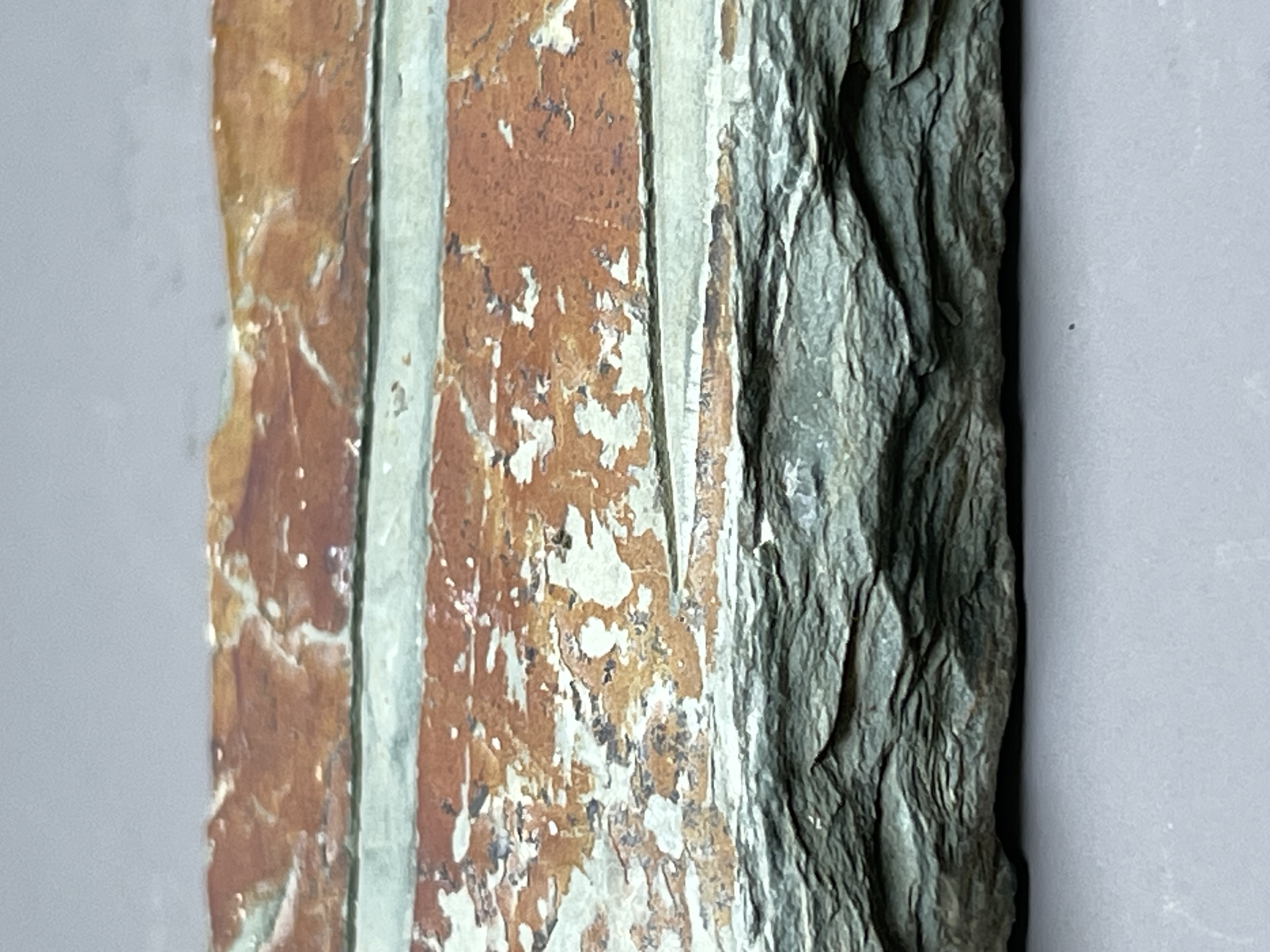
A long, narrow stone incense tray carved in low relief with bamboo stalks and leaves. A small angled aperture near one end is described as a seat for a joss stick, allowing ash to fall onto the tray. Broad reddish-brown surface staining contrasts with the gray stone; cleaved edges and visible tooling document its construction. Bamboo evokes resilience and integrity in the Chinese scholar’s tradition. The proposed circa 1890–1930 date and Southern Chinese workshop origin are object-based attributions.

Access & use

Ways this object may be engaged

Research (No loan fee)

Yes

This object may be fragile and must be handled with care. It must be secured for display to prevent it from falling or being subjected to contact or pressure.

This object must not be cleaned by any method or come into contact with water or any other substance.

Use gloves to avoid staining the object.

Educational Programs (No loan fee)

Yes

This object may be fragile and must be handled with care. It must be secured for display to prevent it from falling or being subjected to contact or pressure.

This object must not be cleaned by any method or come into contact with water or any other substance.

Use gloves to avoid staining the object.

Exhibitions (No loan fee)

Yes

This object may be fragile and must be handled with care. It must be secured for display to prevent it from falling or being subjected to contact or pressure.

This object must not be cleaned by any method or come into contact with water or any other substance.

Use gloves to avoid staining the object.

Editorial — for books, articles, scholarly journals (No loan fee)

Yes

Professional photographs of this object can be provided on request if the physical object is not required.

This object may be fragile and must be handled with care. It must be secured for display to prevent it from falling or being subjected to contact or pressure.

This object must not be cleaned by any method or come into contact with water or any other substance.

Use gloves to avoid staining the object.

Film / TV

(Rental fees apply)

Yes

This object may be fragile and must be handled with care. It must be secured for display to prevent it from falling or being subjected to contact or pressure.

This object must not be cleaned by any method or come into contact with water or any other substance.

Use gloves to avoid staining the object.

Advertisement / Commercial Photography

(Rental fees apply)

Yes

This object may be fragile and must be handled with care. It must be secured for display to prevent it from falling or being subjected to contact or pressure.

This object must not be cleaned by any method or come into contact with water or any other substance.

Use gloves to avoid staining the object.

Prestige Rentals

Distinguished objects available for short- or long-term rental to private residences, offices, hotels and exceptional spaces.

(Rental fees apply)

Yes

This object may be fragile and must be handled with care. It must be secured for display to prevent it from falling or being subjected to contact or pressure.

This object must not be cleaned by any method or come into contact with water or any other substance.

Use gloves to avoid staining the object.

Documentation

Additional documentation

Substantial — ten supplied photographs document full face, oblique views, bamboo carving, aperture, reddish surface staining and layered cleaved edge. Reverse tooling is reported by the owner but not clearly documented in the selected six views; further reverse and aperture macro photographs would aid research.