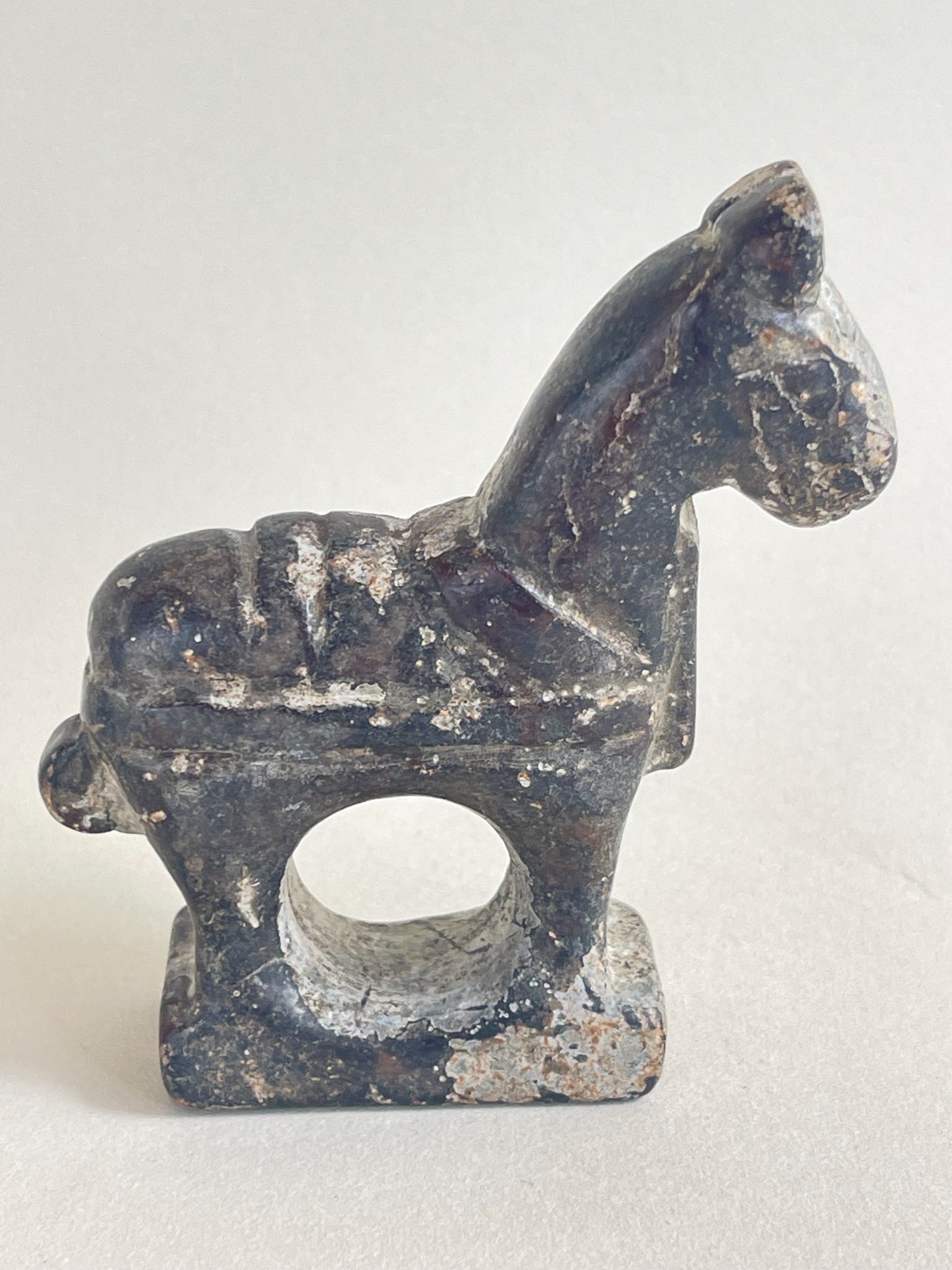
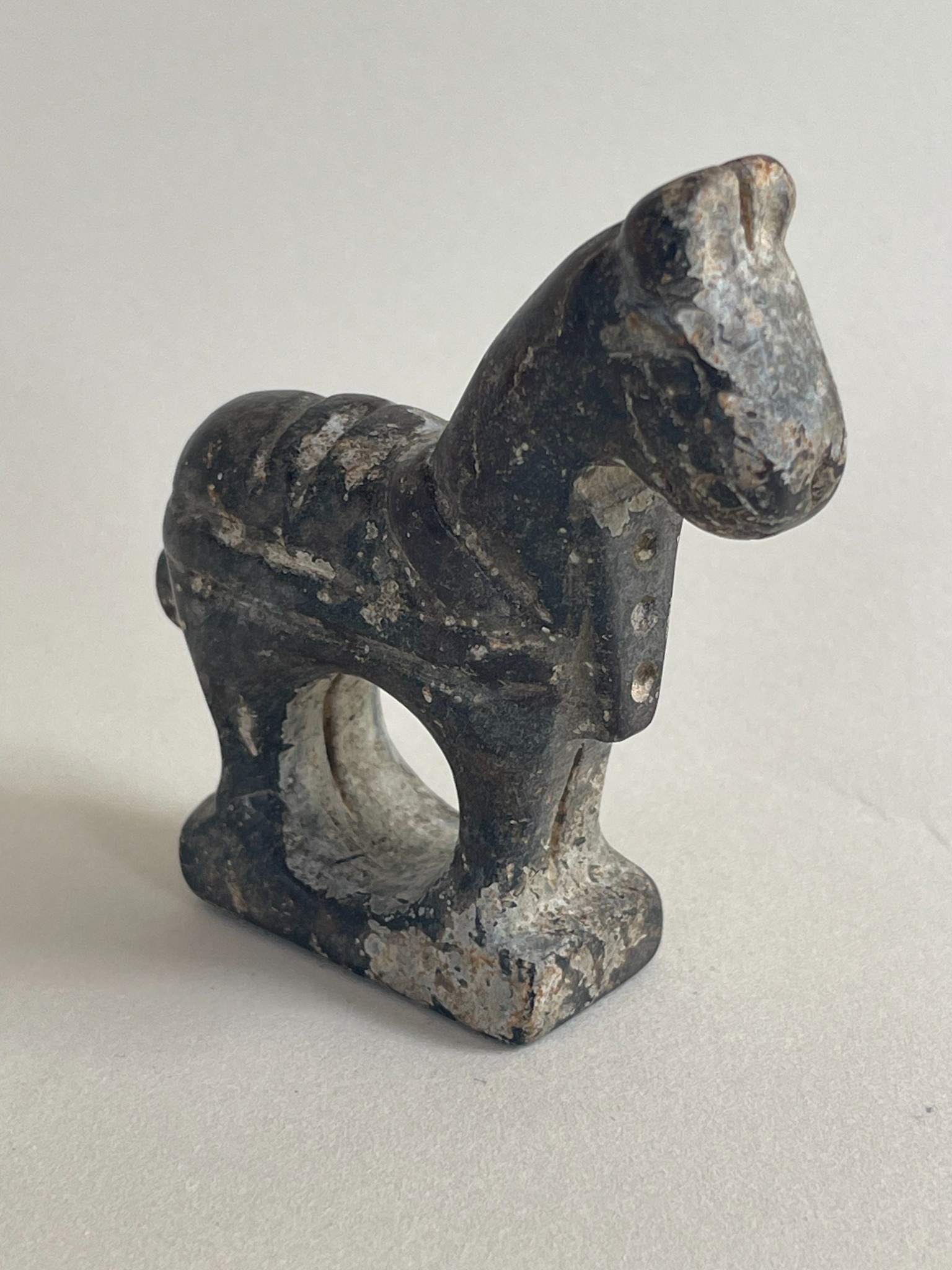
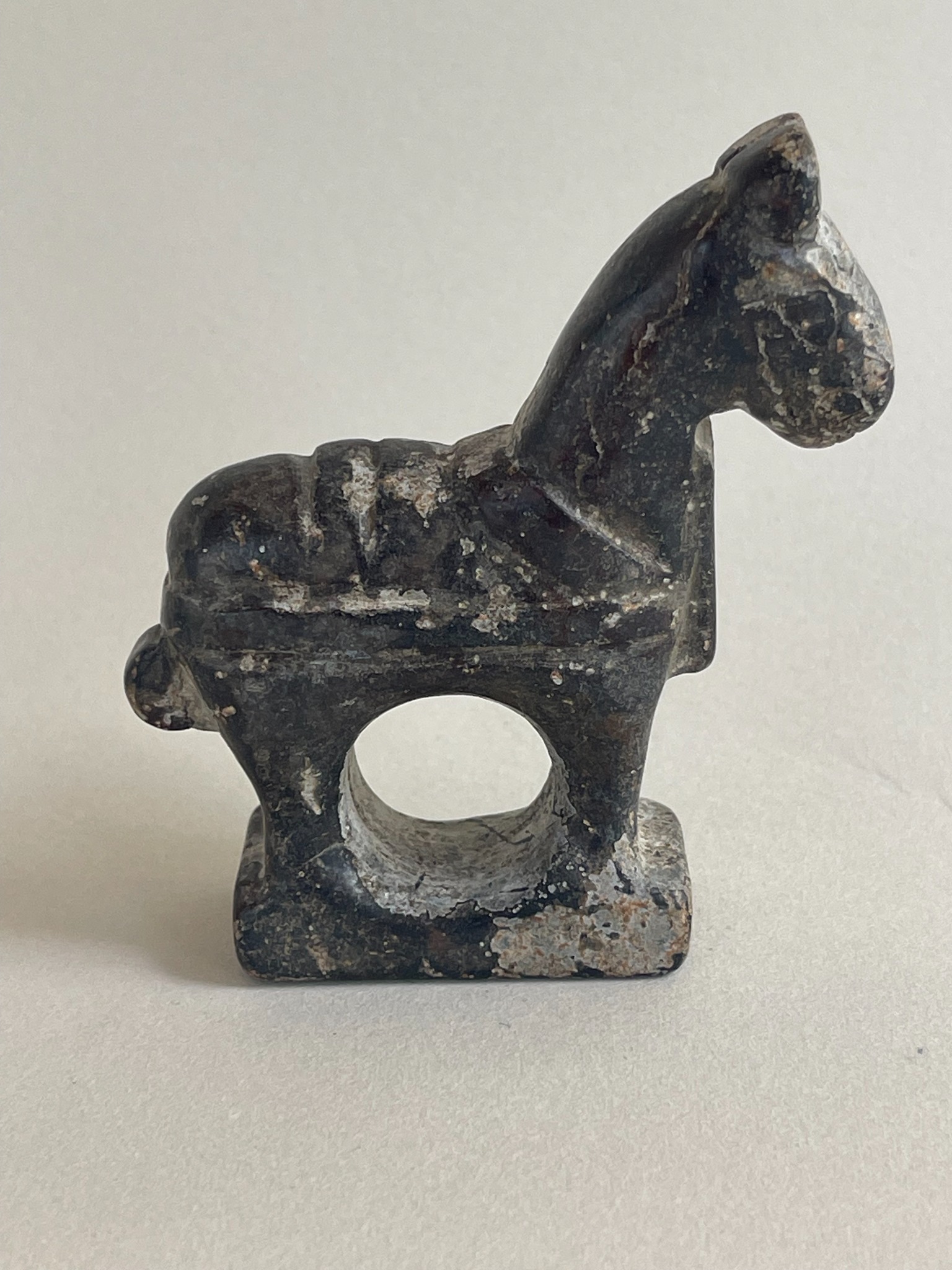
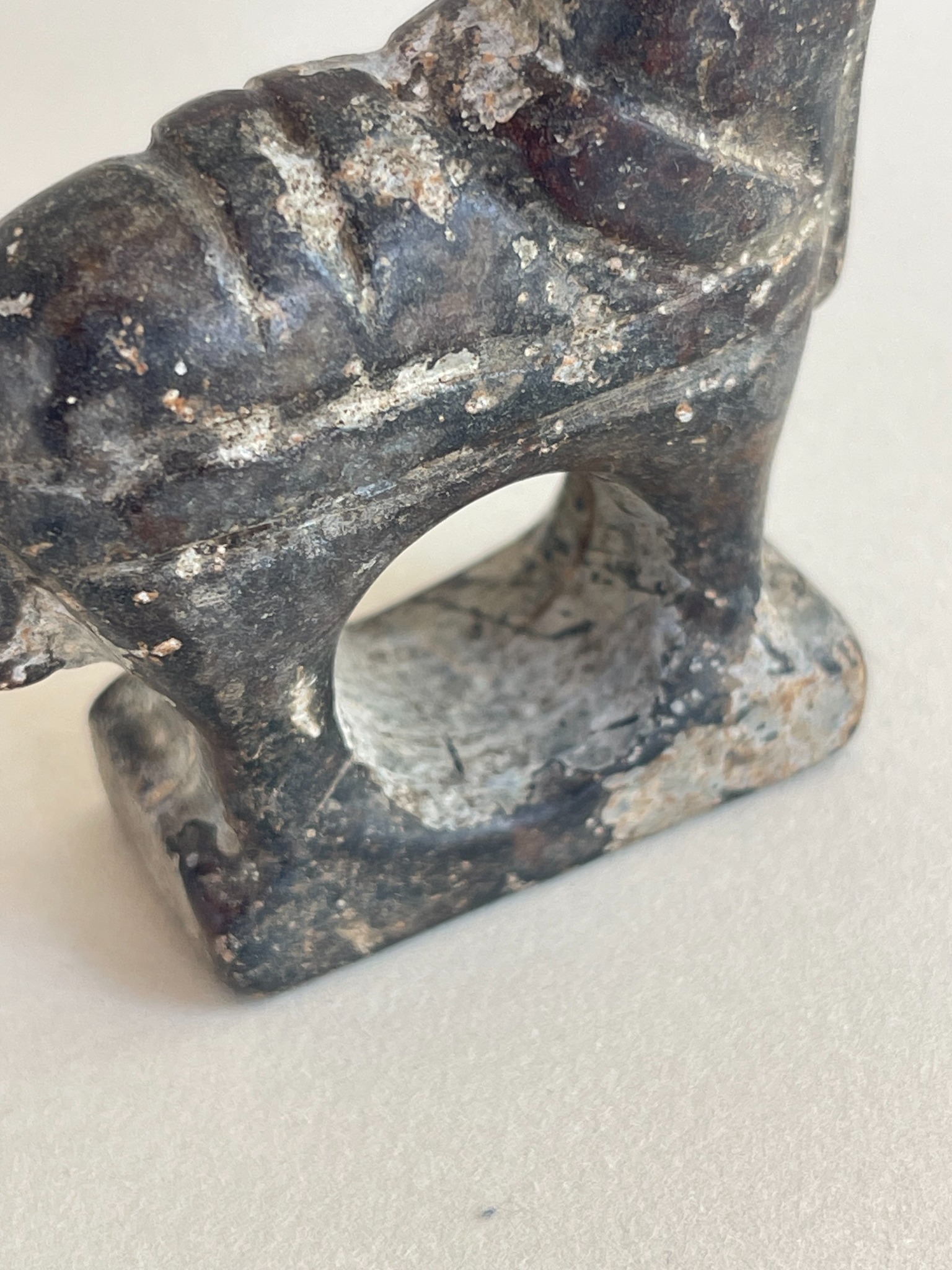
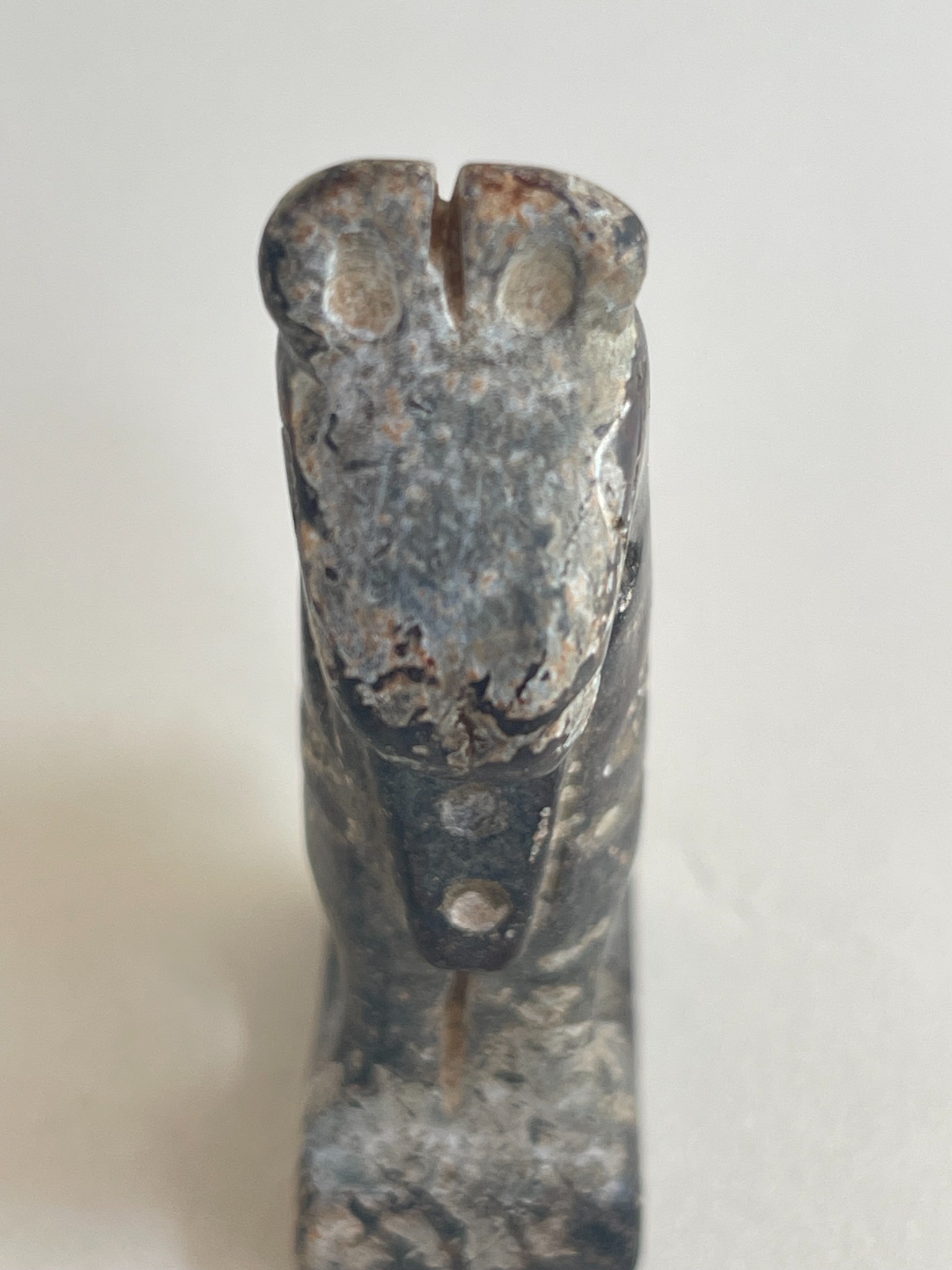
A compact carved stone horse combining a stable, flat continuous base with a large integral opening beneath the body. The opening is comfortably used as a finger hold, allowing the figure to settle into the palm while its base permits it to rest securely on a scholar’s desk as a paperweight. Curved neck, ears, back and legs are economically modeled and incised. Exposed areas have become notably smooth, while the opening and other protected recesses retain pale deposits, small pits, carving evidence and localized orange-brown staining. The proposed Ming attribution rests on the combined construction, hand-directed shaping, surface history and related scholar’s objects, with material identification still open.