Neolithic Vinča–Tordos Female Idol
RRP-095

Neolithic Vinča–Tordos Female Idol

Culture / Origin
Central and southeastern Balkans; attributed Vinča–Tordos cultural complex; reportedly found near Vratsa, Bulgaria
Dating
Neolithic, approximately 5000–4500 BCE (art-historical and technological attribution; no scientific dating undertaken)
Material

Hand-modeled, low-fired gray terracotta, probably reduction-fired; mineral accretions and burial-related surface alteration

Measurements

Height 4 in; width 2 1/8 in; depth 1 1/4 in; weight 107.8 g

Request Access← Back to CollectionInquire about this object →
Catalogue entry

Description

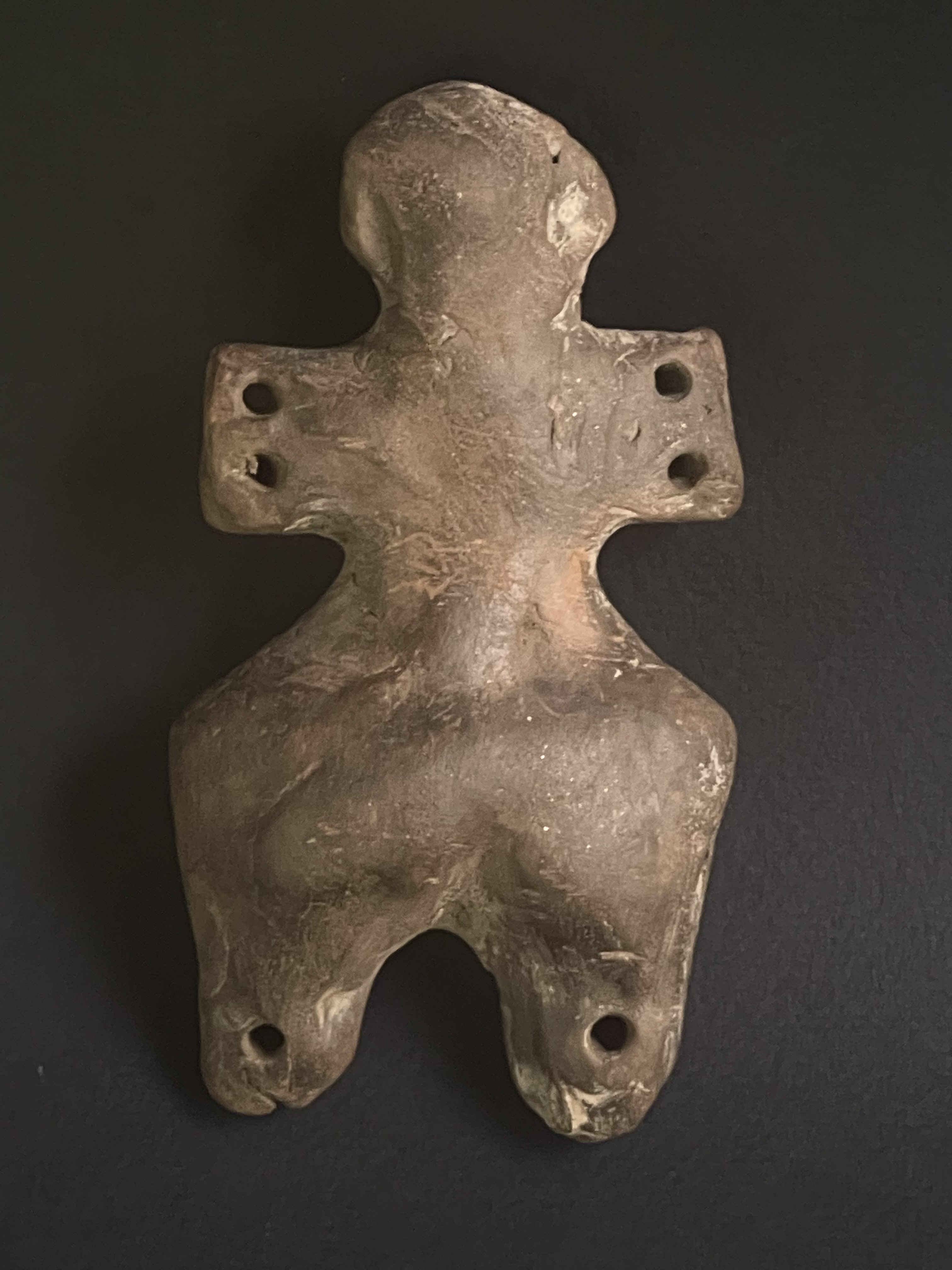
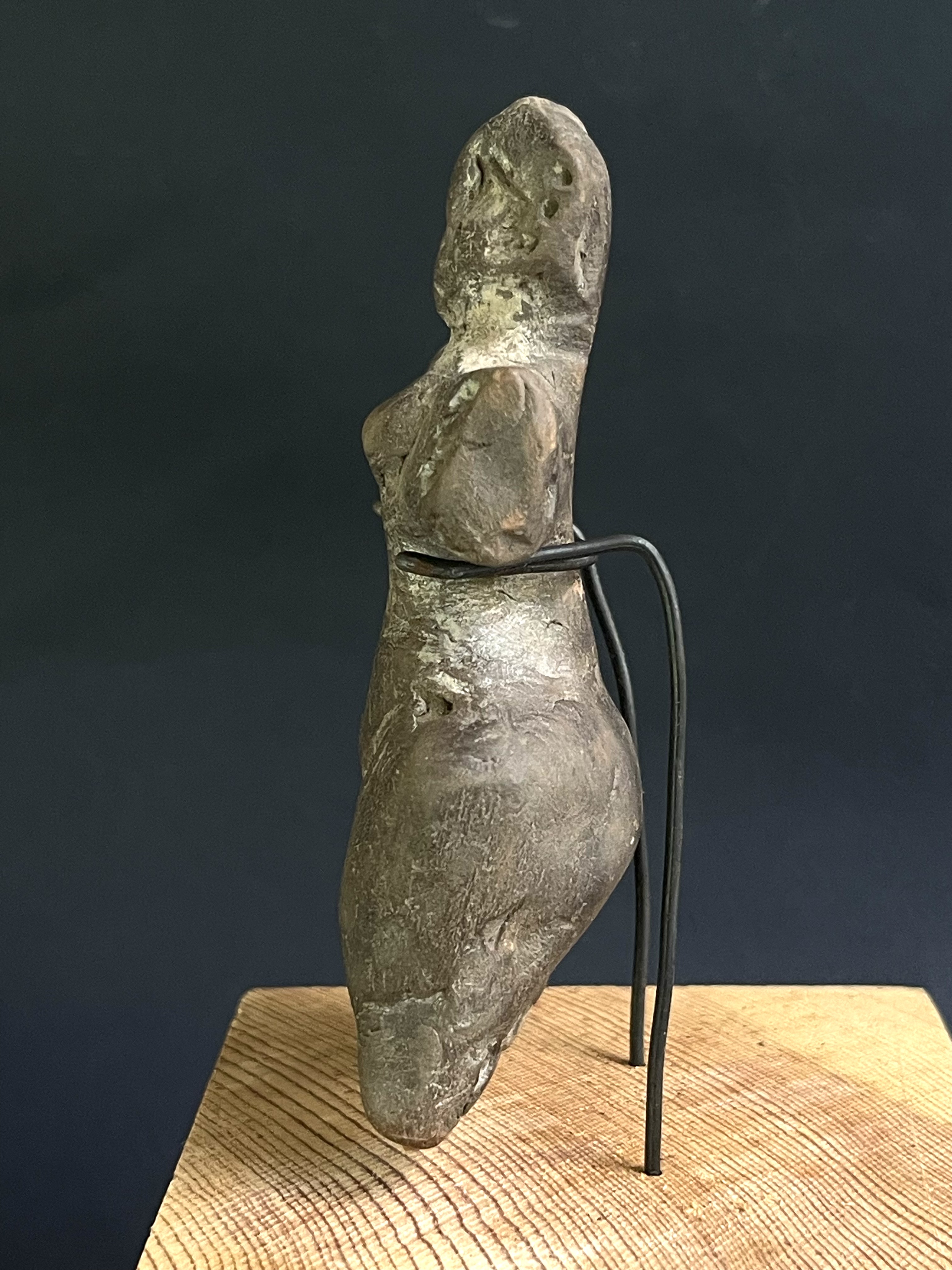
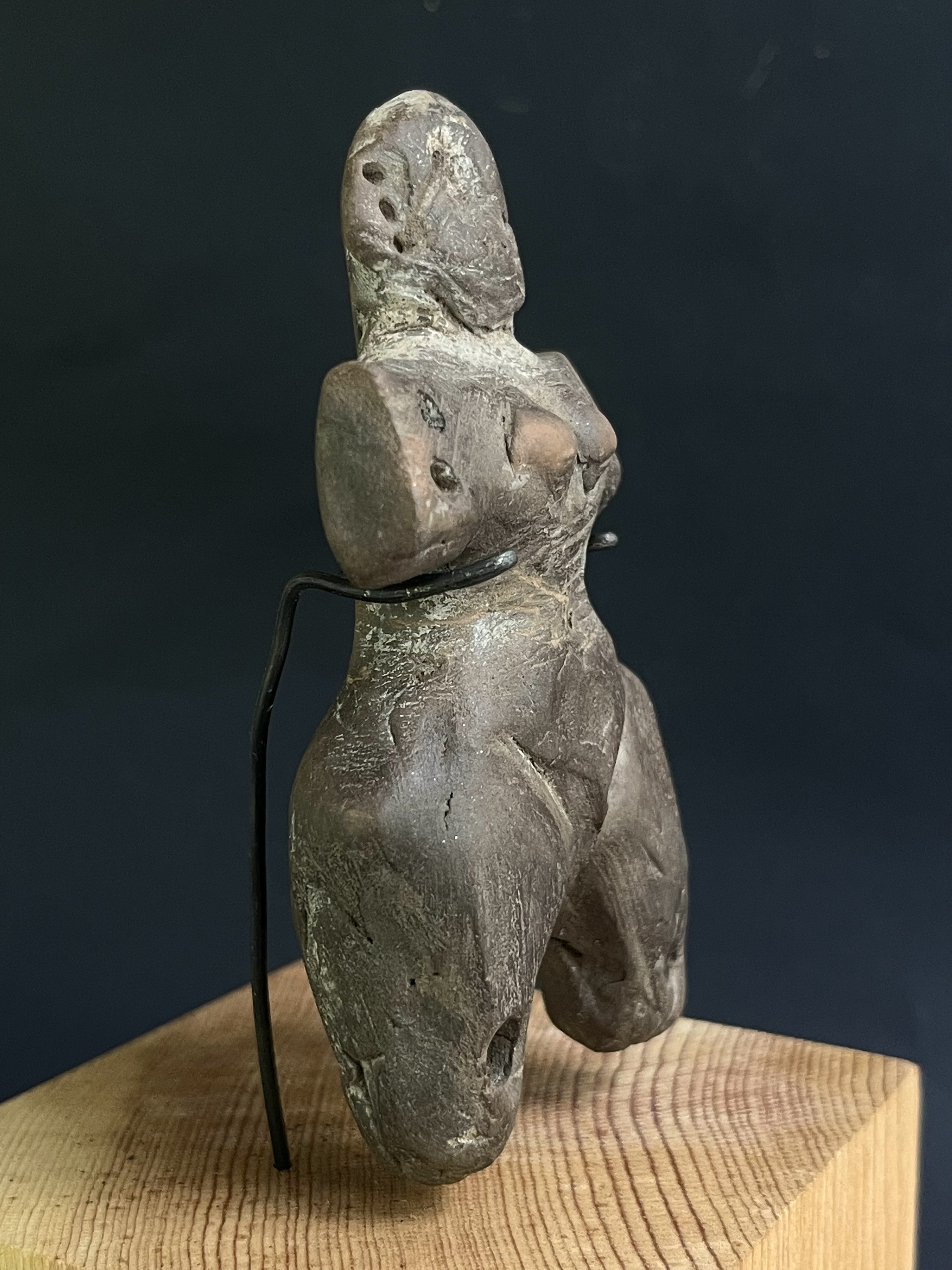
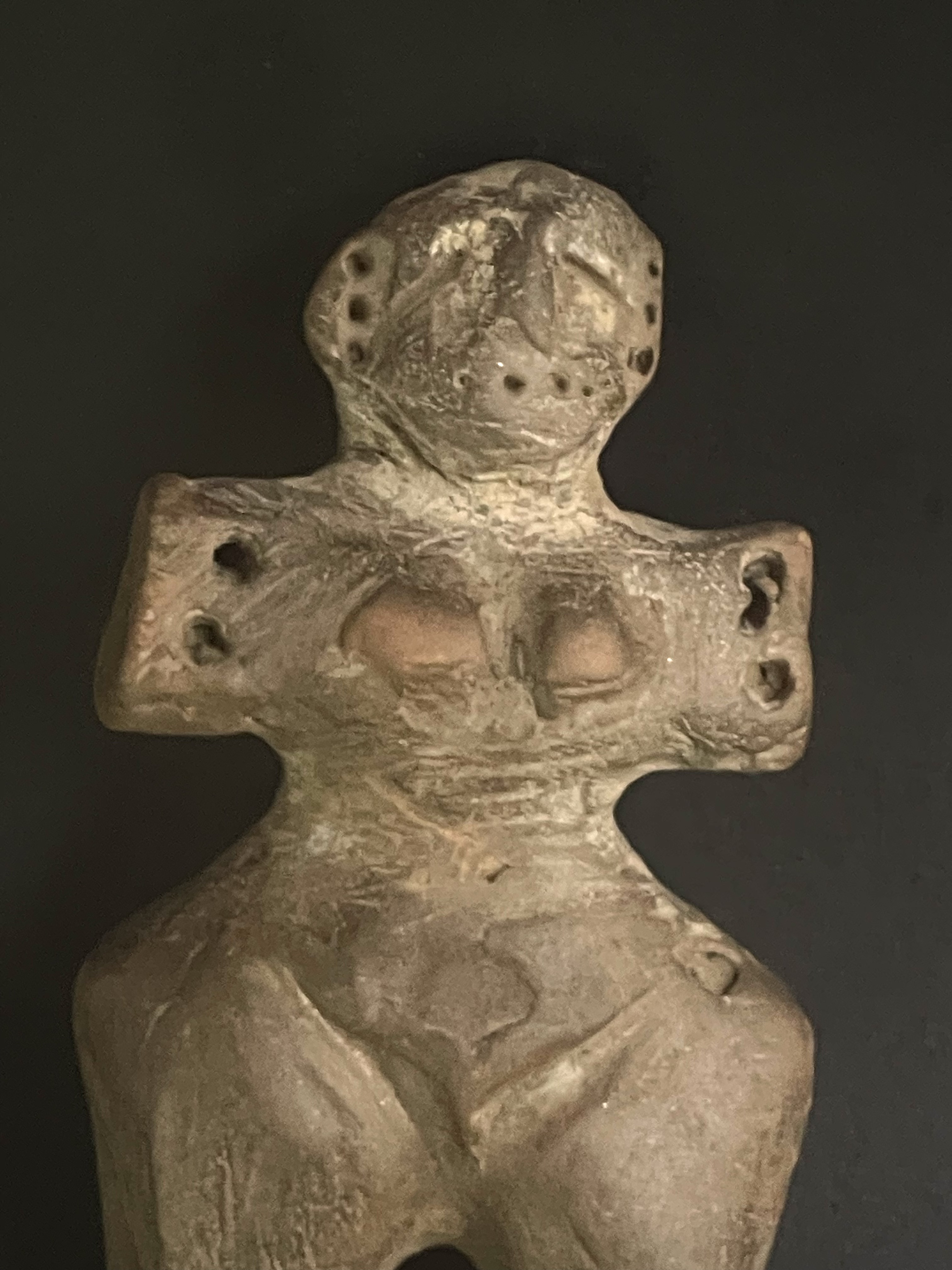
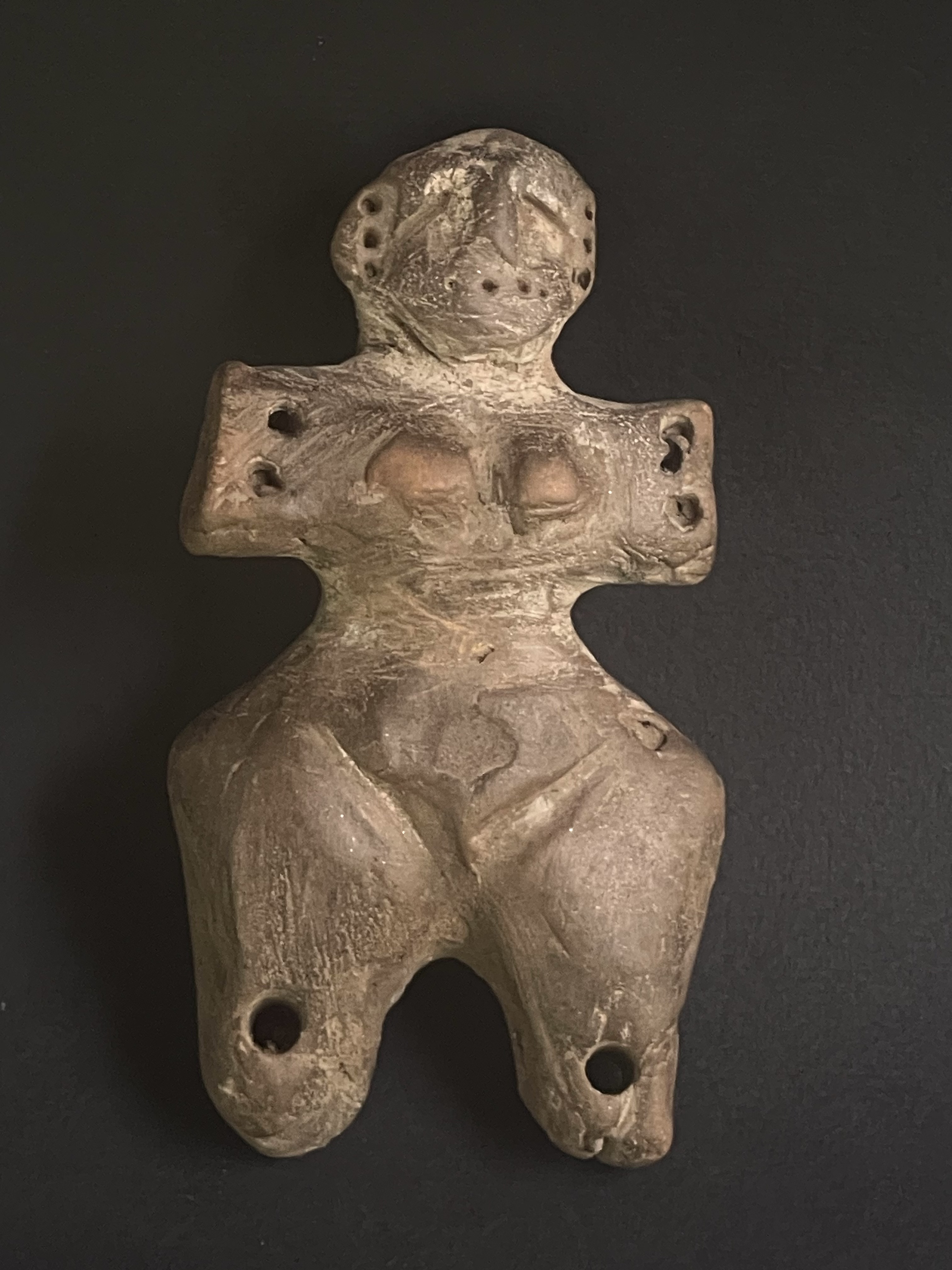
Remarkably complete, strongly frontal female anthropomorphic figurine with schematic head, angular nose, incised facial elements, prominent breasts, broad hips and powerful thighs. Numerous intentional, individually irregular perforations occur around the head and face, through the extended arms and at the lower body. These may once have received cords, fibers, beads, clothing or other perishable attachments, or facilitated suspension or ritual manipulation, but their original function remains unresolved. The flatter reverse contrasts with the deeply modeled front. Gray ceramic color, hand-working, heterogeneous abrasion, mineral deposits and alteration extending into recesses and hole interiors are compatible with substantial archaeological age.
Access & use

Ways this object may be engaged

Research (No loan fee)

Yes

This object is fragile and must be handle with care. It needs to be secure to prevent falling or being exposed to any applied pressure.

This object cannot be cleaned in any way or method and should not be in contact with water or any other substance. Use gloves to avoid staining the object

‍

Educational Programs (No loan fee)

Yes

This object may be fragile and must be handled with care. It must be secured for display to prevent it from falling or being subjected to contact or pressure.

This object must not be cleaned by any method or come into contact with water or any other substance.

Use gloves to avoid staining the object.

Exhibitions (No loan fee)

Yes

 maintain all atributions until lab tests confirm assessments.

This object is fragile and must be handle with care. It needs to be secure to prevent falling or being exposed to any applied pressure. This object can't stand without secured support. The support must be in museum standard and not apply pressure to the object.

This object cannot be cleaned in any way or method and should not be in contact with water or any other substance. Use gloves to avoid staining the object

‍

Editorial — for books, articles, scholarly journals (No loan fee)

Yes

Professional photographs of this object can be provided on request if the physical object is not required.

maintain all atributions until lab tests confirm assessments

This object is fragile and must be handle with care. It needs to be secure to prevent falling or being exposed to any applied pressure. This object can't stand without secured support. The support must be in museum standard and not apply pressure to the object.

This object cannot be cleaned in any way or method and should not be in contact with water or any other substance. Use gloves to avoid staining the object

No handling by performers. Conditional use only as a secured museum-case object or through high-resolution photography and 3D capture. Attribution and ritual function must remain qualified; avoid presenting the object as a proven mother-goddess image.

Film / TV

(Rental fees apply)

Advertisement / Commercial Photography

(Rental fees apply)

Prestige Rentals

Distinguished objects available for short- or long-term rental to private residences, offices, hotels and exceptional spaces.

(Rental fees apply)

Documentation

Additional documentation

Substantial — ten photographs document overall front, reverse and three-quarter views, the predominantly gray surface, modeling, perforations, mineral deposits and macro details. Additional underside, top, profile, scale, ultraviolet and standardized raking-light images would improve conservation and technical documentation.